AI Room Inspection: The Complete Guide for Hotel Housekeeping Leaders
A practical, operator-focused playbook for using computer vision to standardize room quality, reduce supervisor time, and raise guest satisfaction.

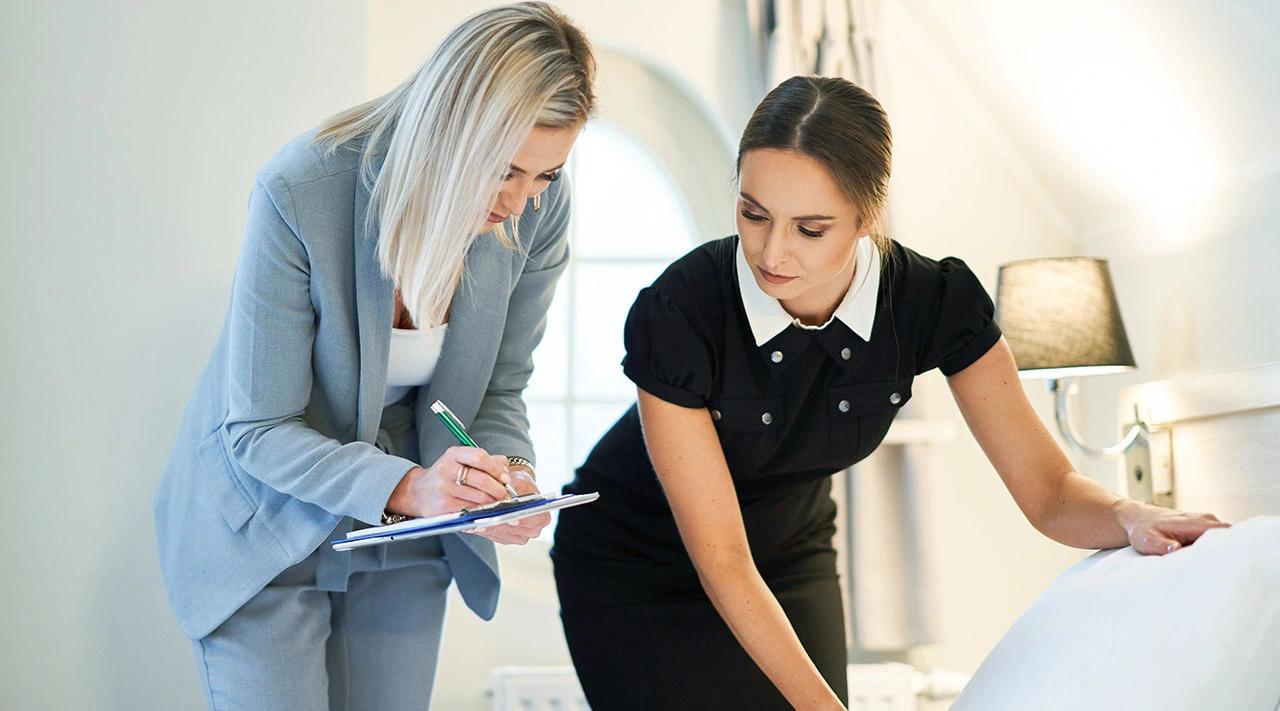
For decades, room inspections have hinged on clipboards, checklists, and whoever happened to be on duty. AI room inspection changes the center of gravity: short walkthrough videos or photos are analyzed by computer vision to flag missed amenities, cleanliness issues, and brand-standard deviations in minutes. This guide is for GMs, Directors of Housekeeping, Executive Housekeepers, and owners who want the real workflow (capture → detect → feedback → work orders → dashboards) plus ROI math, rollout steps, and a vendor checklist.
What you’ll learn: how AI room inspection works (without buzzwords), where the ROI comes from, how to implement it alongside your existing housekeeping app/PMS, how to evaluate vendors, and how to communicate the change with your team.
What Is AI Room Inspection?
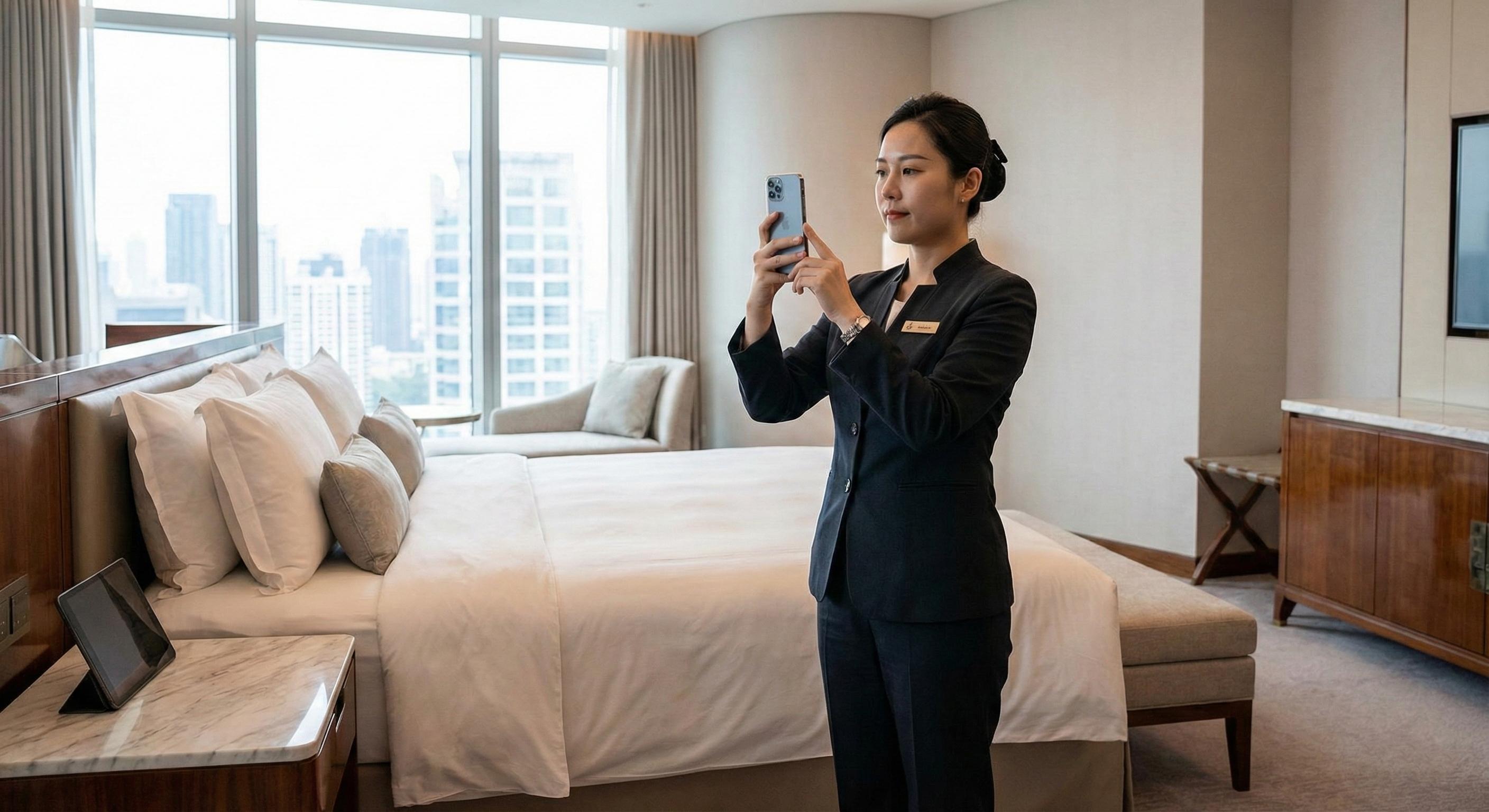
AI room inspection uses computer vision and machine learning to evaluate a guest room’s cleanliness, setup, and brand-standard compliance from photos or a short 15–30 second video. Rather than a supervisor manually checking every surface and amenity, the AI analyzes the visuals and flags exceptions—“Missing hand towel,” “Unstocked minibar,” “Trash not emptied,” or “Bed presentation off.”
Crucially, AI doesn’t replace inspectors; it standardizes, accelerates, and documents the process. Teams still make the final call, but now with consistent, auditable evidence. While the same approach can extend to restaurants and public areas, this article focuses on guest rooms.
In practice, properties often use a dedicated capture-and-detection tool—e.g., Fari Lens—to run the visual checks and return instant feedback without changing their housekeeping staffing model.
Why Manual Room Inspections Break at Scale
- Inconsistent standards across inspectors and shifts - Spot checks vs. full coverage: you can’t walk every room, every day - Supervisor time: 10–15 minutes per room adds up fast - Human error under pressure: overlooked dust, linens, amenities, minibar, small maintenance faults - Downstream impact: re-cleans, OT, negative reviews, brand QA findings
Reality check: At 400 rooms, an extra 5 minutes per inspection is ~33 supervisor hours per day if you aim for full coverage. Multiply by occupancy spikes and new-hire ramp time and the cracks widen.
How AI Room Inspection Works (Without the Buzzwords)
- Capture: Photos or a Walkthrough Video
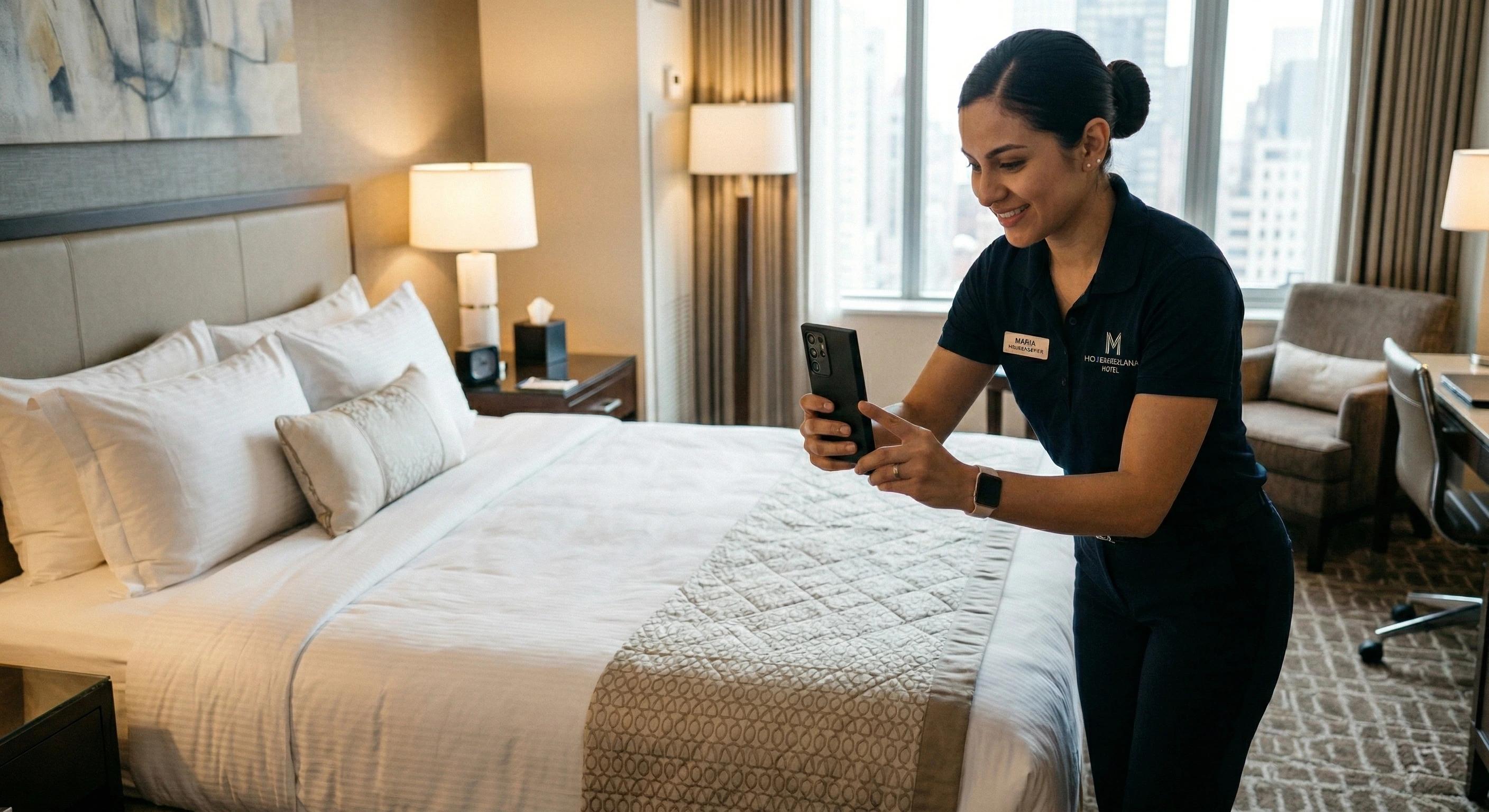
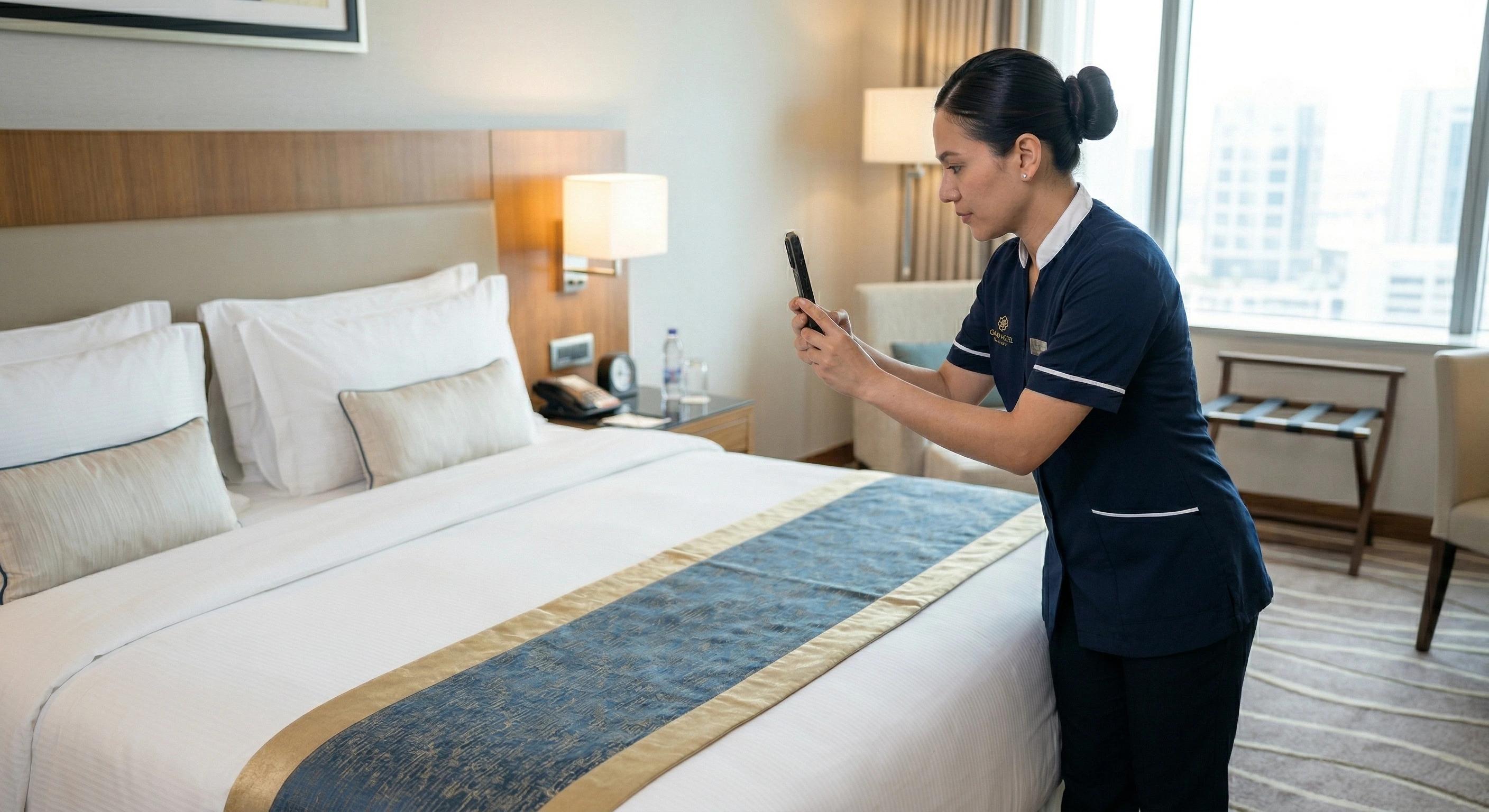
Room attendants or inspectors use their phone (or their housekeeping app) to capture key angles—bed, bath, closet, minibar, desk, floor—typically in a single 15–30 second pass. Tools like Fari Lens streamline this by guiding the framing (e.g., “bed → desk → bath”) so the video covers what models expect.
- Computer Vision Detection
Models look for: - Cleanliness cues: dust/debris on visible surfaces, stains, clutter - Bed presentation: pillow count/placement, linens and runner alignment - Bathroom hygiene: towel types/placement, toiletries, surfaces - Amenities & minibar: presence and placement versus your standard - Layout vs. template: deviations from visual templates per room type
With Fari Lens, the detection runs on-device or at the edge for low-latency feedback and can be tuned per room type or brand template.
- Live Feedback & Issue Flagging
Within seconds, the device or app returns actionable prompts: - “Place second bath towel” - “Stock two waters on the left” - “Close minibar door” - “Replace tissue box cover”
This is where AI inspections leap past traditional checklists: instant, visual, and specific. Lens-style prompts are concise and resolve once the view shows the corrected state.
- Workflow & System Integration
Confirmed issues create tasks for housekeeping or tickets for maintenance. Integrations route work to the right queue (housekeeping lead, engineering) and can sync status back to PMS/CMMS. If you’re using Lens with Fari AI orchestration, those flags can trigger automations (e.g., open a maintenance ticket with photos, notify the floor lead, and mark the room “hold” in PMS until resolved).
- Dashboards, Scores, and Brand Compliance
Leaders view room-level scores, floor heatmaps, and trend lines. Brand-standard items are tracked explicitly. Multi-property groups can benchmark performance across assets and roll out improvements as templates. With Fari Analytics, the same inspection events become trend dashboards—complaints, re-cleans, and time-to-release correlated to inspection coverage.
The Business Case: ROI of AI Room Inspections
Labor Savings
Swap 10–15 minutes of in-room inspection for 2–4 minutes reviewing AI output and only re-enter rooms for true exceptions. In a 300-room property targeting full coverage: - Supervisor hours drop materially (often 50–70% for inspections). - Re-cleans shrink when issues are caught before release-to-inventory.
Quality & Guest Satisfaction
When the AI nudges consistent standards (especially on linen presentation and bathrooms), cleanliness complaints fall and review scores rise. Documented, visual evidence also helps de-escalate disputes.
Brand Compliance & Audit Readiness
A digital inspection history across room types, shifts, and properties turns brand QA from a scramble into a retrieval exercise. You can show adherence patterns, exceptions, and corrective actions—by date, by floor, by team.
Risk, Damages, and Room Audits
Some operators test AI to document damages. Our recommendation: use AI supportively—to catch issues early and speed resolution—rather than as an auto-charge mechanism. Keep human review-in-the-loop and clear guest policies.
A Worked Example - 300 rooms, 85% OCC, 1.2 inspections per stay on average - Manual: 12 minutes/inspection → ~2,040 minutes/day - AI-assisted: 4 minutes review + exception re-entries → ~700–900 minutes/day - Time saved: ~19–22 supervisor hours/day (~570–660 hours/month) Even at modest fully loaded rates, the payback for an AI inspection program commonly lands within 3–6 months, with quality metrics (complaints, re-cleans) compounding gains.
Implementation Roadmap (Pilot → Scale)
Step 1 — Define Visual Standards
Your SOPs should include clear photos of “room ready” states by room type. These become the reference for both people and models. Lens-style templates can be stored per room type.
Step 2 — Pilot in One Wing or Property
Pick high-volume room types and busy floors to surface real variance. Set baseline metrics: inspection time, % rooms fully inspected, complaint rate, re-cleans, and brand QA scores.
Step 3 — Train the Team
Frame AI as an assistant, not a “robot supervisor.” Show live prompts and how to acknowledge/resolve them. Let attendants try the capture flow during real turns. (Lens prompts are intentionally short and consistent across shifts.)
Step 4 — Integrate with Existing Systems
Connect PMS/housekeeping/CMMS via APIs or webhooks so issues become tasks with ownership and SLAs. Start with the obvious (bathroom towels, bed presentation), then expand. If you use Fari components together—Fari Lens for capture/detection and Fari AI for routing—the handoffs are automatic but stay transparent to staff.
Step 5 — Scale and Iterate
Template the visual standards by brand and room type. Adjust thresholds for alerts (e.g., what counts as “bed presentation off”) and review performance monthly. Analytics can highlight where standards or training should evolve.
Optional: If you operate in unionized environments, involve stewards early. Emphasize that AI removes repetitive oversight and creates fair, evidence-based standards.
Build vs. Buy: Choosing an AI Room Inspection Solution
What Traditional Housekeeping Apps Do Well
Checklists, room status, task routing, inspection reports. They’re essential—but not computer vision.
What “Real” AI Room Inspection Requires
- Robust computer-vision models trained on hospitality data - Low-latency inference on mobile/edge for instant feedback - Continuous model updates and operational support - Deep integrations with PMS/housekeeping/CMMS - Privacy, consent, and retention guardrails suitable for guest spaces
Where a tool like Fari Lens fits: as the capture + detection layer that slots into your existing housekeeping stack, passing only the necessary events (flags, thumbnails, metadata) to downstream systems.
Vendor Evaluation Checklist
Ask:
- What’s your accuracy on missing amenities and cleanliness cues?
- How many rooms/properties are live? Any multi-brand deployments?
- How do you support union SOPs and change management?
- What’s the privacy model—guest visibility, blurring, retention periods?
- What training, playbooks, and KPIs do you provide post-go-live?
Case Study: From Spot Checks to Systematic Quality
Before: A 420-room urban hotel ran spot inspections on ~30% of turns; cleanliness complaints clustered on high-turn floors.
After: - Inspection coverage to 100% of rooms - Supervisor time down ~88% for inspection/re-inspection - Cleanliness complaints per 1,000 stays down ~32% - Re-cleans cut by ~24%, freeing attendants for peak departures - QA audit variance tightened—brand-standard gaps easy to trace to shift/zone
Note: In similar rollouts, hotels using a Lens-style workflow reported faster staff adoption because prompts appear during capture rather than after shift.
FAQs About AI Room Inspection
What is AI room inspection? Computer vision analyzes a short video or photo set of a room to flag cleanliness, setup, and brand-standard issues. Teams act on those flags; AI creates consistency and an audit trail.
Does AI replace human inspectors? No. It augments them with instant, objective checks and better documentation.
How accurate is computer vision for cleanliness? Modern models reliably detect missing or misplaced items and many cleanliness cues under typical lighting. Accuracy improves with property-specific visual standards and ongoing tuning.
Will it work with my housekeeping app? Yes, via APIs/webhooks. Issues can appear as tasks for attendants/leads, and status can sync to PMS/CMMS. In blended stacks, Fari Lens handles detection while your existing app handles routing and room status.
Is this only for luxury hotels? No. Limited-service and select-service assets may see faster payback because labor minutes and re-cleans are more visible in the P&L.
How long does implementation take? Depending on the size and complexity of your property or portfolio, Fari Lens can typically be deployed in 2–4 weeks, with larger or multi-property rollouts taking 8–12 weeks.