The Benefits of Fari Lens for Modern Casinos
How casino operators can use Fari Lens and computer vision to capture more non-gaming revenue, cut F&B shrinkage, and strengthen operational control across towers, bars, and public areas.

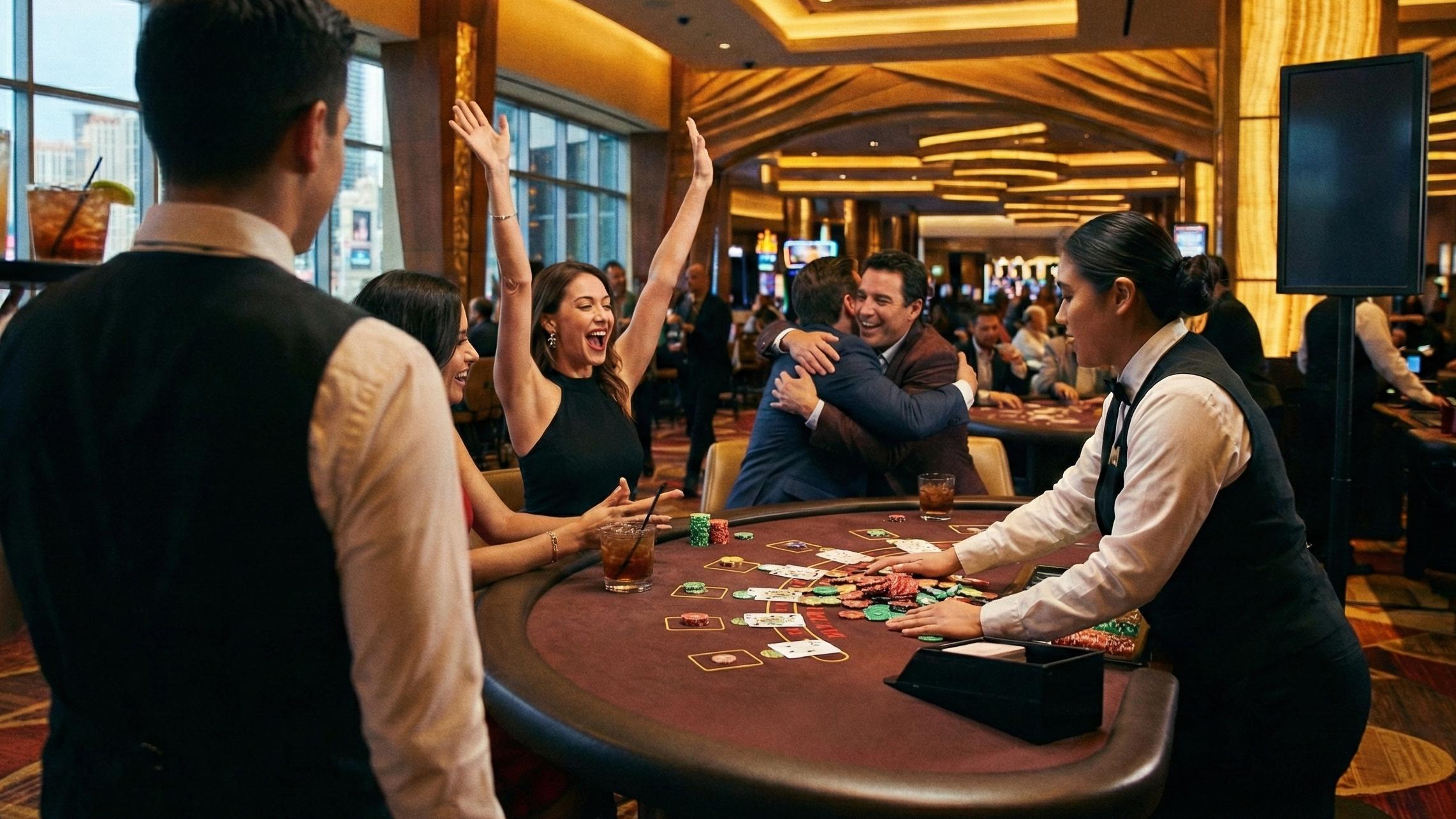
On a busy Saturday night, a modern casino resort is less a single business than a small city stacked vertically. Slot banks hum, dealers flip cards, bartenders build craft cocktails three deep at the rail, banquets turn over between concerts, and thousands of guests move between gaming floors, hotel towers, and restaurants without ever seeing the operational choreography underneath.
For operators, that choreography has become exponentially harder. Non-gaming revenue now represents the majority of income on the Las Vegas Strip, with some analyses putting it at roughly 60–70 percent of total revenue, and food and beverage is a core contributor. At the same time, industry studies suggest that typical bars and restaurants lose 15–20 percent of product to shrinkage, overpouring, theft, and process breakdowns. Labor costs in hotel F&B have risen sharply in recent years, with F&B departments shouldering the fastest-growing share of staffing expense.
In that environment, casino operators can no longer treat bars, banquets, and hotel towers as “soft” support functions. They are high-margin businesses in their own right, under the same scrutiny as gaming. That makes them an almost perfect canvas for computer vision – and specifically for Fari Lens, the visual operations layer within Fari’s AI-powered operating system for hotels.
Why casinos are primed for computer vision
Casinos share many traits with large hotels, but at a more extreme scale:
- They never sleep. Inventory, cleanliness, and service issues surface at 3 p.m. and 3 a.m. with equal likelihood. - They earn heavily from non-gaming. Integrated resorts increasingly depend on F&B, rooms, retail, entertainment, and MICE to stabilise earnings and satisfy regulators. - They live under intense regulatory and audit pressure. Surveillance, AML, and gaming regulation already require meticulous record-keeping. - They run dozens of visual processes that are still manual. Minibar checks in hotel towers, bar stocktakes, banquet resets, cleanliness inspections, and brand-standard checks are all fundamentally visual tasks.
Historically, these workflows have relied on clipboards, spreadsheets, and human memory – which means delay, inconsistency, and leakage. Fari Lens exists to turn those visual processes into structured, auditable data that flows into the same operational nervous system as the property’s PMS, POS, ERP, and analytics stack.
What Fari Lens actually does in a casino context
Within Fari’s product suite, Fari Lens is the computer-vision platform that automates visual operations such as minibar stocktaking, cleanliness checks, and F&B inventory tracking. Instead of asking staff to count bottles, cans, and amenities by hand, it lets them capture quick images on a mobile device. Behind the scenes, convolutional neural networks – trained on tens of thousands of annotated product images – identify items, vintages, and fill levels with human-level or better accuracy.
Because Fari Lens is part of a broader operating system rather than a point solution, those visual insights do not live in a silo. They can trigger automations (through Fari AI’s internal agents) and feed portfolio-wide dashboards (through Fari Analytics), so a single scan can post minibar charges, adjust inventory, and update financial reports without anyone re-keying data.
For casinos, that combination matters more than the underlying algorithms. The business value lies in five areas.
1. Turning non-gaming F&B into a precision business
In an integrated resort, the F&B footprint can span dozens of venues: lobby bars, high-limit lounges, nightclubs, pool bars, buffets, and banqueting spaces tied to the convention centre. Many of these outlets operate at very high volume, with complex SKUs and overlapping teams. That is precisely where shrinkage and waste tend to hide.
Minibars in the tower: the quiet revenue engine
Casino hotel towers, especially suites and VIP floors, often carry premium minibars – high-margin spirits, champagne, and snacks where every missed charge is pure leakage. Traditional minibar workflows are slow and error-prone: room attendants open doors, eyeball what is missing, tick items on a form, and hope that those marks become correct postings in the PMS.
Fari Lens replaces that sequence with a few smartphone photos. The system recognises items in situ – even when guests have rearranged them – and cross-checks against the room’s configured product list. When connected to a PMS such as Opera or FCS, it can push charges directly to the folio, ready for review.
The impact is twofold:
- More revenue captured. Hotels using similar computer-vision minibar workflows routinely cut shrinkage and missed postings, while also resolving guest disputes faster because they have timestamped visual evidence of the minibar state. - Less labour per room. Instead of manually counting items, attendants capture a few images and move on. Fari deployments in hotel environments show minibar and beverage audits dropping from hours to minutes, with labour reductions of 30–70 percent in these tasks alone.
In a casino tower where suites command significant ADR and are heavily comped for VIPs, ensuring that every consumed minibar item is accurately billed – whether to the guest, a host’s comp account, or a marketing promotion – becomes part of holding the line on profitability.
Bars, lounges, and nightclubs: where shrinkage hurts most
Industry research suggests that the average bar can lose around 15–20 percent of its inventory to shrinkage – overpouring, unrecorded comps, theft, and administrative errors. In a casino with multiple high-volume bars, that translates into millions of dollars in silent losses over a year.
Fari Lens attacks this from two angles:
- Fast, objective stocktakes. Instead of dragging out manual counts at 4 a.m., staff can walk the back bar and storage areas with a mobile device, capturing images that the system converts into counts. Because the same computer-vision models distinguish bottles and packaging variations with high precision, operators get consistent results across teams and shifts.
- Fill-level monitoring on open bottles. In conjunction with calibrated bottle profiles, Fari Lens can estimate remaining volume in partially used bottles, turning a fuzzy “about one-third left” into structured data. That makes it easier to reconcile POS sales against actual pour volume and to spot variances by bar, shift, or product family.
When Fari Lens sits on top of Fari’s automation and analytics layers, these inventory snapshots can automatically:
- Trigger purchase orders when stock drops below par - Flag variance thresholds that require investigation - Update cost-of-goods-sold calculations and F&B P&L in near real time
For casino operators chasing a few percentage points of margin in non-gaming, this kind of control over bars and lounges is not a nice-to-have – it is an economic lever.
2. Making revenue disputes rare and easy to resolve
Casinos are guest-centric businesses, but they also live under intense scrutiny from auditors, regulators, and owners. That makes disputes around charges particularly delicate. A minibar or bottle-service dispute may seem minor compared with a gaming complaint, yet comps and write-offs accumulate quickly.
Because Fari Lens captures an image for every minibar scan or inventory event, it automatically generates an encrypted, time-stamped visual record. When a guest contests a minibar charge, front-office or VIP services can:
- Pull up the image associated with that room and date - Verify what was present at check-in and at the time of scan - Decide whether to uphold, adjust, or waive the charge with full context
In practice, this has several benefits:
- Fewer unnecessary comps. Staff are no longer forced to “err on the side of the guest” because they lack evidence. - Better training data. Repeated disputes around a particular item or process can be traced back to how staff restock, how SKUs are configured, or how pricing is communicated. - Cleaner audit trails. Finance, surveillance, and compliance teams can see not just that a charge was posted, but also the image that justified it.
For VIP programmes, where bespoke comps are part of the relationship, having this level of traceability also helps hosts understand the true cost of service packages and promotions.
3. Cleanliness and brand standards across a 24/7 property
Casino resorts promise not only excitement but also a sense of curated, controlled environment: spotless gaming floors, pristine restrooms, and hotel corridors that feel cared for regardless of the hour. Maintaining that standard at scale is hard, especially when staffing models are under pressure.
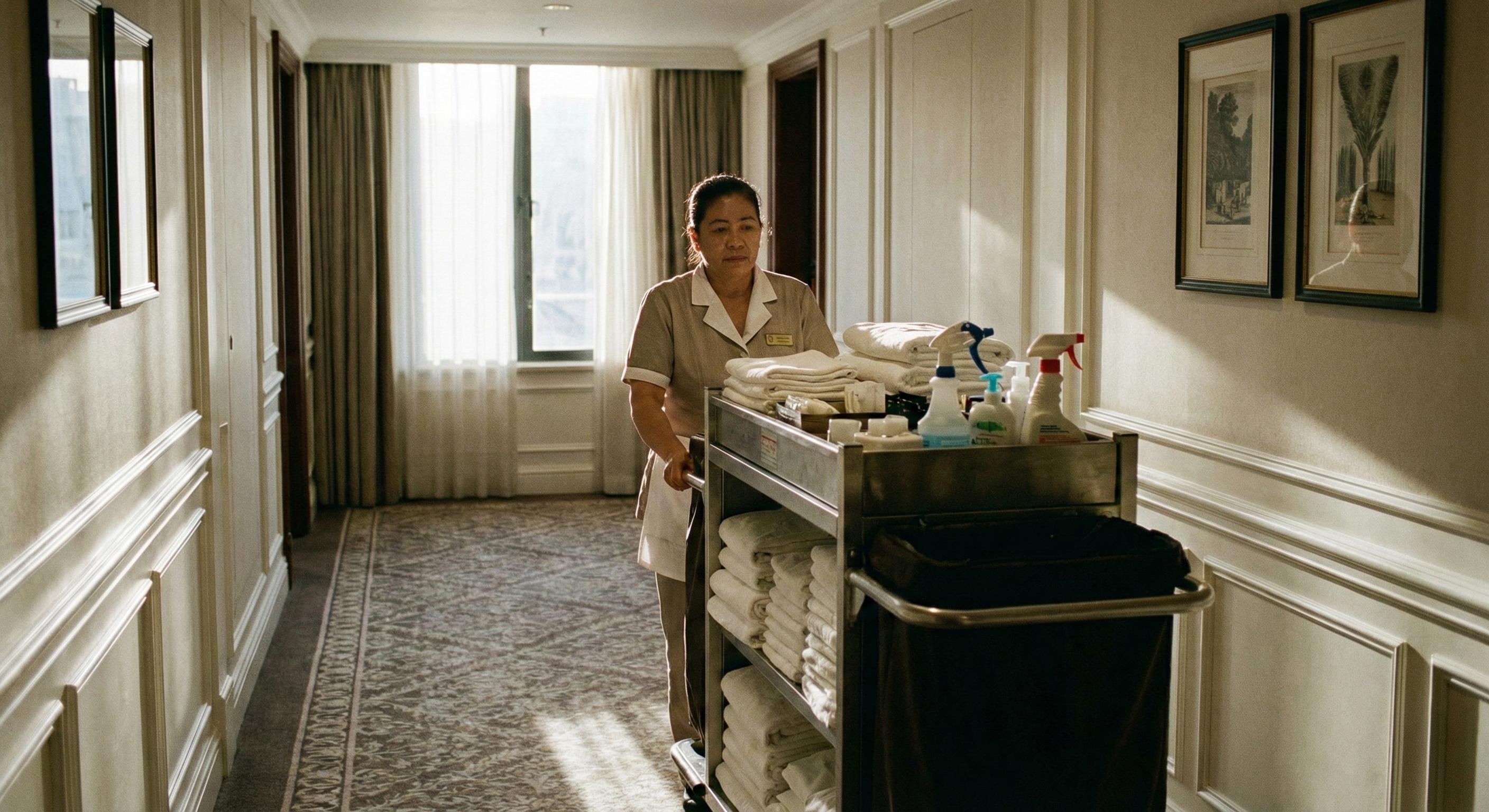
Fari Lens extends the same computer-vision approach to cleanliness checks and brand-standard inspections. In hotel use cases, it can verify whether a room reset meets checklist criteria – pillows arranged correctly, amenities present, no visible debris – and trigger tasks through Fari’s automation layer when something is missing.
In a casino environment, the same pattern applies to:
- Public-area restrooms and corridors. Attendants or supervisors can capture quick zone images. If the model detects litter, spills, or missing supplies, Fari AI can automatically open or escalate a work order. - Gaming-floor zones. Operations teams can document the state of specific banks or pit areas at pre-defined times, building a visual record of cleanliness and layout compliance. - Event spaces before and after shows. Banquet and events teams can capture before-and-after images to confirm that contracted setups and resets have been executed.
Because Fari Lens ties these checks into a single data model with timestamps and locations, leaders gain an objective view of how cleanliness performance varies by time of day, area, or contractor – rather than relying solely on guest comments and ad-hoc inspections.
4. Labour strategy in an always-on operation
Labour is one of the largest cost lines in hospitality and is rising fastest in F&B and service departments. Casinos face additional challenges: 24/7 operations, peak-heavy calendars, and competition for talent in markets where hospitality skills are already scarce.
Fari Lens contributes to a more sustainable labour model in three ways:
- Reducing low-value manual work. Replacing manual counts and paper checklists with quick image captures immediately frees hours on each shift. In hotel benchmarks, automation of minibar and beverage audits has reduced administrative and stocktaking hours by 20–40 percent, contributing to 3–5× ROI in year one when combined with other back-of-house automations.
- Shifting staff into higher-impact roles. When F&B and housekeeping staff spend less time counting and more time serving guests or managing exceptions, both guest experience and revenue potential improve.
- Supporting flexible staffing models. Because a Fari Lens workflow behaves consistently regardless of who holds the device, operators can cross-train staff and smooth over schedule gaps without sacrificing process quality.
Fari’s design philosophy is not to replace people but to remove the drudgery from their jobs, with audit trails and role-based permissions that align with emerging AI governance expectations. In casinos, where union relationships, labour law, and guest expectations are all sensitive, that distinction matters.
5. Building a visual data layer that feeds the whole casino stack
For all the focus on AI models, the most strategic contribution of Fari Lens is the data it generates. Every minibar scan, bar stocktake, and cleanliness check becomes structured, time-stamped information that can be joined with:
- PMS data (occupied rooms, rate codes, segments) - POS data (checks, promotions, server IDs) - Finance and ERP data (COGS, GL codes) - Operational automations (tasks, approvals, exceptions)
With Fari Analytics consolidating this multi-property data into dashboards, casino executives can start asking more interesting questions:
- How does minibar capture rate differ between VIP suites and standard rooms, by host, by tower, or by marketing programme? - Which bars show the highest variance between theoretical and actual pour volume, and how does that correlate with shift patterns or event calendars? - Are cleanliness-related complaints concentrated in specific zones or time windows where staffing is thin? - Does tightening F&B control in one part of the resort correlate with higher overall non-gaming profitability, or does it unintentionally dampen guest spend?
Because Fari acts as an intelligent layer above existing PMS, POS, and ERP systems rather than a replacement, casinos do not have to rip out their gaming or hotel tech to benefit. Fari Lens simply extends that operating system into the visual domain.
Implementation playbook for casino operators
Rolling out Fari Lens in a casino follows many of the same patterns as in large hotels, but with a few casino-specific nuances. The most successful programmes tend to move through four phases.
- Pick high-leverage, low-friction starting points
Rather than beginning on the busiest bar or the most politically complex part of the operation, casinos often start where the economics are clear and the stakeholder map is simple. Typical first use cases include:
- Hotel minibars, especially in high-value rooms and suites - Back-of-house beverage storage for one or two major bars - Banquet storage and returns for convention and event spaces
These areas combine material revenue impact, relatively contained teams, and existing pain around counts and disputes.
- Integrate with the hotel and F&B stack first
Fari’s standard connectors cover Opera / Opera Cloud PMS, Micros and Infrasys POS, ERP and finance tools, and payment gateways. For most casinos, it makes sense to:
- Connect Fari to the hotel PMS and main F&B POS - Map how minibar and bar inventory should post into the GL - Configure role-based access so that surveillance, finance, and operations can see what they need – and only that
Only after those foundations are in place does it become useful to consider deeper integration with specialised gaming systems.
- Pair vision with automations and human-in-the-loop controls
Because Fari Lens sits alongside Fari AI, casinos do not have to stop at “better counts”. They can use computer-vision events as triggers for automations:
- Successful minibar scans generate draft charges that a supervisor can approve in bulk - Inventory variances above a threshold open incidents that managers review with full context - Cleanliness failures create tasks in housekeeping or facilities, with SLA timers and escalation paths
Crucially, these automations are configured in a no-code builder, so operations leaders – not just IT – own the logic and guardrails.
- Instrument, measure, and expand
Before the pilot, teams baseline key metrics: shrinkage percentage per bar, minibar capture rate, time spent on counts, dispute volumes, and cleanliness complaints. During and after rollout, they track deltas automatically through Fari Analytics.
Hotel benchmarks suggest that when multiple workflows – payments, parity checks, inventory, night audit – are automated together, operators can realistically achieve 3–5× ROI in year one and 8–12× in year two. In a casino, where non-gaming volumes are higher and labour is more expensive, the upside can be even more pronounced.
Once a pattern is proven in one tower or set of bars, it can be templated and rolled out property-wide or portfolio-wide, with each casino adapting thresholds and workflows to its own risk appetite and brand positioning.
Risks, governance, and guest trust
Casinos are already some of the most surveilled environments in the world. Adding more cameras and AI can raise understandable questions from guests, staff, and regulators alike. Fari’s architecture is designed to address many of those concerns:
- Security by default. Data is encrypted in transit and at rest, with granular, role-based access controls and audit logs. - Operational transparency. Every automated action – a charge posting, a variance alert, a task creation – is tied back to a visual event and a clear history of who approved what, when. - Regulatory alignment. Fari’s platform is built with modern privacy frameworks in mind, including the DPDP Act in India and the growing body of AI governance guidance in markets such as the EU. While casino regulation has its own specific requirements, the underlying principles – minimisation, accountability, and human oversight – are similar.
For staff, the key is positioning Fari Lens as an assistant rather than a replacement: a tool that removes tedious tasks, reduces blame for manual errors, and provides evidence when something goes wrong. For guests and regulators, the value lies in more accurate billing, cleaner environments, and clearer audit trails.
The bigger picture: a unified operating system for casino hospitality
Seen in isolation, Fari Lens is “just” a computer-vision layer for minibars, cleanliness, and F&B inventory. The real power emerges when it operates as part of a broader, agentic OS for hospitality:
- Fari AI orchestrates cross-system workflows – from prepayments and guarantees to night audit packs and invoice generation – using internal AI agents and a no-code builder. - Fari Lens turns visual processes on the casino and hotel side into structured, trusted data. - Fari Analytics pulls everything into a single, multi-property view of operational and financial performance.
Casino operators already live by dashboards and surveillance feeds. What they have often lacked is a way to connect those screens to day-to-day work – to move from watching to acting. By bringing visual operations into the same fabric as payments, rates, and reporting, Fari Lens helps build exactly that connection.
In a world where non-gaming revenue is a strategic imperative, labour markets are tight, and regulators expect ever-stronger controls, the casinos that win will not be the ones with the flashiest themes alone. They will be the ones where the house truly sees – and where that visibility quietly, reliably translates into better decisions, cleaner operations, and more resilient profit across the entire property.