
AI Room Inspection Software for Casinos: How Fari Lens Cuts Labor Costs and Improves Guest Experience
Casinos operate at the intersection of hospitality and strict audit control. Fari Lens uses computer vision to automate inventory, standardize inspections, and create defensible visual records, reducing shrinkage, accelerating decisions, and protecting guest experience across bars, suites, and public spaces.

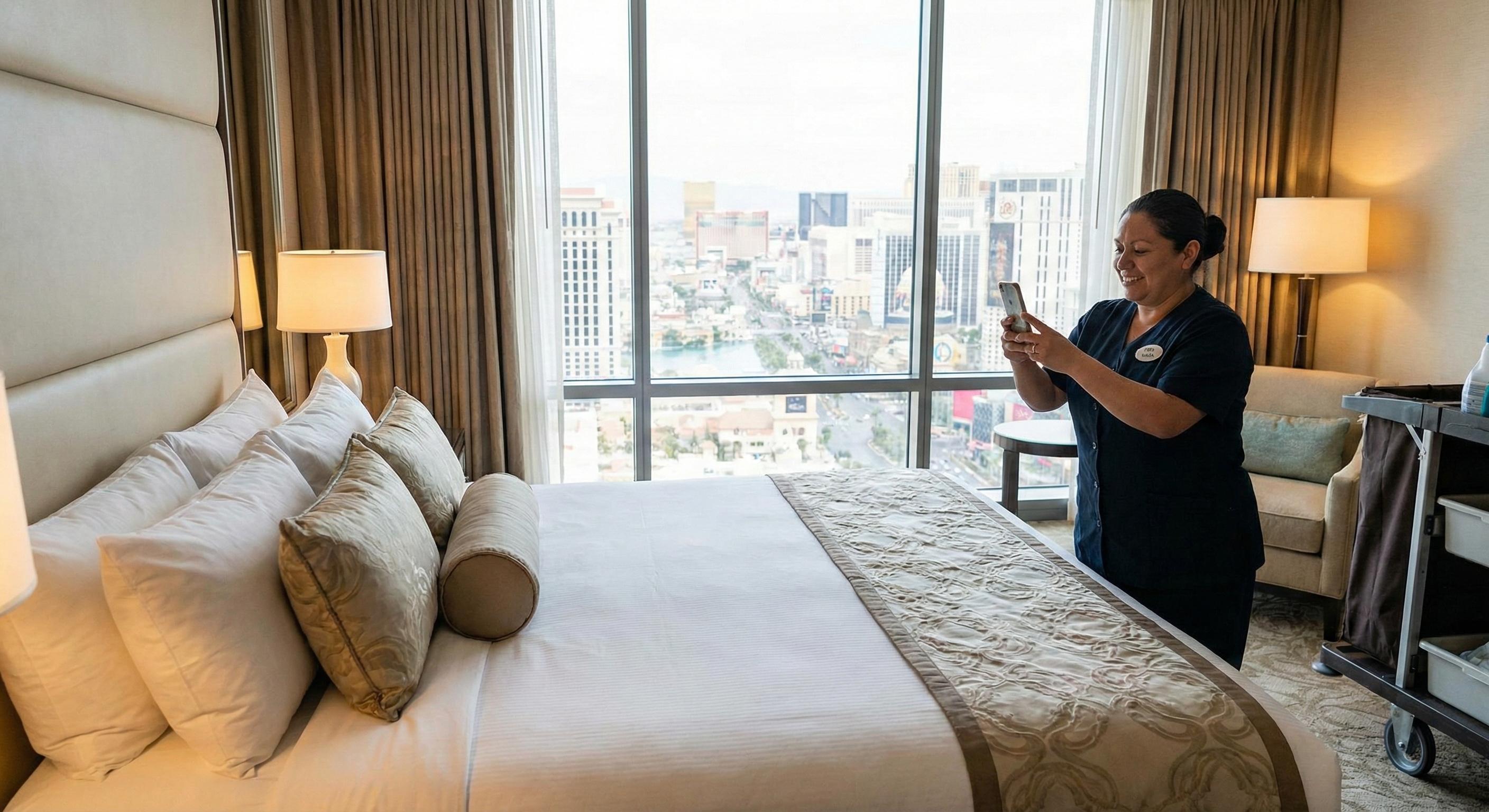
There is a particular kind of motion you only find in casinos: a perpetual circulation of arrivals, departures, and rapid turnovers. A casino resort does not simply host guests; it resets and resells thousands of rooms continuously across towers, suites, and premium floors. Because the property rarely powers down, operational questions arrive at inconvenient hours: Is this room truly inspection ready? Was a detail missed during turnover? Did late night check-ins collide with a housekeeping bottleneck?
In environments like this, the hardest operational problems are often the most routine. Confirming cleanliness. Verifying standards. Ensuring that a room is inspection ready before release. These tasks are not glamorous, but they sit close to revenue. In large casino resorts where thousands of rooms turn daily, even small delays in inspection can cascade into front desk backups, longer guest wait times, and lost opportunity to sell inventory at peak demand.
Fari Lens exists for this exact reality. It is a computer vision platform that converts room inspections into structured operational data. Instead of relying solely on manual checklists and subjective verification, attendants capture images using a mobile device. The system identifies required standards, flags discrepancies, and produces a clean time stamped record. The result is less uncertainty and more confidence in room readiness.
Why casino hotels are uniquely suited to visual inspections
Casinos operate at a different scale than most hotels. Large properties can exceed 1,500 or even 3,000 rooms. They function 24 hours a day, often with compressed turnover windows and high guest expectations.
Room inspections in this context face three core challenges:
- Volume and speed pressure during peak check-in waves.
- Inconsistency across shifts and inspectors.
- Limited documentation when issues are disputed later.
Traditional inspection workflows depend heavily on human memory and manual confirmation. Two inspectors may evaluate the same room differently. A shift change can create gaps in accountability. Visual inspection software introduces consistency by anchoring inspections in captured evidence rather than subjective recall.
Fari Lens strengthens what teams already do visually by making inspections standardized, measurable, and auditable.
Reducing labor friction in high volume operations
Manual inspection processes consume time. Inspectors walk rooms, check details, and manually confirm readiness before release. In a 2,000 room property, small inefficiencies multiply quickly.
AI assisted room inspections compress that workflow. By capturing and analyzing images in real time, the system can:
- Identify missed standards immediately.
- Reduce repeat room checks.
- Accelerate the time between clean and sellable.
- Decrease back and forth communication between housekeeping and the front desk.
When rooms clear faster and with fewer rechecks, labor hours are reclaimed and front desk congestion decreases. The impact compounds at scale.
From subjective checks to defensible documentation
Room readiness disputes are not uncommon. A guest may report a missed cleaning detail. A manager may question whether a room was properly inspected before release. Without documentation, resolution depends on memory and internal notes.
Fari Lens produces time stamped visual records of inspections. That changes the nature of internal accountability and guest resolution. Instead of reconstructing what happened, teams can reference documented evidence. This reduces friction, speeds up resolution, and protects both staff and guest relationships.
In casino environments where expectations are high and VIP accommodations carry reputational weight, defensible documentation becomes especially valuable.
Standardizing cleanliness across shifts and towers
Casinos are sensory environments. Cleanliness and presentation influence perception immediately. Yet maintaining consistent inspection standards across multiple towers, supervisors, and rotating shifts is difficult.
Visual inspection software introduces uniformity by:
- Applying the same inspection criteria every time.
- Creating measurable quality benchmarks.
- Highlighting recurring problem areas.
- Tracking performance trends over time.
This shifts inspections from mood based evaluations to system driven verification. Over time, data replaces anecdote.
Faster room readiness during peak arrivals
Large casino hotels frequently experience compressed turnover windows due to events, conferences, or entertainment schedules. Hundreds of rooms may need to transition from departure to arrival status within tight timeframes.
When inspection workflows are slow or inconsistent, bottlenecks surface at the front desk. Guests wait. Staff scramble. Service perception declines.
AI powered room inspections shorten the gap between clean and ready status. By identifying exceptions instantly and reducing redundant checks, properties can increase the percentage of rooms available at peak arrival times. That directly supports revenue optimization and guest satisfaction.
Integration with existing hotel systems
Casino operators often manage complex technology stacks that include property management systems, housekeeping tools, and reporting platforms.
Fari Lens does not replace those systems. It enhances them by providing verified inspection data that feeds downstream workflows. Instead of manual status updates, inspection confirmation becomes structured input. This reduces administrative friction and strengthens operational visibility.
Measuring ROI in casino room operations
The return on AI room inspection software is grounded in measurable operational levers:
- Labor hours reduced through fewer repeat inspections.
- Faster room release and increased sellable inventory.
- Lower dispute resolution time.
- Improved consistency across inspectors and shifts.
- Stronger accountability through documented evidence.
In large casino resorts, even marginal improvements in inspection efficiency can translate into meaningful financial impact due to scale.
The deeper benefit: operational trust
Casinos operate on precision. Guests expect seamless service. Executives expect accurate reporting. Teams expect clarity.
Manual inspection processes introduce variability. Fatigue, shift pressure, and human inconsistency are unavoidable realities in 24 hour operations.
Fari Lens strengthens operational trust by making room inspections visible, consistent, and documented. It does not replace experienced housekeeping leaders. It supports them with structured evidence and faster workflows.
The result is not spectacle or novelty. It is something more valuable for casino resorts: a calmer housekeeping operation, rooms released with confidence, and a system that produces consistent truth at scale.