The Real Benefits of AI Room Inspections for Las Vegas Casino Hotels
In Las Vegas casino resorts, AI room inspections can tighten quality control, speed turnovers, reduce disputes, and give hotel teams visual evidence at scale.

Las Vegas is a peculiar hotel market because it is not really a hotel market at all. It is a city of integrated resorts: giant, always-on machines that combine gaming, nightlife, conventions, entertainment, retail, pools, celebrity dining, and, underneath all that spectacle, an enormous rooms operation. In April 2026, the Las Vegas Convention and Visitors Authority said the destination had about 150,000 hotel rooms, and its January 2026 year-end release said annual occupancy averaged 80.3% in 2025. That combination of scale and sustained volume is what makes room inspection so consequential here. A missed towel, an unreported stain, a broken lamp, or a minibar discrepancy is not just a housekeeping error. At Las Vegas scale, it becomes a throughput problem, a guest-experience problem, and eventually a margin problem.
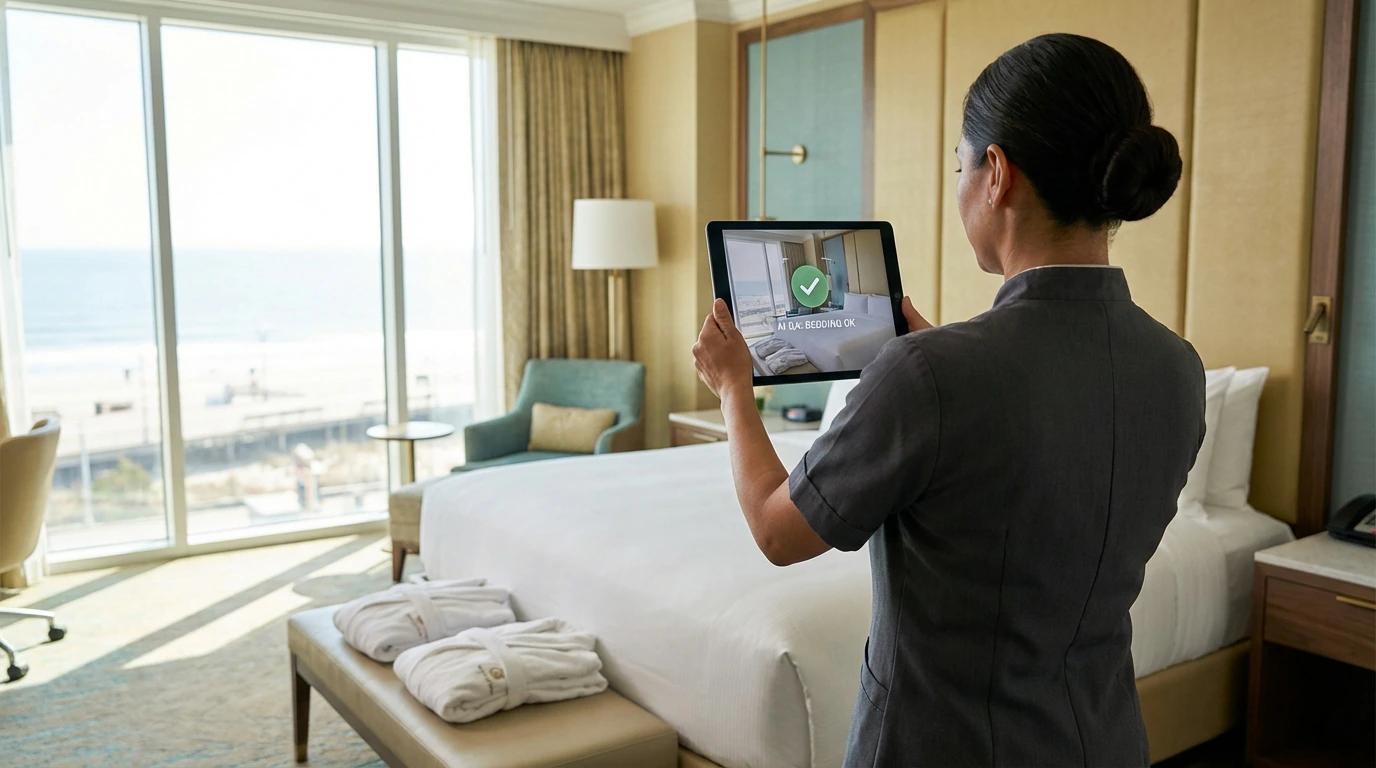
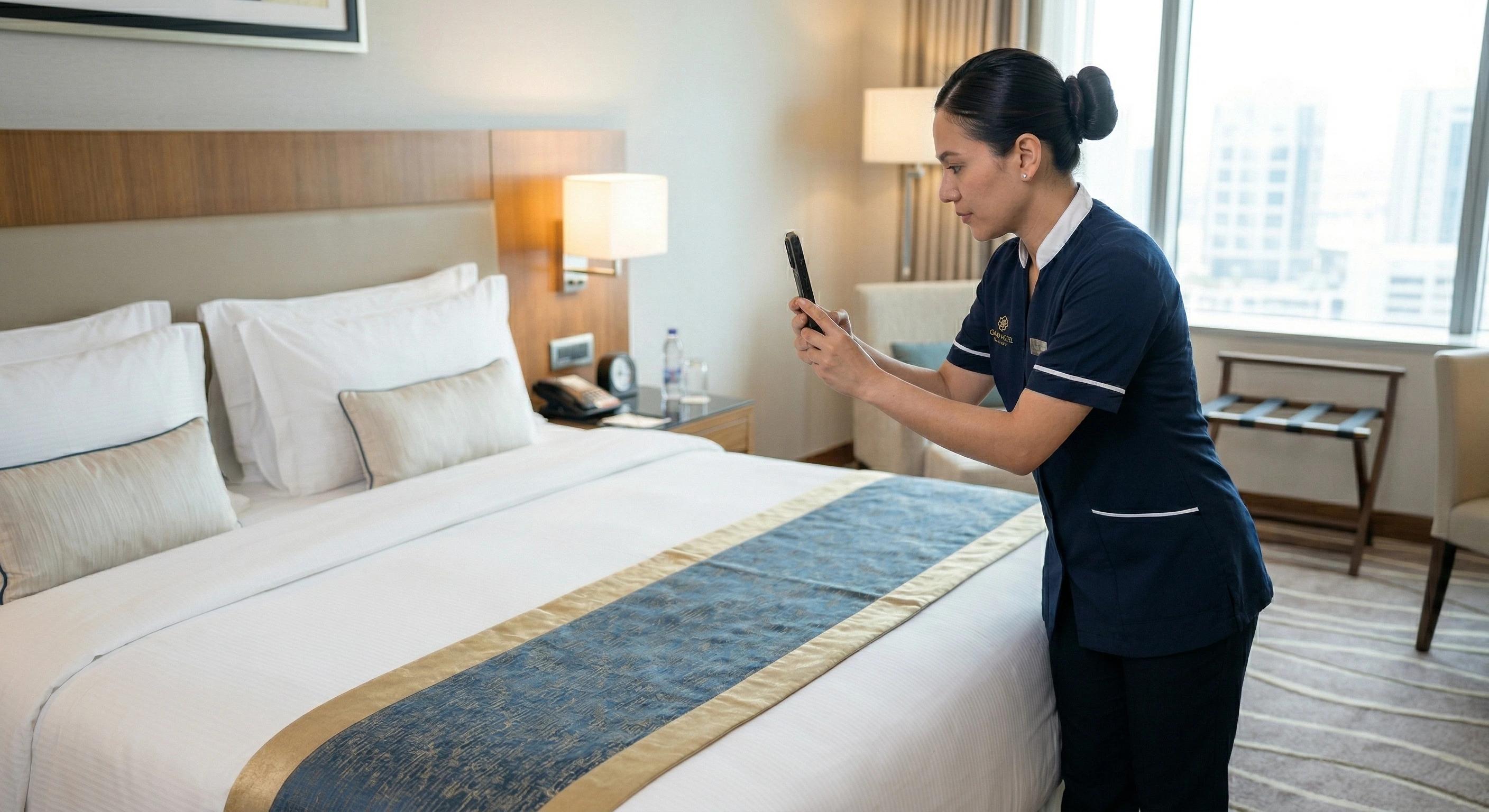
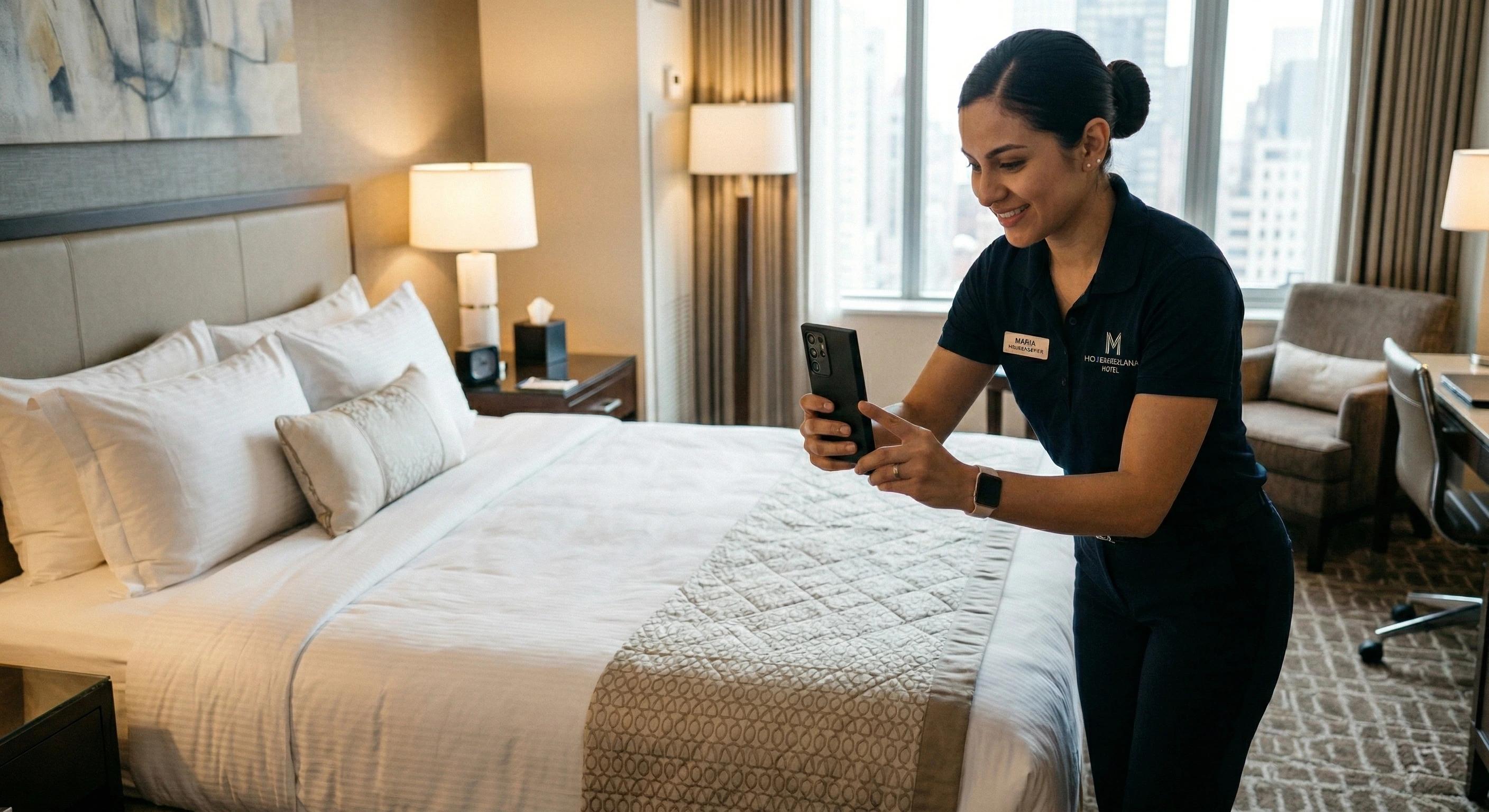
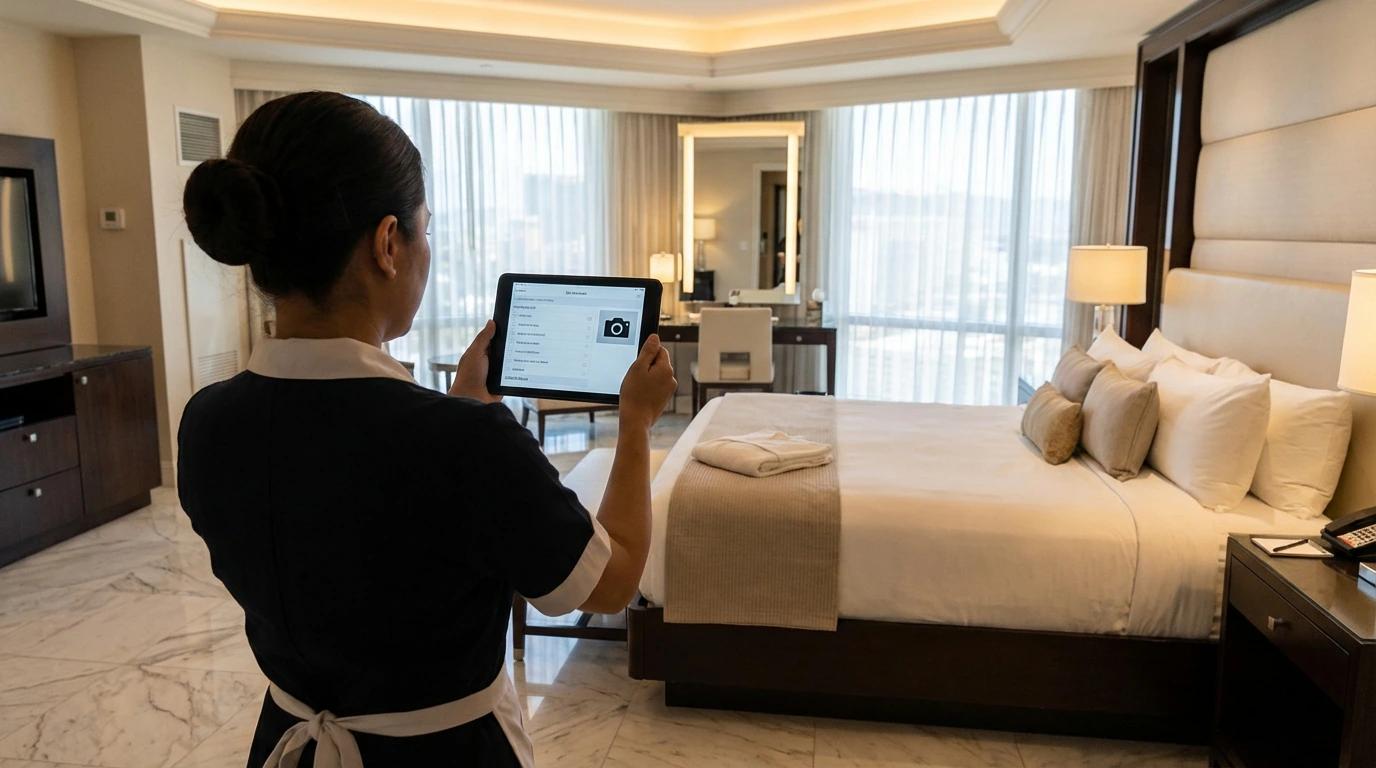
That is the strongest case for AI room inspections in casino resorts: not that they replace housekeeping supervisors, but that they make quality control more consistent in an environment where inconsistency is expensive. The practical promise is simple. Instead of relying on a clipboard, a rushed walkthrough, and the variable eye of whoever happens to be inspecting that floor, computer vision systems can analyze room photos or a short video pass and flag exceptions against a defined standard. Done well, that shifts inspection from a selective spot-checking exercise into a repeatable operating layer.
Why Las Vegas is a particularly strong fit
Almost any hotel can benefit from better inspection discipline, but Las Vegas casinos and integrated resorts have a more punishing operating profile than most properties. Room types vary sharply, from standard kings to oversized suites configured for group stays and entertainment. Arrival curves can spike around weekends, conventions, sporting events, and concert calendars. Many properties are full-service or resort-heavy, which tends to make labor intensity structurally higher than in select-service hotels. Recent U.S. hotel labor reporting has pointed to continuing productivity pressure, while AHLA survey data has shown that staffing shortages remain common and housekeeping remains one of the most critical hiring needs.
This matters because room inspection is usually treated as a downstream control when it is really an upstream operational lever. If inspection is slow, subjective, or incomplete, room readiness data becomes noisy. Supervisors spend time rechecking instead of managing exceptions. Maintenance issues surface after check-in instead of before it. Housekeepers get uneven feedback. Front desk and guest services inherit avoidable friction. In a casino resort, where one room problem can sit inside a much larger stay involving VIP hosts, dining reservations, gaming activity, and premium expectations, the cost of a preventable defect often travels well beyond housekeeping.
First, a reality check on minibars
Your instinct was directionally understandable: some hotel markets have deemphasized the minibar, and Las Vegas has certainly leaned hard into in-room dining, grab-and-go retail, and amenity-rich public spaces. But public room and amenity pages show that minibars are still very much present across a meaningful slice of the Las Vegas resort landscape, especially in upscale and luxury inventory. MGM advertises minibars in several room categories, including a built-in recessed minibar at MGM Grand and a fully stocked intelligent minibar at ARIA. Caesars Palace room descriptions mention minibars. Wynn room materials reference minibars and even publish separate minibar menus. The Venetian says its suites include a minibar and refreshment-center setup. Fontainebleau says rooms include a minibar and has published a minibar menu and guest materials describing each room as fully stocked.
So the right conclusion is not that minibar inspection is irrelevant in Las Vegas. It is that minibar operations are unevenly distributed. Some properties and room categories still rely on them heavily. Some have intelligent or automated charging mechanisms. Others may emphasize mini-fridges, personal refrigerators, or a narrower refreshment-center model. For an operator, that means AI inspection should be framed broadly: minibar is one inspection surface, not the whole story. The deeper opportunity is visual verification of room readiness across the room itself, with minibar as an optional but still commercially important module wherever it exists.
The core benefit: moving from subjective checks to visual evidence
Traditional room inspection has an old problem: it depends too heavily on memory and attention. Even well-run housekeeping departments tend to live with a gap between the brand standard on paper and the standard actually observed in a fast-moving shift. Oracle’s housekeeping documentation reflects the operational importance of room-status accuracy and inspection states within PMS workflows, but the system logic does not solve the visual verification problem on its own. A room can be marked inspected; that does not mean the inspection was equally thorough on every floor, by every supervisor, on every turn.
AI room inspection changes that by making the inspection itself machine-readable. The room is photographed or captured in a short guided pass. The system evaluates cleanliness conditions, missing amenities, setup compliance, visible damage, and maintenance needs. Crucially, it also creates a timestamped visual record. That is not a cosmetic feature. It is what turns housekeeping quality from an opinion into evidence. Fari Lens is designed around exactly this idea: a standalone computer-vision workflow for hotel visual checks, including room cleanliness and maintenance verification, timestamped photo records, and optional integration to hotel operations systems when an operator wants exceptions to route into a larger workflow.
What this changes operationally on the hotel side
1. More rooms can be checked without adding more supervisors
The obvious gain is inspection coverage. In many hotels, supervisors simply do not have the time to inspect every room with the same depth, especially during heavy turnover windows. Industry vendors pitching AI-assisted inspections often describe a world in which only a fraction of rooms receive full human walkthroughs, while photo-based systems analyze every submitted room image for standards compliance. Even allowing for marketing inflation, the underlying point is credible: when the act of inspection becomes image capture plus automated exception review, managers can spend more time on the rooms that actually need intervention.
2. Quality becomes more consistent across shifts, towers, and room types
A Las Vegas integrated resort does not operate one hotel product. It operates a stack of them: standard rooms, premium rooms, suites, high-roller accommodations, accessible inventory, adjoining rooms, and event-driven blocks. AI inspection systems are useful precisely because they can be trained against property-specific standards instead of generic checklists. Fari’s own deployment materials stress that its models are fine-tuned to a hotel’s actual room layouts, inventory mix, and operating standards rather than using a one-size-fits-all template. That matters in Vegas, where room variance is high and where the standard for a convention block room is not necessarily the standard for a premium suite arrival.
3. Defects are caught before check-in, not after complaint
The real financial value of inspection is not proving a room was clean. It is intercepting the visible failure before the guest sees it. Stains, missing bath amenities, damaged fixtures, an incompletely reset room, or a minibar discrepancy all become more expensive once the guest is in the room. Some newer hotel quality-control platforms report that AI-assisted self-inspection improves manager productivity and speeds training, while digital inspection case studies outside Vegas show that photo documentation and automated escalation can sharply reduce maintenance-related complaints by catching problems pre-arrival. Those examples are not Las Vegas-specific, but they reinforce the same operational logic: earlier detection is the real prize.
4. Housekeeping feedback becomes a coaching system, not just an audit
One of the quieter benefits of AI inspection is training consistency. In a manual system, feedback is often episodic and interpersonal: one supervisor is strict, another lenient, and the room attendant receives mixed signals about what good actually looks like. A visual model creates a more stable reference point. The same towel-placement miss, amenity omission, or visible stain is flagged the same way every time. Fari’s rollout materials explicitly position timestamped image review and compact staff training as part of the deployment process, which is a good indicator of where these tools tend to create value in practice: onboarding, reinforcement, and accountability.
5. Maintenance stops hiding inside housekeeping
In large resorts, housekeeping and engineering are often linked by friction: room attendants or inspectors notice a defect, but the reporting path is delayed, incomplete, or informal. Computer vision can make maintenance issues legible at the moment of inspection. Fari Lens materials describe visible maintenance detection as part of room verification and note that, when integrated, issues can route directly into work order systems. The benefit is not just faster repair. It is cleaner separation of labor. Housekeeping should not be spending time repeatedly rediscovering the same broken item across successive turns.
6. When minibar exists, disputes and leakage become easier to control
Minibar is not the reason to adopt AI room inspections in Las Vegas, but where minibar remains active it is still one of the cleanest use cases. Manual minibar checks are slow, error-prone, and vulnerable to guest disputes. Fari Lens positions minibar inspection as a photo-based process that identifies missing or moved items, logs photo evidence, and can optionally post to the folio through integrations. Its own materials claim typical outcomes such as a 70% reduction in time spent on minibar checks and a 15% to 30% increase in captured minibar revenue by catching previously missed consumption. Even if an operator discounts those numbers until proven on property, the direction of value is easy to understand: faster checks, better evidence, and fewer ambiguous charges.
Why this matters more in casino resorts than in ordinary hotels
A standalone hotel can sometimes absorb inconsistency through managerial attention. A major casino resort usually cannot. The rooms division is interdependent with premium player programs, group arrivals, events, transportation timing, and front-desk queue management. A room that is technically cleaned but not truly guest-ready can ripple outward into compensation decisions, delayed check-ins, housekeeping rework, engineering dispatches, and brand damage that far exceeds the cost of the missed item itself. That is why AI room inspection should be understood as infrastructure for reliability. In an integrated resort, reliability is often more valuable than a dramatic one-time labor cut because reliability protects the rest of the revenue ecosystem.
The best argument for AI room inspection is not that it makes housekeeping more futuristic. It is that it makes room readiness more believable.
What operators should be careful about
- Do not frame the system as surveillance of housekeepers. The more durable framing is standards consistency, faster exception handling, and fewer guest-visible failures.
- Do not start with every room type and every edge case. In a Las Vegas property, begin with a few room categories and a finite checklist of visible issues: setup, missing amenities, visible damage, obvious cleanliness misses, and minibar where relevant.
- Do not assume PMS status equals quality truth. The point of computer vision is to improve the fidelity of that status, not merely to mirror it.
- Do not overstate minibar if the property has largely phased it out. In some Las Vegas towers it will still matter; in others, the business case will lean much more heavily on cleanliness verification, damage detection, and room-readiness accuracy.
The likely near-term future
The near-term evolution is not mysterious. Las Vegas resorts will keep layering more intelligence into the room-readiness chain: mobile housekeeping workflows, more granular room-status logic, photo-based inspection, automated escalation into maintenance, and selective use of folio-connected minibar verification. The most effective platforms will not be the ones that promise a fully autonomous hotel. They will be the ones that reduce ambiguity in the last mile between housekeeping completion and guest arrival.
That is also why tools like Fari Lens fit naturally into this conversation when discussed carefully. Not because they should be bolted onto a marketing narrative, but because the hotel-side problem in Las Vegas is intensely visual and operational. A room is either properly set, clean, stocked, and defect-free, or it is not. A system that can turn that visual reality into structured, timestamped operational data is not a gimmick. In a resort environment defined by scale, it is a way of making standards executable.
The bottom line
For Las Vegas casinos and integrated resorts, the benefit of AI room inspections is not simply labor savings, though there can be some. It is operational trust. It is faster and more scalable quality control. It is fewer defects reaching the guest. It is cleaner coordination between housekeeping and engineering. It is documented evidence when minibar or room-condition disputes arise. And it is a more realistic way to manage standards across an inventory base that can be immense, heterogeneous, and unforgiving. The casinos may generate the mythology of Las Vegas. But the rooms operation, inspected well or badly, still determines how much of that mythology survives first contact with the guest.