The Benefits of Fari Lens and AI Room Inspections for Cleanliness Assessment
How AI room inspections improve cleanliness consistency, reduce guest complaints, speed room turns, and give hotel teams better operational visibility.

Cleanliness is one of the strangest disciplines in hotel operations. It is everywhere in the guest experience and yet, operationally, it is often managed through fragments: a checklist on paper, a hurried supervisory walk-through, a radio call about a missed amenity, a complaint at the front desk after check-in. Hotels invest enormous effort in housekeeping, but the verification layer, the part that determines whether a room is truly ready, frequently depends on manual inspection under time pressure. That is where inconsistency enters.
The problem is not that supervisors do not care. It is that visual quality control is difficult to perform at scale. A room can appear acceptable at first glance while still containing the things that create disproportionate guest frustration: a hair in the bathroom, a stained linen edge, missing amenities, a tissue box left half empty, a towel arrangement that falls short of brand standard, a scuff that signals deferred maintenance. In a busy operation, especially around peak checkout and check-in windows, even strong teams miss things.** AI room inspections change that dynamic by turning room-readiness assessment into a faster, more consistent, and more documentable process.**
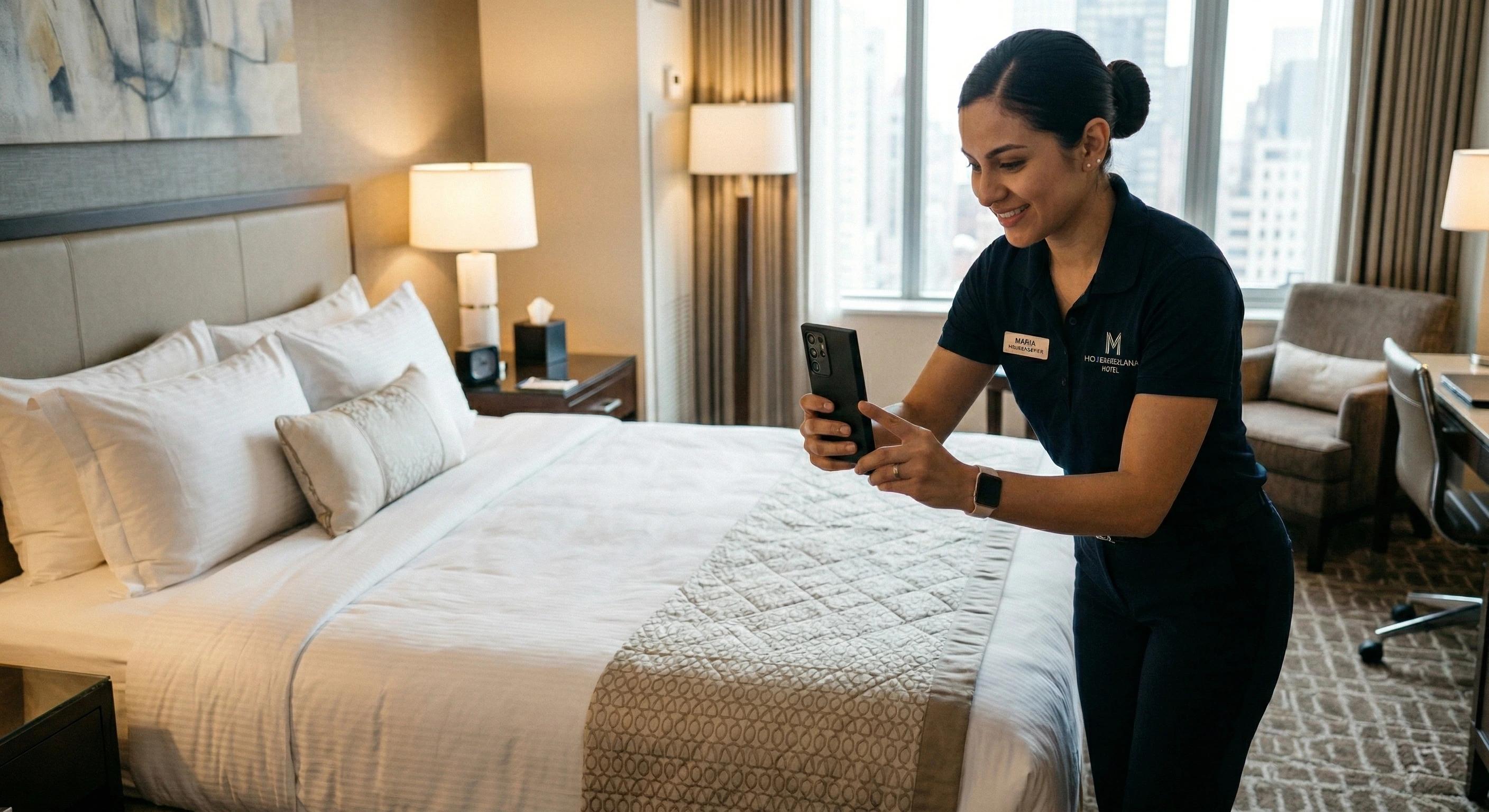
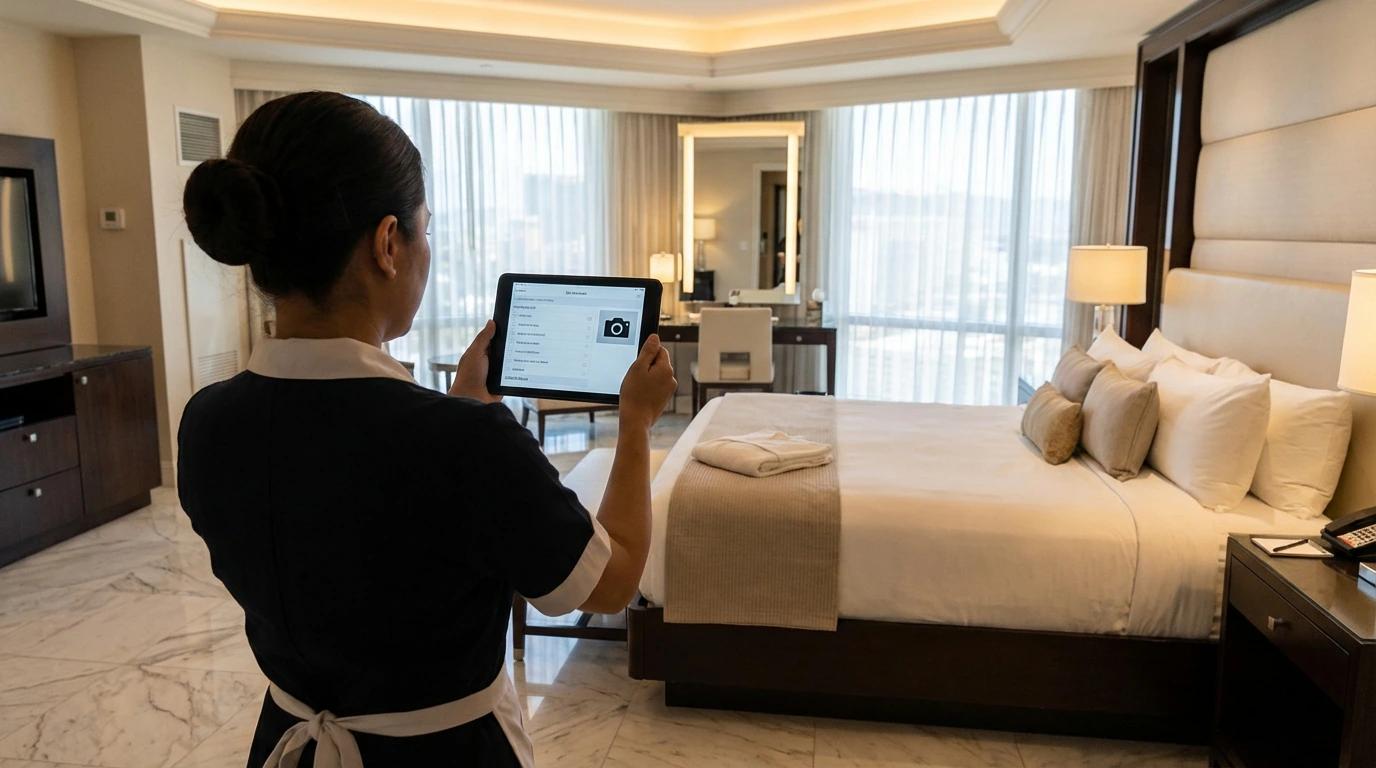
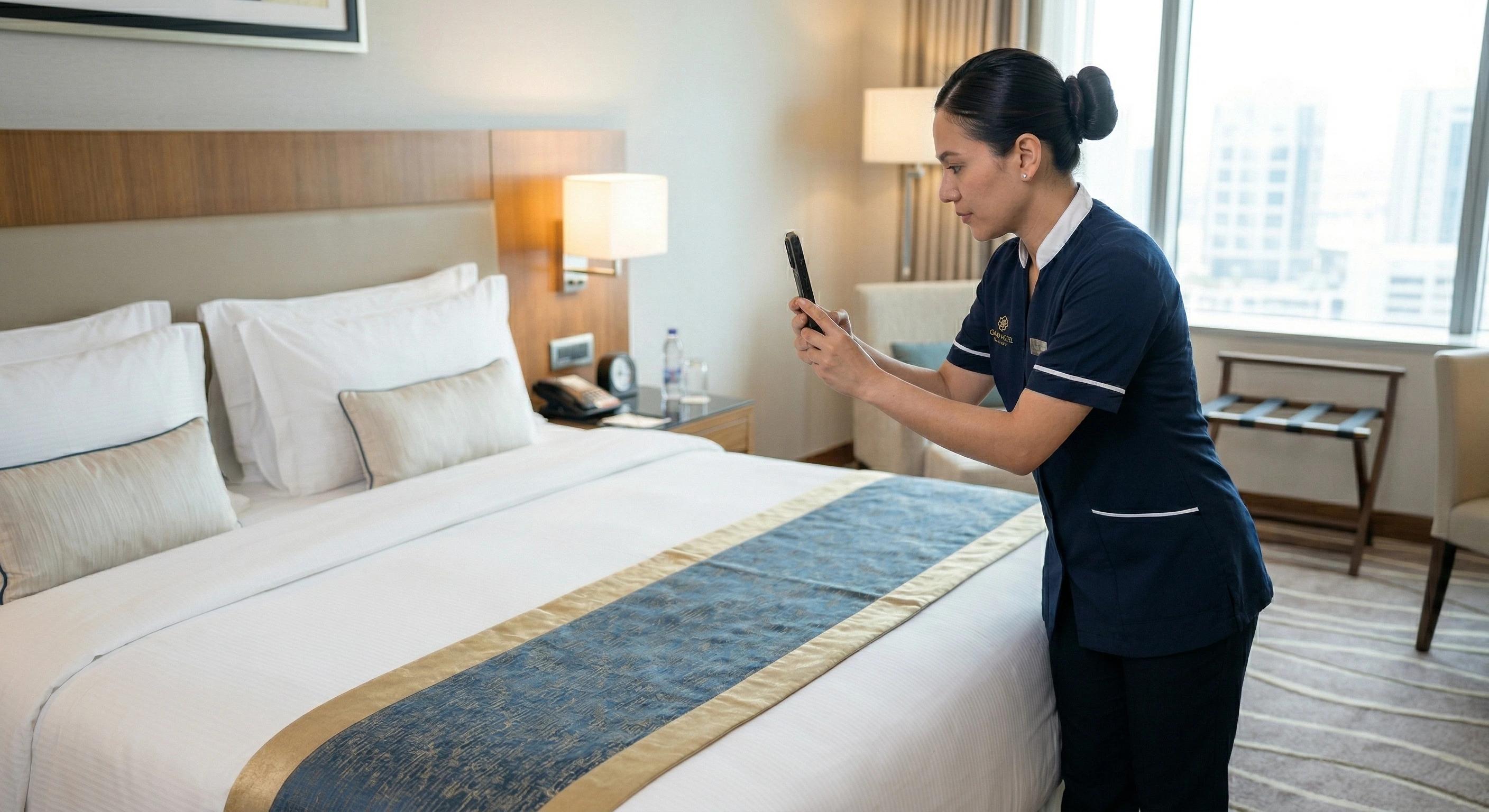
Fari Lens sits in this operational gap. Using mobile phone cameras and hotel-specific computer vision models, it allows staff to photograph rooms in the app and automatically analyze cleanliness conditions, missing amenities, maintenance needs, stains, and damage. Just as important, it creates timestamped photo records that can verify whether standard operating procedures were followed, from towel placement to amenity setup. The value is not merely that the system sees more. It is that it helps hotels turn visual inspection from an informal judgment into a repeatable operational signal.
Why room cleanliness assessment is harder than it looks
Housekeeping quality is usually discussed as a labor question: how quickly can a room be cleaned, how many rooms can an attendant turn, how many supervisors are needed on a shift. But cleanliness assessment is really an information problem. A hotel is trying to answer several questions at once: Is the room clean enough for check-in? Are all required amenities present? Has housekeeping followed brand or property SOPs? Is there an underlying maintenance issue that should be addressed before the room is sold? And can any of this be proven later if a dispute emerges?
Traditional inspection methods answer those questions unevenly. Some rooms receive a thorough review. Others get a brief doorway scan because arrival pressure is high. One supervisor may notice a misaligned setup detail that another would ignore. The result is variation, and variation is expensive. It leads to rework, delays in releasing rooms, inconsistency in brand execution, and, in the worst cases, guest complaints that damage both loyalty and labor morale.
What hotels need is not simply faster inspection. They need reliable inspection—a process that makes quality standards visible, measurable, and easier to uphold even when the operation is under strain.
The first benefit: consistency at the moment it matters most
The most immediate advantage of AI room inspections is consistency. Human supervisors bring experience and judgment, but they also bring fatigue, time constraints, and natural variation. A vision-based system applies the same inspection logic every time an image is captured. That does not replace human oversight; it makes human oversight less dependent on memory and less vulnerable to rush.
For room cleanliness assessment, this matters because guests do not experience averages. They experience the single room they walk into. A property may be performing well overall and still disappoint a guest if one bathroom corner was missed or one coffee setup was incomplete. Fari Lens helps narrow that gap by checking the details that tend to slip between cleaning completion and room release.
Over time, consistency has a compounding effect. Teams begin to understand exactly what the property considers acceptable, because the inspection process itself becomes more explicit. Standards stop living only in training manuals or supervisors’ habits and start appearing in the daily workflow. That shift is subtle, but operationally it is powerful.
The second benefit: faster room turns without weaker quality control
Hotels are often forced into a false choice between speed and quality. During heavy turnover periods, the pressure to release rooms can make thorough manual inspection feel like a luxury. Yet skipping robust checks only defers the cost. The room may reach the guest sooner, but if something was missed, the hotel pays later through complaint handling, service recovery, or an urgent housekeeping revisit.
AI room inspections break that tradeoff by compressing the verification step. A housekeeping team member can photograph the room in the app and receive an immediate assessment of cleanliness conditions and setup issues. Instead of waiting for a supervisor to physically visit every room or relying on partial sampling, the hotel gets quicker quality verification embedded into the turnover process itself.
That speed matters beyond housekeeping. Faster verification supports front office teams managing early arrivals, helps operations leaders prioritize exceptions instead of reviewing every room equally, and reduces the friction between departments that occurs when room status is uncertain. In practical terms, a hotel becomes better able to say not just that a room is cleaned, but that it is truly inspection-ready.
The third benefit: fewer guest complaints and more credible service recovery
A cleanliness complaint is rarely just about the object or defect itself. It is about trust. The guest sees a room that was supposed to be ready and concludes, sometimes instantly, that the property’s promises are less reliable than advertised. That perception can color the entire stay.
This is why early detection matters so much. If stains, damage, missing amenities, or setup errors are identified before the guest enters, the hotel preserves more than time; it preserves confidence. Fari Lens is especially useful here because it does not frame cleanliness as a binary pass-fail event. It helps surface the small conditions that often become large emotional signals once a guest notices them.
And when something does go wrong, timestamped photo records create a stronger basis for response. Documentation improves accountability internally, but it also improves the quality of service recovery. Teams can review what the room looked like, when it was checked, and whether a condition emerged before or after release. In hospitality, evidence does not eliminate problems, but it often makes problem-solving calmer, faster, and fairer.
The fourth benefit: better housekeeping training and clearer accountability
One of the most underrated uses of AI inspections is as a training tool. Housekeeping leaders know that standards are hard to teach in the abstract. It is one thing to tell a new team member what a fully prepared room should look like; it is another to show repeatable examples, highlight deviations, and create feedback loops rooted in actual rooms rather than generic instructions.
Because Fari Lens records photographic evidence tied to specific inspections, supervisors can use those records to coach more precisely. They can point to recurring issues, distinguish between cleaning problems and maintenance problems, and identify where SOP adherence is strong or uneven. The conversation becomes less personal and more operational. Instead of vague feedback such as “pay more attention to detail,” teams can address a specific pattern like incomplete bathroom resets or inconsistent amenity placement.
That clarity also strengthens accountability. In many hotel operations, tension arises when one department believes another failed, but there is little shared evidence. Timestamped inspection records reduce ambiguity. They do not exist to police teams so much as to create a common operational memory. In a labor-intensive environment with shift changes, outsourcing arrangements, and fluctuating occupancy, that kind of memory is valuable.
The fifth benefit: earlier maintenance detection
Cleanliness and maintenance are often treated as separate workstreams, but guests rarely separate them. A cracked tile, damaged wall edge, malfunctioning fixture, or visibly worn soft furnishing affects the perception of cleanliness even if the room has been perfectly cleaned. For that reason, the best room inspection processes are not just about dust and amenities; they are about condition.
Fari Lens can flag maintenance needs and visible damage during the same capture flow used for cleanliness verification. This is operationally important because it shifts issue detection earlier in the lifecycle. Instead of discovering a problem after a guest reports it, the property has a chance to intervene during turnover or before the next arrival. Small defects that might otherwise persist across multiple stays become easier to surface and route.
In practice, this supports a more unified back-of-house operation. Housekeeping is not left to silently work around a condition that engineering has not seen, and engineering receives better context for prioritization. AI does not remove the need for cross-department coordination, but it gives that coordination better starting information.
The sixth benefit: stronger operational visibility for managers
Many hotel leaders discover cleanliness issues only through lagging indicators: complaint logs, review mentions, supervisor anecdotes, or post-shift summaries. By then, the signal is already delayed. AI room inspections create a more immediate operational picture. Managers can see which rooms have been checked, which ones have open issues, where repeated exceptions are occurring, and how consistently standards are being executed across teams or room types.
That visibility helps leaders move from reactive management to exception-based management. Instead of spending time asking whether rooms were inspected, they can focus on where problems cluster and what kind of intervention is needed. Is one floor producing more maintenance flags? Are certain room categories consistently slower to clear? Are missing amenities concentrated on high-turnover shifts? Once the inspection layer becomes digital, these questions become easier to answer.
This is also where Fari AI can become complementary. When visual inspection produces structured signals about room condition, those signals can feed broader automation and workflow decisions, from prioritizing follow-up tasks to informing operations teams where bottlenecks are forming. The value of visual AI grows when it becomes part of an operational system rather than an isolated check.
The seventh benefit: a cleaner audit trail in a business built on physical service
Hotels are physical businesses, but their evidence trails are often surprisingly thin. A room is marked clean. A supervisor initials a list. A shift ends. If a dispute, complaint, or internal review emerges later, the property may have little more than recollection and status codes. That is inadequate for modern operations, especially as owners and operators ask for better documentation around standards, accountability, and process discipline.
Timestamped photo records solve part of that problem. They create a factual record of what was inspected and when. In cleanliness assessment, that matters not just for dispute handling but for managerial learning. Auditability allows a hotel to compare intended process against actual practice. Were inspections happening where they were supposed to? Were issues corrected before release? Which standards are frequently missed despite training? Documentation turns cleanliness from an invisible labor outcome into something an operation can study.
Why this matters especially for labor-constrained hotels
The case for AI room inspections becomes stronger when staffing is tight, turnover is high, or properties are managing mixed room inventories with demanding brand standards. In those environments, quality control often becomes harder precisely when it becomes more important. Supervisors are stretched. Newer staff need guidance. Inspection coverage can become uneven. The operation responds by asking people to move faster, but speed without support rarely produces better consistency.
Fari Lens is valuable because it does not require hotels to redesign the entire tech stack before seeing operational benefit. As a standalone computer vision application, it can work without existing system integration, while optional APIs can support deeper automation later. That makes it suitable for properties that want a practical entry point into AI-driven room quality control rather than a long transformation project before any results appear.
What the broader payoff looks like
The benefits of AI room inspections are often described in pieces: reduced guest complaints, faster room turnovers, better documentation, earlier maintenance detection. All of that is true. But the deeper payoff is operational confidence. A hotel becomes more certain that the room being released reflects the standard it intends to deliver. That confidence has downstream effects on front office efficiency, housekeeping morale, brand consistency, and guest trust.
In hospitality, excellence is usually discussed as culture, training, and service instinct. Those things matter immensely. But cleanliness assessment shows the limits of relying on human effort alone. When standards are visual, repetitive, and time-sensitive, AI can be useful not because it replaces judgment, but because it supports judgment with evidence, speed, and consistency. That is the promise of Fari Lens in room inspections: not a futuristic gimmick, but a more dependable way to confirm that what should be ready for the guest actually is.
The real value of AI room inspections is not that they make housekeeping less human. It is that they make quality control less fragile.
For hotels trying to protect both operational efficiency and guest confidence, that is a meaningful shift.