Seeing the Whole Property: How Fari Lens Turns Housekeeping into Visual Analytics
A grounded look at how Fari Lens uses computer vision in housekeeping and inspections to provide visual analytics, early maintenance signals, and a clearer view of hotel operations in real time, without promising impossible automation.

Walk any property with a general manager and a pattern emerges. There is the official picture of the hotel, the PMS, the housekeeping board, the maintenance backlog, and there is the real picture: the scuffed skirting in 1704, the minibar that was not quite checked on 12F, the shower mixer in 805 that engineering has coaxed along one more week.
Most systems only capture what someone types. Fari Lens starts from a different premise: that the most complete description of a hotel already exists in the images staff collect every day. By applying computer vision to those images, it turns housekeeping and inspection workflows into a stream of structured observations that can be analysed, trended, and used to catch small problems before they become expensive ones.
This piece is about what that looks like in practice and just as importantly, what it does not do. No magic integrations that fix every system. No promise that computers will “understand” a hotel the way a seasoned executive housekeeper does. Instead, a clear account of how Fari Lens works today, where it is useful, and the limits that matter.
What computer vision actually does here
At the core of Fari Lens is a simple loop:
- Staff capture images as part of normal work, a housekeeper finishing a departure clean, a supervisor doing a random check, a minibar attendant doing rounds, an F&B team member auditing a storeroom.
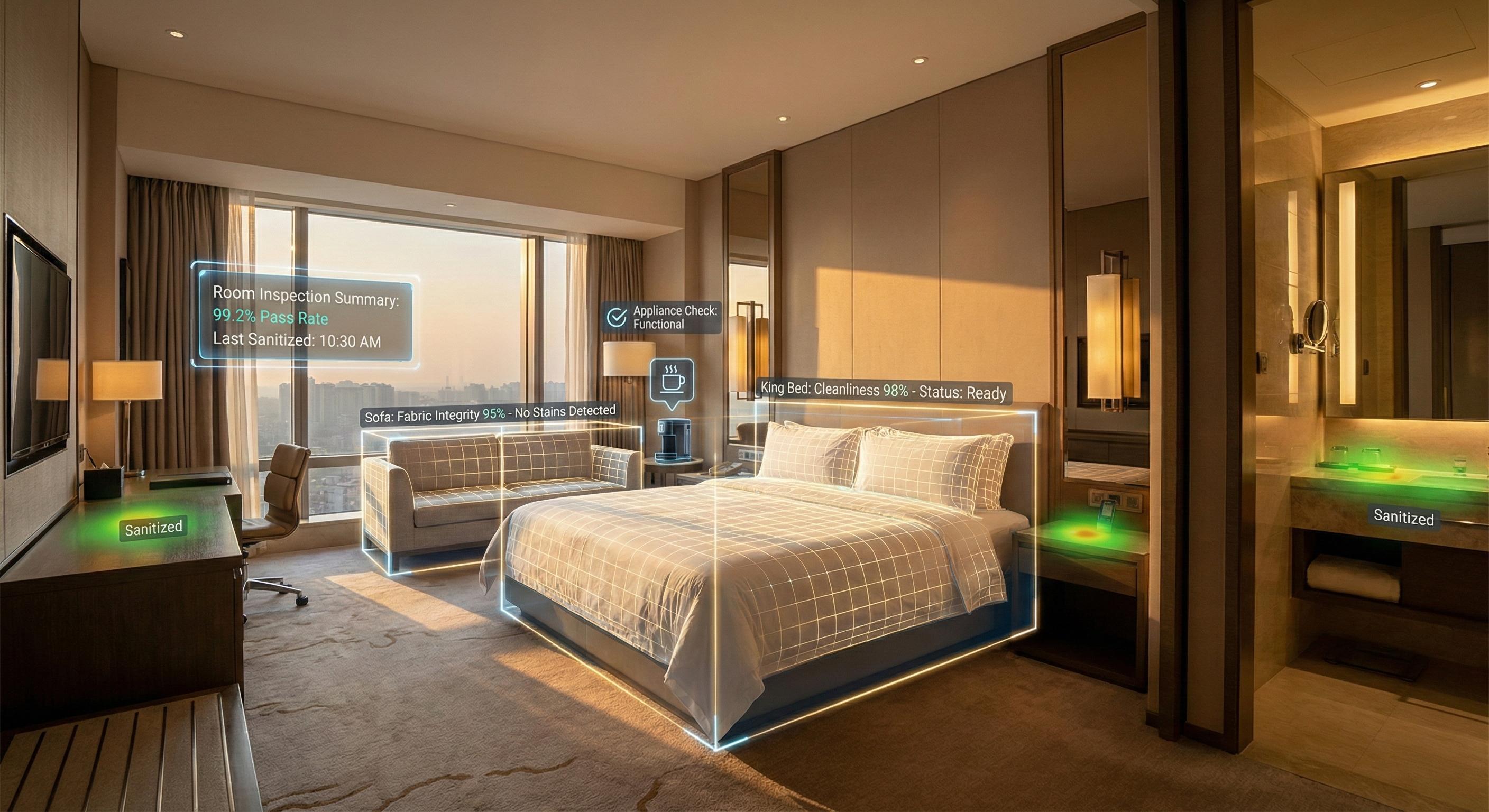
- Fari Lens processes each image with trained models that recognise objects, surfaces, and conditions: bottles, towels, linens, amenities, visible stains, clutter, empty shelves, and more.
- The system converts what it sees into labelled data points, for example:
- “Room 1207 · minibar · coke missing · water missing” - “Room 804 · bathroom · shower amenities complete · visible mildew on grout” - “Floor 10 corridor · wall · paint chipped”
- Those labels flow into the hotel’s operational tooling, where they can trigger tasks, feed dashboards, or simply provide an auditable record.
A few important boundaries:
- The models see pixels, not intentions. They can tell that a towel is missing, not why it is missing. - Accuracy depends on configuration: image quality, angles, the training set used for that property, and the thresholds set for each label. - Fari Lens is optimised for visual operations, minibars, cleanliness, basic condition checks, F&B inventory, not for speculative scenarios like reading emotions, identifying individual guests by face, or predicting mechanical failures that leave no visual trace.
The value comes from running this simple loop consistently, thousands of times per week, and tying it to everyday housekeeping work rather than a separate “AI project”.
Housekeeping as a sensor network
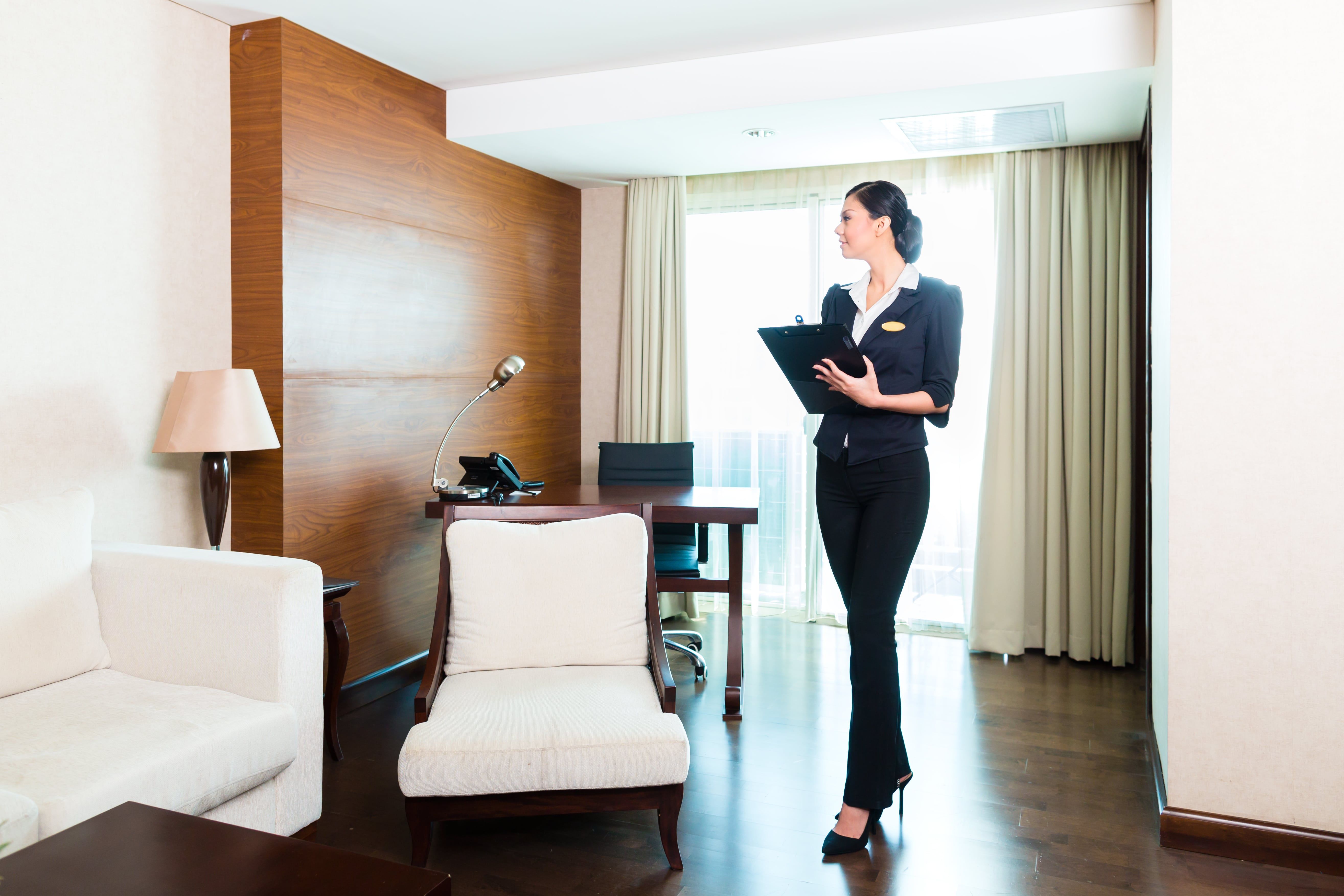
In most hotels, housekeeping is already the closest thing to a real-time map of the property. Teams visit every room, every day or two, long before most managers see it. The problem is that their observations live in memory, paper checklists, or quick WhatsApp messages.
Fari Lens treats every completed room as a small, structured inspection.
Room readiness and quality checks
A typical departure workflow with Fari Lens might look like this:
- The housekeeper completes the clean as usual.
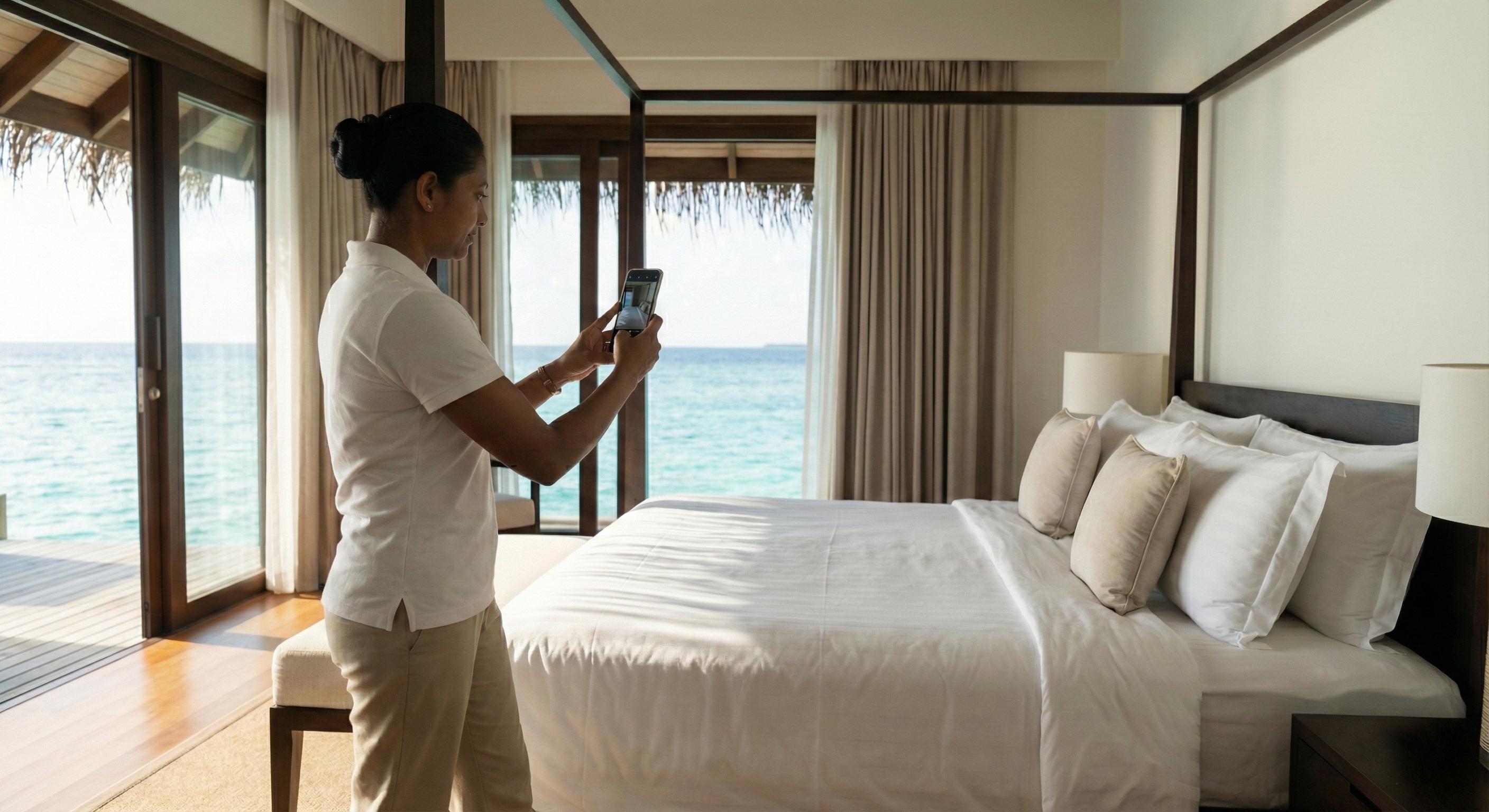
- Before marking the room ready, they open the Lens app and capture a small set of photos, for example:
- A wide shot of the bedroom - The minibar and desk area - The bathroom vanity and shower
- Fari Lens analyses those images for:
- Presence or absence of standard items such as pillows, robes, glasses, amenities - Obvious cleanliness issues such as visible stains on linens, clutter on surfaces - Minibar configuration relative to the hotel’s planogram
Instead of a binary “clean / not clean” tick box, the hotel now has a structured snapshot of what the room looked like at handover. Supervisors can review edge cases remotely, and management gains a far more granular view of quality over time.
Minibar and amenity verification
Minibar checks are a classic example of visual work that quickly turns into admin work. With Lens, the primary effort stays visual:
- The attendant photographs the minibar once, rather than counting line by line. - The model compares what it sees to the target layout, identifies what is missing or moved, and generates a list of variances. - These variances can then be matched against consumption and posting rules in the broader Fari platform, so the financial side remains auditable without doubling the labour already spent on the round.
The minibar image itself becomes evidence for later disputes and a training artefact for new staff, rather than a moment that disappears as soon as the door closes.
Condition cues for maintenance
Every image that proves a room is ready is also a snapshot of its physical condition. Over time, Fari Lens can be configured to flag:
- Visible cracks or chips in tiles and fixtures - Discolouration that suggests moisture issues - Frayed or stained soft goods that need rotation or replacement - Recurrent clutter patterns in certain corners or under certain desks
The models do not decide which of these are critical. Instead, they label what is visible so housekeeping leaders and engineers can design rules: for example, “if mildew is detected in the shower on two inspections in a row, create a low-priority maintenance task” or “if a chipped basin appears in more than three images, include it in the next capex review”.
In other words, housekeeping becomes a distributed sensor network for maintenance, using tools teams already carry.
Visual analytics: seeing the state of the hotel, not just individual rooms
Once these labelled observations accumulate, they start to answer questions that are hard to get from PMS data alone.
Examples of visual analytics that hotels commonly derive from Fari Lens data include:
- Coverage: What percentage of occupied rooms had a visual inspection with images in the last 24 hours? Which towers or floors are under-inspected? - Defect heatmaps: Which room types, floors, or wings produce the most cleanliness exceptions per hundred stays? Are the same issues clustered near specific risers, exposures, or housekeeping closets? - First-pass quality: How many rooms pass all visual checks on the first attempt versus requiring supervisor intervention? - Amenity compliance: How often are required amenities missing when rooms are marked ready, and is this improving with training?
Because Fari Lens converts each photo set into consistent labels, these metrics can be fed into Fari’s analytics layer alongside operational and financial data, producing dashboards that show both process and outcome. For example, a GM can see not only that housekeeping labour per occupied room is trending down, but also that first-pass quality remains stable and visual defects are not silently increasing.
The emphasis is on decision-grade visibility rather than glossy heat maps. The hotel decides which metrics matter, and which thresholds should trigger a conversation.
How preventative maintenance fits in realistically
Preventive maintenance is often described in grand terms: algorithms predicting failures before they happen. In practice, much of what matters in a hotel is simpler and more visual:
- The patch of condensation that appears on the same corridor ceiling every few weeks - The balcony rail that starts to rust in a familiar pattern - The grout line that never quite dries in certain showers - The carpet seam that frays faster than the rest of the floor
Fari Lens contributes to preventive maintenance in three grounded ways.
- Catching repeated issues earlier
Because every inspection image is tagged by location and time, repeated defects are easy to spot:
- If “mildew on grout” is detected in room 1103 three departures in a row, that is no longer a housekeeping problem, it is a maintenance pattern. - If “paint chip” labels cluster around a particular elevator lobby, that suggests either a design detail guests keep bumping, or a scheduling gap in touch-ups.
Hotels can configure simple rules so that recurring visual defects automatically generate low-severity work orders in their maintenance system, or show up in a weekly exception report for engineering. The computer vision models surface the pattern; engineers still decide how to respond.
- Informing lifecycle and capex planning
Fari Lens is not a structural engineer, but it does create a photographic record of wear and tear across the asset. When linked to room types and asset registers, this history helps answer questions like:
- Which furniture lines or finishes deteriorate fastest in high-humidity rooms? - Are refurbished rooms actually holding up better than legacy stock after two seasons? - Do certain plumbing layouts show more repeated moisture indicators than others?
Instead of relying purely on anecdote, asset managers can review sets of labelled images over months and years. This does not replace professional surveys, but it makes those surveys more targeted: engineers arrive on site already knowing where visual issues cluster.
- Coordinating with sensor-based maintenance
In some properties, Fari Lens runs alongside IoT sensors, for example, water leak detectors, vibration monitors on plant equipment, or BMS alerts. In those scenarios, images from housekeeping provide the ground truth that complements sensor readings:
- A leak sensor alerts for possible moisture under a fan coil. - On the next housekeeping round, the room’s inspection images show a slight stain on the ceiling and surface condensation around a grille. - Together, these cues justify a proactive visit from engineering before the damage worsens.
Crucially, Fari Lens does not claim to infer mechanical faults from a single photo. It adds visual context to the signals a hotel already collects, so maintenance teams can prioritise work on what is actually visible and guest-facing.
Guardrails, limits, and design choices
Because Fari Lens works with images, guardrails matter as much as model accuracy. In real deployments, hotels typically make a few explicit choices:
- Human-in-the-loop for judgment calls. For high-stakes decisions such as guest safety, disputes over serious damage, or brand-critical cleanliness, staff review images and labels before acting. Automation focuses on the long tail of routine cases. - No continuous guest surveillance. Lens is used on staff-captured images of rooms and assets as part of work, not as a general surveillance system for guests. - Property-specific label sets. A resort might care about balcony rail corrosion and outdoor furniture wear; a business hotel may emphasise desk amenity layout and bathroom fixtures. The models and thresholds are configured accordingly. - Clear exception paths. When the model is uncertain, it can mark an item as “needs review” rather than guessing. That keeps the data useful without pretending to be perfect.
Just as important is what the system does not promise:
- It does not guarantee a fixed accuracy number independent of training, lighting, and configuration. - It does not promise to understand smells, sounds, or subtle design issues that are not visually obvious. - It does not replace the role of housekeeping leaders, chief engineers, or GMs; instead, it supplies them with more consistent evidence and trend data.
A realistic payoff for operators
When Lens is woven into housekeeping and inspection routines, the benefits tend to show up in three places:
- Operational clarity. Leaders know, with evidence, which parts of the property are consistently on standard and which are drifting, without relying entirely on spot checks and anecdote.
- Fewer surprises. Repeated issues are spotted early, so a slow leak becomes a scheduled repair instead of an emergency room-out event, and recurring minibar disputes decline as image evidence becomes part of the process.
- Better use of human judgment. Housekeepers, supervisors, and engineers spend less time on rote checking and more time on coaching, problem solving, and guest-facing work.
None of this turns a hotel into a self-driving machine. What it does is bring the physical reality of rooms, corridors, and outlets into the same analytical frame as reservations, revenue, and labour. Fari Lens gives operators a way to look at their property as it actually is, today, not just as their systems say it should be, and to act on that picture with the tools they already trust.