Ireland’s Grow Digital Voucher and the New Hotel Operating Model
Ireland offers smaller hotels a practical route into AI, cloud, and analytics. The bigger opportunity is not the grant itself, but what disciplined technology adoption can unlock.

For years, hotel technology spending followed a familiar hierarchy. Large chains bought platforms. Independent properties bought point solutions. Everyone else waited, usually because the operational pain was obvious but the budget was not. That gap is beginning to narrow in Ireland, where the state’s digitalisation push has created a more practical on-ramp for smaller businesses that want to modernise without betting the balance sheet on a grand transformation.
The most relevant mechanism is Ireland’s Grow Digital Voucher, delivered through the Local Enterprise Offices. It is not a hotel-specific subsidy, and that is precisely why it matters. Smaller independent hotels, guesthouses, and other accommodation businesses that fall within the scheme’s size rules can use it to fund software, training, and configuration tied to a wider digital roadmap. In plain terms, that means public support for the kinds of tools hotels increasingly need: AI, cloud systems, analytics, and workflow automation.
Why Ireland is a credible answer for hotel tech funding
Ireland’s case is stronger than a one-off headline about innovation. The policy architecture is visible. The Grow Digital Voucher supports businesses with between one and fifty paid employees, offers grant aid for eligible digital spending, and sits behind a prior Digital for Business assessment so companies are not simply buying software at random. The broader national framework also explicitly treats AI, cloud, and data analytics as priority areas for SME adoption. For hoteliers, that combination matters: funding, guardrails, and a policy narrative that assumes operational technology is no longer optional.
There is a useful realism embedded in that design. The best public technology schemes do not ask an operator to become a futurist. They ask a simpler question: where does work get stuck, and what class of digital tools can remove friction? In hotels, the answer is rarely glamorous. It is in room inspection loops, minibar reconciliation, staffing allocation, invoice handling, night audit preparation, internal communication, forecast-driven purchasing, and the small but constant leakages that accumulate across a property over the course of a month.
The grant is small. The operational leverage is not.
A grant ceiling of a few thousand euros will not rebuild a hotel’s technology stack. But that is the wrong benchmark. In operations, modest interventions often generate outsized returns because hotel work is repetitive, cross-functional, and sensitive to delay. One automated handoff between housekeeping and front office can save more time than a beautiful dashboard no one uses. One reliable visual audit process can prevent a chain of downstream disputes. One forecasting model can reduce the quiet habit of overstaffing for uncertainty.
That is why smaller hotels should treat schemes like Grow Digital less as a source of capital and more as a forcing function for discipline. The exercise is not to ask, “What technology can we afford?” It is to ask, “Which recurring operational bottlenecks are expensive enough that software should now handle them?” Once that question is framed properly, the menu becomes clearer.
Where the first wave of spending usually belongs
- Guest messaging and service triage, so routine requests stop crowding the front desk.
- Revenue and demand monitoring, especially where pricing decisions are still made in spreadsheets and intuition.
- Housekeeping coordination, including room status visibility, inspection workflows, and exception handling.
- Back-office automation for invoices, reconciliations, approvals, and reporting packs.
- Visual operations checks, where computer vision can verify conditions faster and more consistently than manual review alone.
How hotels can use AI without turning the property into a lab
Hoteliers often hear AI discussed in abstractions: personalization, transformation, intelligence. But operational value usually begins in narrower places. AI is most useful when it does one of three things well. It classifies. It predicts. Or it triggers action. Classifying could mean sorting incoming guest messages by urgency or identifying discrepancies in invoices. Predicting could mean estimating late arrivals, staffing needs, or likely stockouts. Triggering action could mean assigning a task, generating a work order, flagging an exception, or posting a charge after verification.
This is especially relevant for smaller hotels because they do not need an enterprise-wide “AI strategy” before they can benefit. They need a sequence. Start with high-frequency work. Choose a use case where the baseline is currently manual, inconsistent, or invisible. Define a measurable outcome. Then add the minimum amount of technology required to improve it. That is the operational logic public funding should support, and it is the logic many hotel teams overlook when they buy software based on demos instead of process maps.
Five practical use cases for an Irish independent hotel
First, service requests. A small property handling WhatsApp messages, emails, OTAs, and direct calls can use lightweight AI tools to consolidate incoming demand, draft responses, and route requests by department. The real gain is not novelty. It is response consistency during peak periods.
Second, scheduling. Demand patterns, event calendars, historical occupancy, and lead-time behavior can be used to support staffing decisions. Many hotels still overcompensate for uncertainty by scheduling more labor than the day will justify. Even modest forecasting support can reduce that habit.
Third, finance and reconciliation. AI-assisted document processing can extract data from supplier invoices, check line items against rules, and reduce the manual burden on lean teams. Hotels feel these gains most strongly in the back office, where repetitive administrative work is tolerated far longer than it should be.
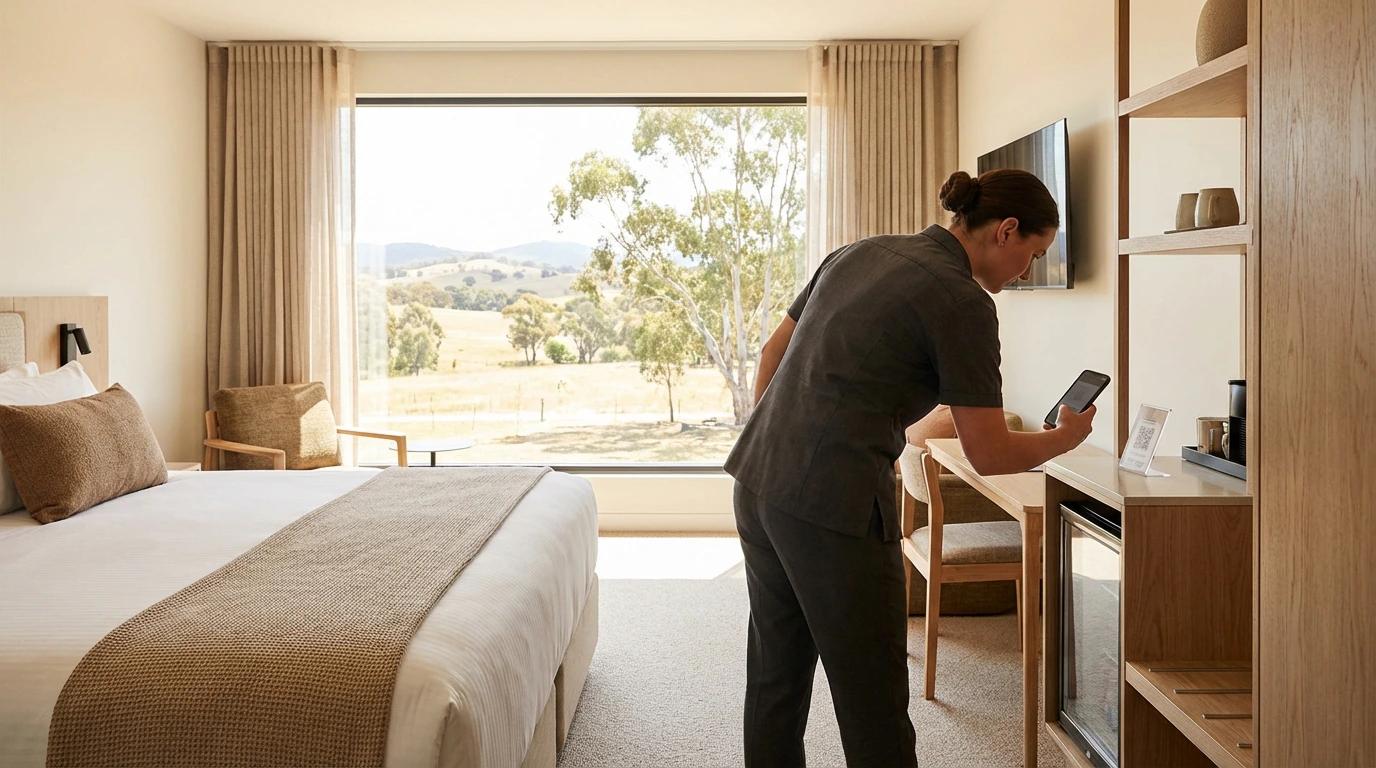
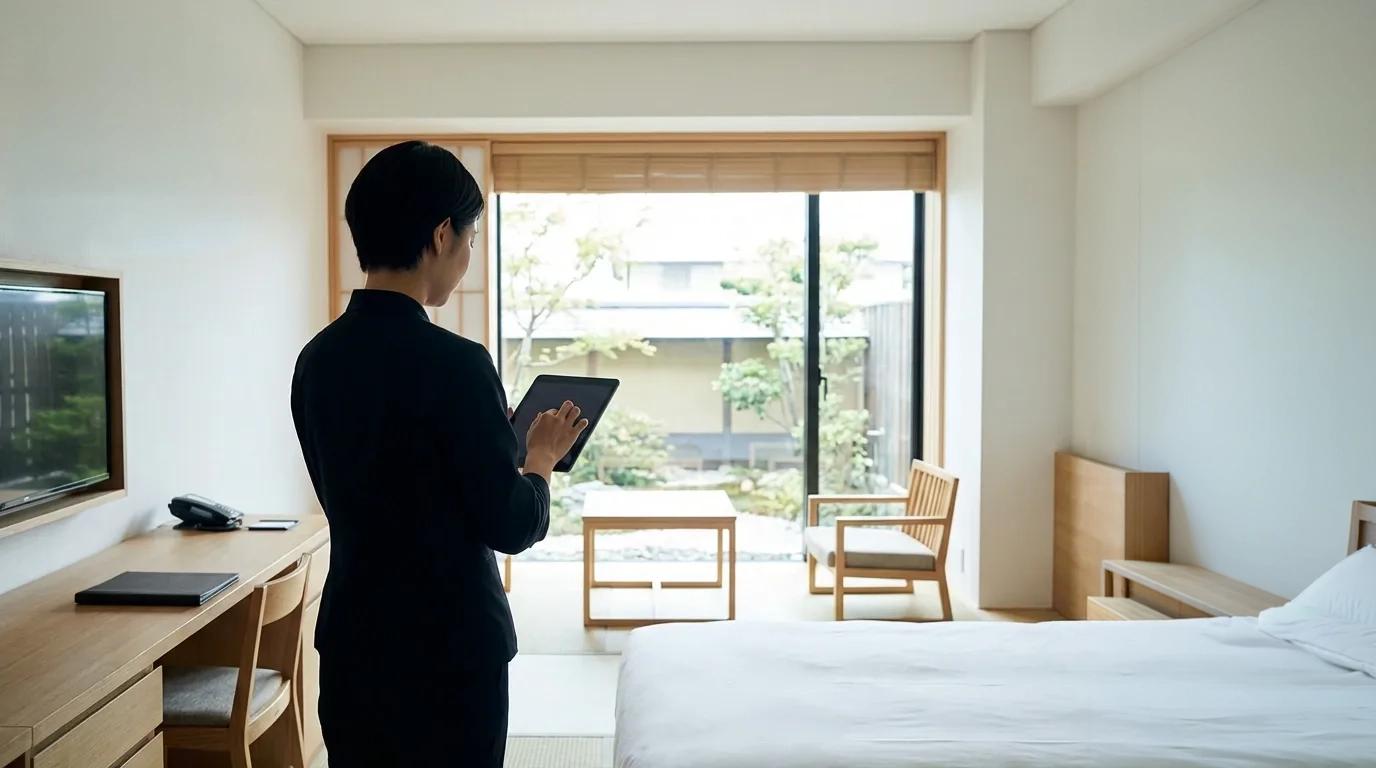
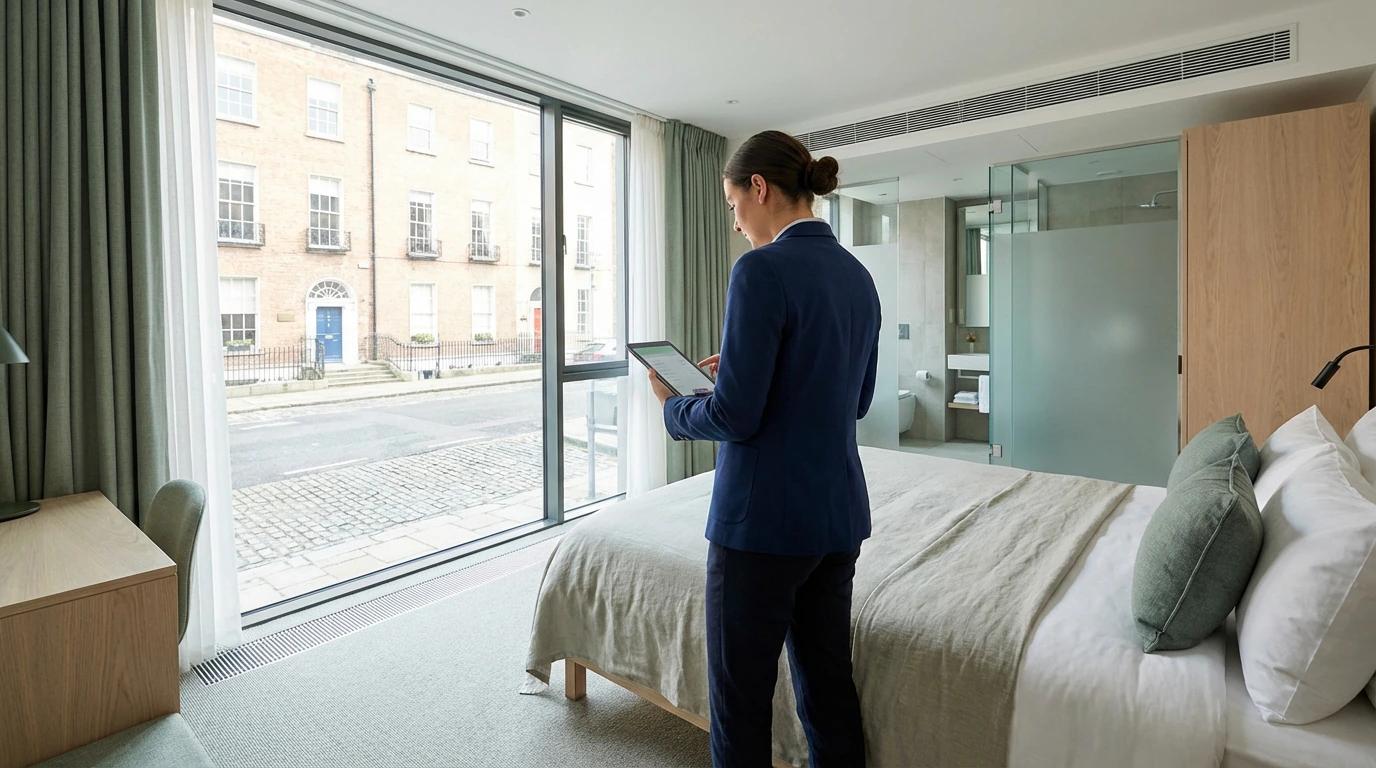
Fourth, maintenance and room readiness. When room inspections are documented consistently, exceptions become visible earlier. A missing amenity, a stain, or a maintenance issue caught before check-in is not just a housekeeping win; it is a prevented guest recovery cost.
Fifth, inventory integrity. Minibars, bar stock, and other visually verifiable inventories are classic examples of work that consumes labor while still producing error. In these workflows, computer vision becomes less a futuristic add-on than a way of making routine checks more auditable. Some operators are now experimenting with specialist tools such as Fari Lens to photograph minibars or room conditions, convert those images into structured operational data, and shorten the path from inspection to action. The appeal is subtle but powerful: less counting, fewer missed charges, and a clearer record when something is disputed.
The real constraint is not budget. It is process clarity.
Technology projects in hotels do not usually fail because the software is impossible. They fail because the property has never fully described how work currently happens. Who notices an issue first? Who confirms it? Where is it logged? What system holds the truth? What exception requires a manager? Where does the process die on busy days? Without those answers, a grant-funded implementation simply digitizes ambiguity.
That is why Ireland’s requirement for a Digital for Business assessment is more than bureaucratic staging. In a healthy version of the process, it forces the operator to articulate the business problem before selecting the tool. For hotels, this is exactly the right order. A property that maps one operational loop well can often unlock much more value than a property that buys five disconnected applications because each one sounded efficient on its own.
In hospitality, the most successful technology is rarely the most visible. It is the technology that removes a handoff, shortens a queue, closes a revenue leak, or catches a problem before the guest does.
What a sensible rollout looks like
For a smaller hotel using a scheme like Grow Digital, the sequencing should be conservative. Begin with one operational domain, not an all-property overhaul. Use the funding to cover the software layer, the configuration needed to fit real workflows, and the training required so teams actually adopt the process. Set success measures in advance: time saved per check, reduction in exceptions, fewer disputed charges, faster room release, lower administrative hours, improved service response times. Then review after sixty or ninety days and decide whether the next workflow deserves the same treatment.
- Identify one repetitive process with visible cost, delay, or leakage.
- Document the current workflow in enough detail to expose bottlenecks and exceptions.
- Choose a digital tool that fits the process, rather than redesigning the property around the tool.
- Train staff on the new decision points, not just the interface.
- Measure operational outcomes before expanding into a second use case.
A grant is most useful when it changes management behavior
The most interesting part of Ireland’s approach is not the voucher amount. It is the idea that digital adoption should be structured, staged, and tied to productivity. That is a useful corrective to the hospitality industry’s occasional habit of treating technology as branding rather than operations. Hotels do not need more systems merely because digital transformation sounds modern. They need better control over work that is already happening, often expensively and out of sight.
For smaller properties, especially owner-operated or independently run hotels, this is where public support can matter most. A modest grant can de-risk the first step. It can make the first workflow worth redesigning. It can help a team move from discussing AI in theory to using automation, analytics, or computer vision in a way that is concrete enough to change the day. And once that happens, the conversation shifts. Technology stops being a purchase. It becomes part of how the hotel operates.
Ireland, in other words, offers a credible template. Not because it promises a fully automated future, but because it gives smaller hospitality businesses a practical way to start building one.