Australia’s Hotel Tech Grants and the New Operations Playbook
In Australia, hotel operators can tap tourism-business funding for digital upgrades. The smarter lesson is not the grant itself, but what kind of operational technology is actually worth backing.

The most interesting hotel technology story in 2026 is not that artificial intelligence exists. It is that some governments have begun to treat operational technology as infrastructure rather than as a luxury line item. Australia is a useful example. In Queensland, a government-backed Tourism Business Digital Adaption Program was set up as a two-year A$4.5 million initiative, with A$2,500 rebates intended to help tourism businesses adopt digital tools for business operations and visitor experience. Separately, Business Queensland continues to point tourism operators toward grants that improve resilience, capability, growth, and market share.
That does not mean Canberra or Brisbane is writing blank cheques for every hotel AI pilot. The reality is more pragmatic. Australia’s support ecosystem is a patchwork: tourism-business rebates, broader tourism investment funds, and, at the federal level, AI adoption infrastructure designed to help small and medium businesses explore responsible AI through free specialist services, roadmaps, demonstrations, and training.
Why Australia matters
For hotel owners, the Australian lesson is not about chasing subsidies for their own sake. It is about public policy quietly validating a deeper shift inside hospitality: the next round of competitive advantage will come from better operating systems, better evidence, and fewer manual blind spots. When a state decides that digital adoption deserves public support, it is implicitly saying that old workflows are now an economic handicap.
Victoria’s Regional Tourism Investment Fund makes the point in a different register. Its 2024 program included an explicitAccommodation upliftstream, with grants from A$500,000 to A$2 million, alongside broader support for innovative tourism infrastructure. In other words, Australia is not only willing to back destination growth in the abstract; it is willing to put capital behind the actual operating base that makes tourism work.
A practical case study: what a subsidy should buy
Imagine a 110-room regional hotel on Australia’s east coast: labor is tight, minibar checks are inconsistent, housekeeping supervisors spend too much time on physical inspections, and the general manager has no reliable visual record when a guest disputes a charge or a room-readiness issue. The property has already bought plenty of software. What it lacks is operational certainty.
This is where grant money becomes strategically useful. A modest public subsidy should not be used to add another dashboard that nobody opens after week three. It should be used to remove one of the hotel’s chronic forms of friction: manual inspection, manual counting, manual reconciliation, manual proof.
The best hotel technology investments are not the most futuristic. They are the ones that quietly eliminate repeatable waste.
Where hotels should actually deploy new technology
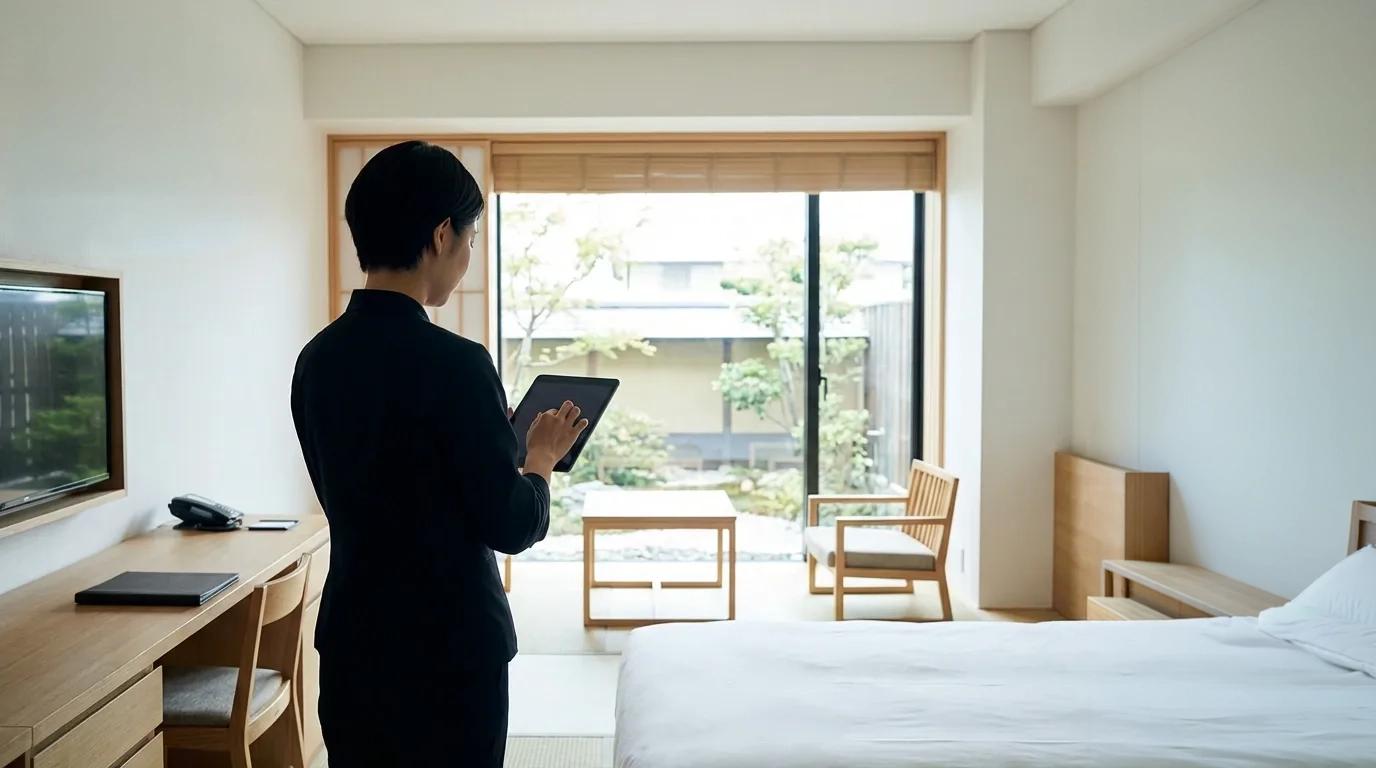
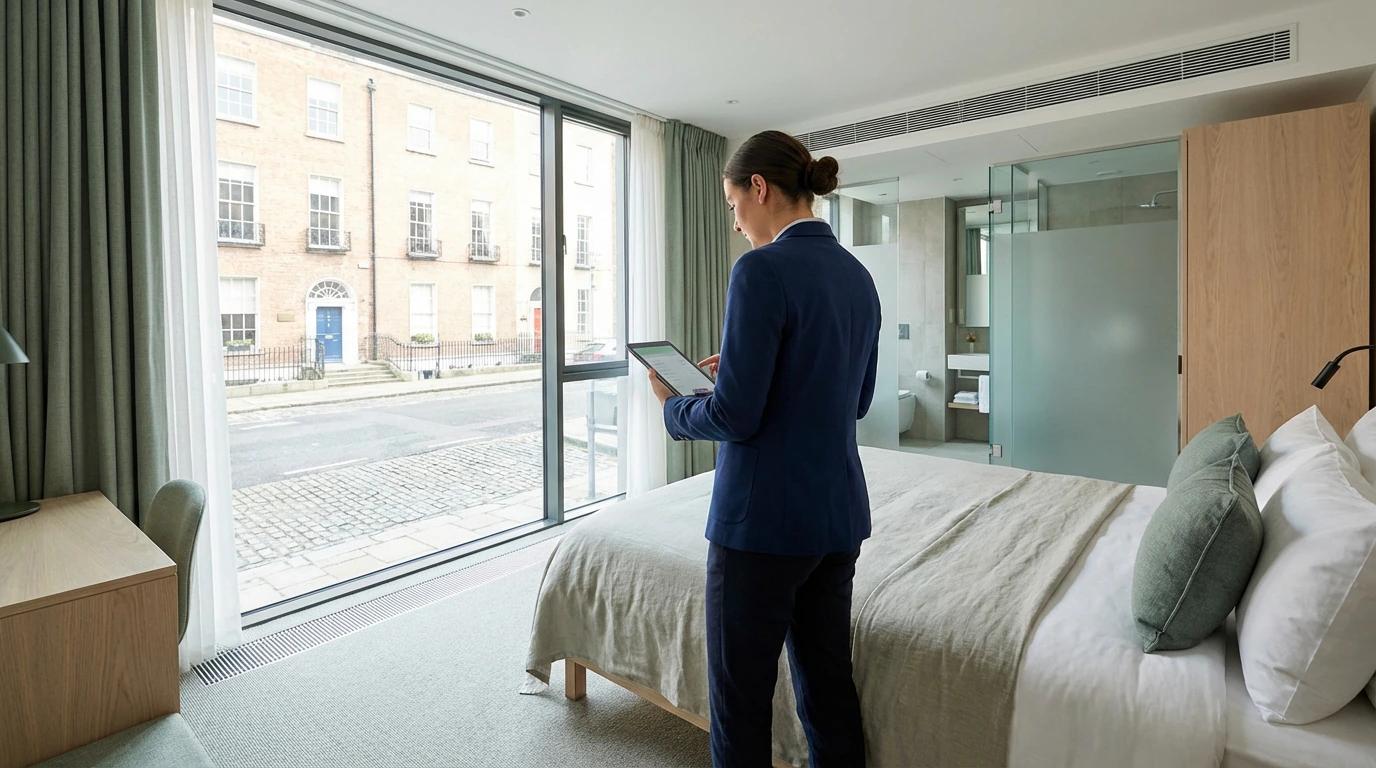
- Room inspection and turnover verification— If a room can be photographed and evaluated against operating standards, supervisors no longer need to physically re-check every edge case. That shortens turnover cycles and creates a timestamped record of what was actually ready, when, and in what condition.
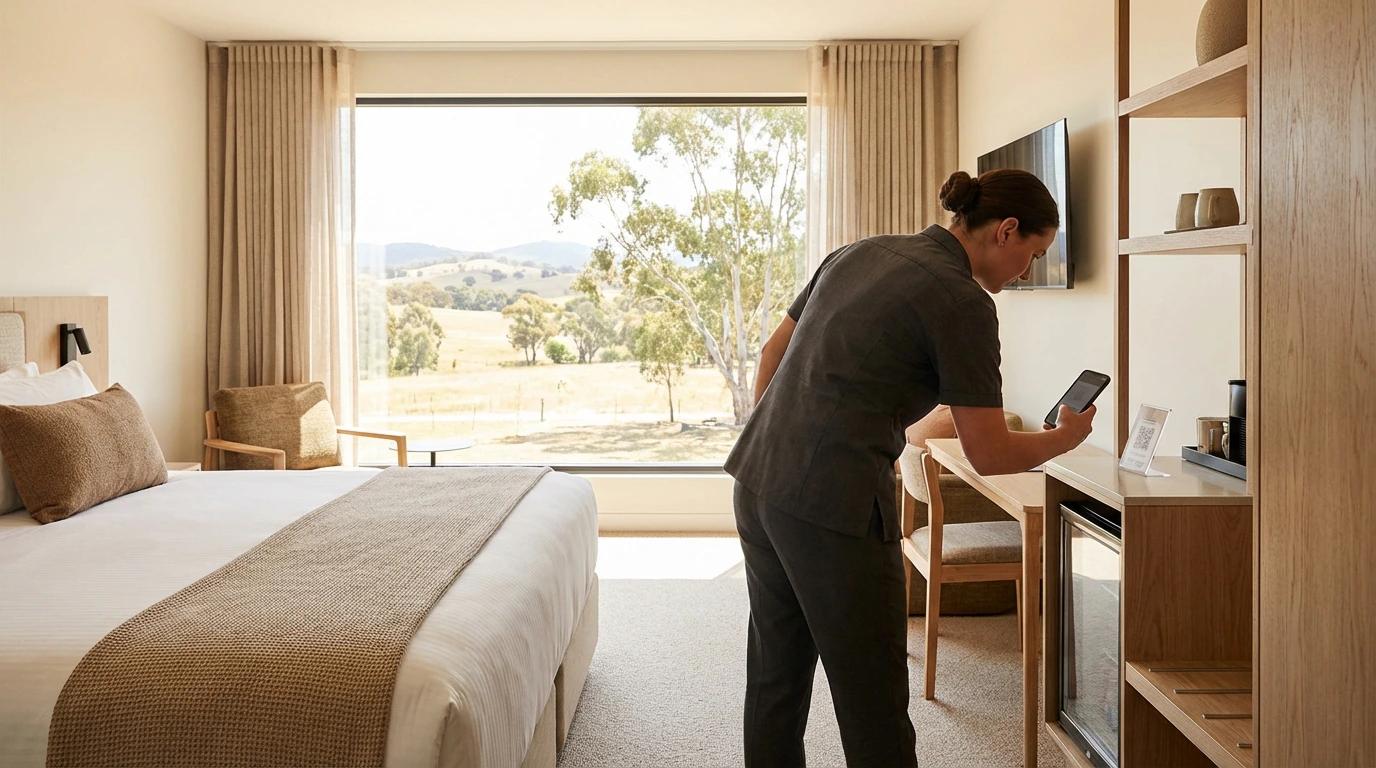
- Minibar and in-room inventory control— Hotels still lose money in small, unglamorous ways. A visual inventory process can reduce missed consumption, accelerate restocking, and give finance teams cleaner evidence when charges are questioned.
- Maintenance detection at the point of inspection— The economic value of visual operations is not only labor reduction. It is earlier intervention. A stain, missing amenity, broken fixture, or damaged furnishing costs less when found before the guest arrives than after the review is written.
- Evidence-led service recovery— In hospitality, many disputes are not really about money. They are about confidence. A hotel that can show what was stocked, cleaned, or checked at a specific time has a fundamentally stronger service posture than one relying on memory and handwritten notes.
Why computer vision fits the grant logic particularly well
Public funding programs tend to favor technologies that can be explained plainly: what problem they solve, who uses them, and what measurable change they create. Computer vision travels well in that framework. It is easier to justify than a vague promise of “AI transformation” because it attaches intelligence to an observable workflow: a room photo, a minibar image, a documented discrepancy, a time saved, a charge captured.
A visual operations layer in the mold of Fari Lens is compelling for exactly this reason. Its logic is operational rather than theatrical: staff use a mobile phone camera, the system analyzes room conditions or minibar stock, and the result becomes a timestamped record that can support quality assurance, accountability, and follow-up actions. Fari’s own product materials describe this approach as useful both with and without deep system integration, which matters for hotels that want improvement before they are ready for a full stack overhaul.
The subtle power of that model is organizational. It does not ask a property to become a software company. It asks a property to make one visible part of hotel work less dependent on memory, inconsistency, and end-of-shift reconciliation.
What an Australian hotel operator should do first
- Treat grants as a catalyst, not a strategy.
- Start with one high-frequency operational bottleneck that already consumes labor every day.
- Choose technology that creates evidence, not just alerts.
- Measure outcomes in labor hours, captured revenue, dispute reduction, and room-readiness speed.
- Only then expand into broader AI use cases such as forecasting, workflow automation, or cross-property benchmarking.
The larger lesson
Australia is not important because it has invented a magical hotel AI fund. It is important because its policy mix acknowledges something many operators already know from experience: tourism businesses need help modernizing the machinery of everyday work. Queensland’s rebate-driven digital adoption program and Victoria’s investment support for tourism infrastructure are different instruments, but they point in the same direction. Governments are beginning to reward operators who make their businesses more legible, more efficient, and less manually fragile.
For hotels, that means the winning question is no longer “Should we do something with AI?” It is “Which part of the operation is repetitive enough, expensive enough, and visible enough that technology can improve it immediately?” In many properties, the answer is not a chatbot in the lobby. It is a camera, a workflow, and a better record of what actually happened.