How Singapore Hotels Are Actually Using Computer Vision
A case study of how Singapore hotels moved computer vision from pilot projects into real operational use, from biometric check-in to the next wave of back-of-house automation.

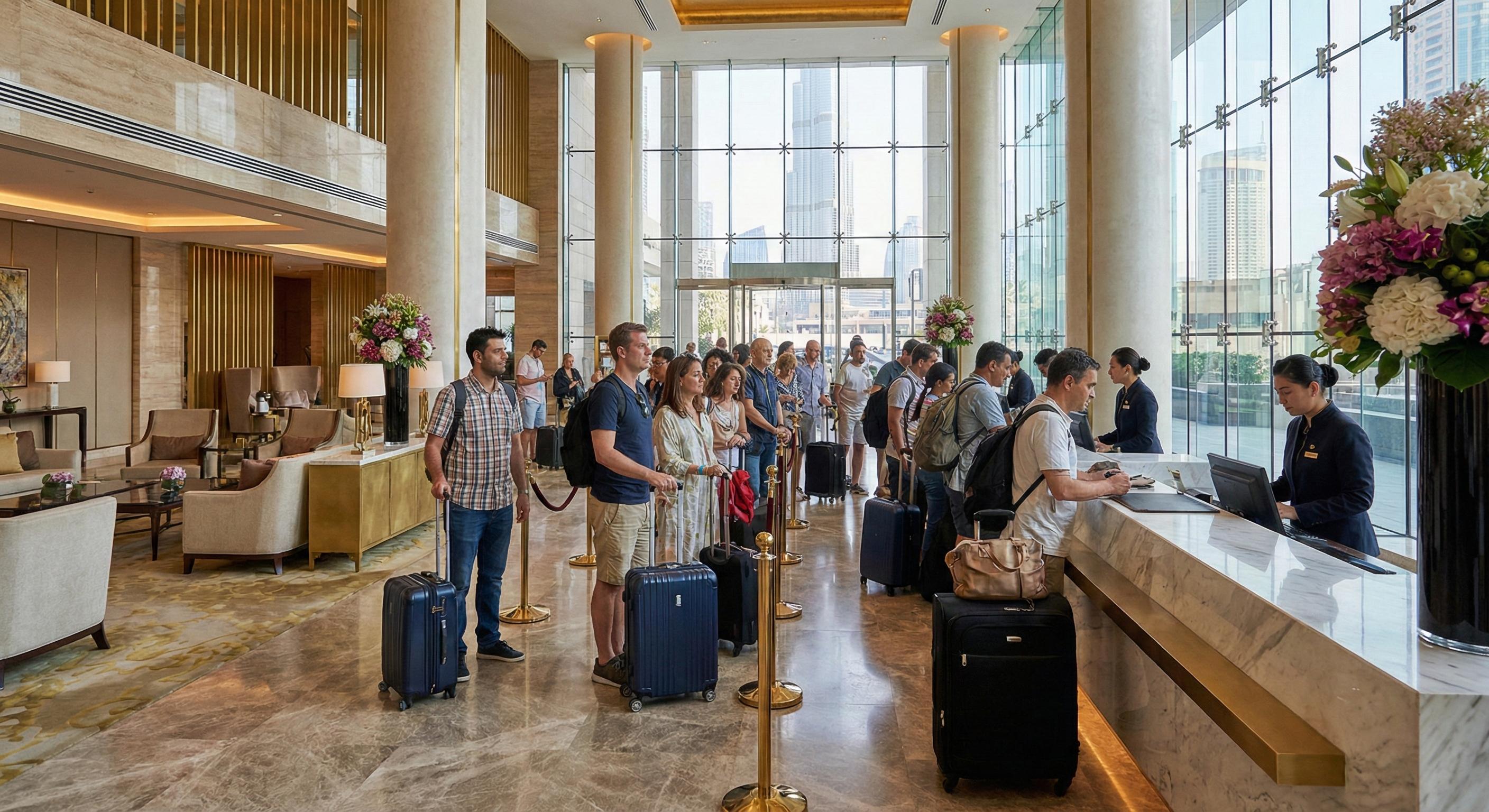
In most industries, computer vision arrives with a futuristic sales pitch. In Singapore hotels, it arrived with a queue.
The practical problem was mundane but consequential: identity checks at reception were slow, repetitive, and heavily dependent on labor. Hotels had to confirm that a guest matched the passport photo in front of them, and also verify the legality of the guest’s stay. In a market where labor productivity is a strategic concern rather than a talking point, that bottleneck created the conditions for a very Singaporean kind of innovation. Computer vision was not introduced first as theater. It was introduced as infrastructure.
That distinction matters. While many hotel markets still discuss AI in broad abstractions, Singapore’s hotel sector has treated visual intelligence as an operational tool: useful when it reduces friction, acceptable when it can be governed, and scalable when it aligns with a broader state-backed transformation agenda. The result is one of the clearest real-world case studies in hospitality of how computer vision moves from novelty to habit.
Why Singapore became an early proving ground
Singapore’s hotel industry sits inside a policy environment unusually favorable to operational technology. The Singapore Tourism Board has spent years pushing productivity, contactless services, and redesign of hotel work. The logic is structural: high labor costs, a strong regulatory apparatus, and a national preference for systems that can be standardized. When technology is adopted in Singapore hospitality, it is often because it can solve a known process problem at scale, not because it photographs well in a lobby.
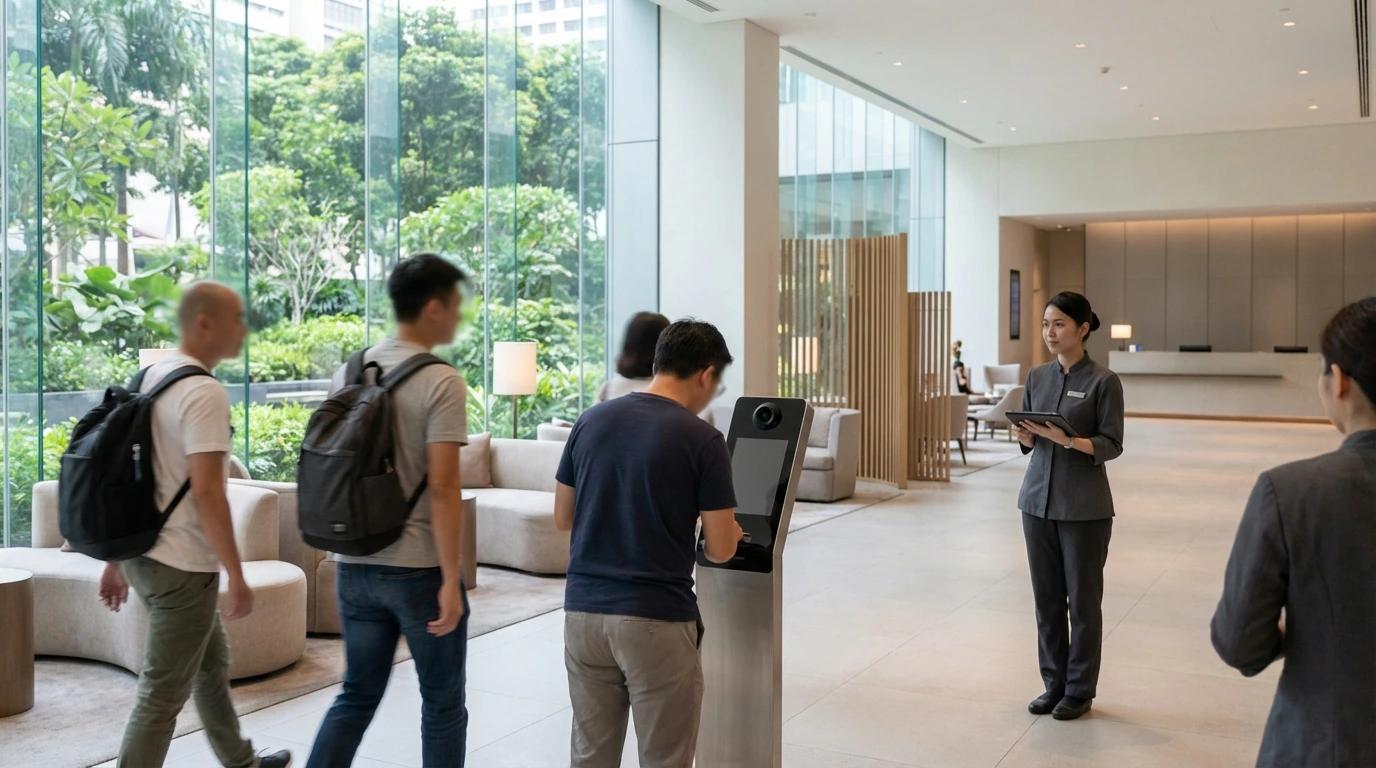
This is why the country’s most visible computer-vision use case in hotels has been identity verification. Rather than treating check-in as a ritual of paperwork and manual observation, Singapore began to reconceive it as a visual matching problem. The state built regulatory rails for that shift through E-Visitor Authentication, or EVA, a system that uses facial recognition to match passport images to the guest presenting at check-in and to automate reporting requirements tied to immigration compliance.
The important point is not merely that facial recognition exists. It is that Singapore embedded it into a hotel workflow where compliance, guest experience, and labor productivity all meet at the same counter.
Phase one: computer vision at the front desk
The earliest widely discussed examples came through pilot programs and early adopters such as Grand Park City Hall, which tested selfie-based mobile check-in before the broader EVA ecosystem matured. The appeal was obvious. A guest could complete more of the identity process before arriving at the desk, receive digital credentials, and avoid the slow choreography of form-filling, document handling, and manual face matching.
Later, Singapore’s EVA framework turned that concept into something more systematic. Hotels such as Ascott Orchard, Swissotel The Stamford, and Grand Park City Hall were among the early properties associated with facial-recognition-enabled self-check-in. Other operators and kiosk vendors subsequently entered the ecosystem as approved or EVA-ready partners, extending the model into more properties. M Social Singapore, for example, has been publicly referenced in connection with EVA-capable kiosk deployment.
What makes this notable is not simply the speed gain, though that matters. It is the way computer vision changed the nature of labor. Reception staff were no longer needed primarily for document comparison. Their value moved toward exception handling, guest reassurance, upselling, and solving the unusual cases that automation does not handle elegantly. In other words, vision systems did not erase the front desk. They changed what the front desk was for.
What Singapore hotels learned from biometric check-in
- A successful computer-vision use case begins with a narrow operational problem, not a broad promise.
- Adoption accelerates when technology also solves a compliance burden, not just a customer-experience problem.
- The real economic value often comes from redeploying labor to higher-value service, not from removing labor outright.
What computer vision is doing beneath the surface
Once a hotel becomes comfortable letting a camera interpret a guest’s identity, it becomes easier to imagine cameras interpreting other kinds of operational reality. This is where the Singapore case becomes more interesting than the headlines suggest. The front-desk story is only the first chapter. The more consequential shift is that hotels start to understand visual data as operational data.
There are at least four adjacent domains where that logic is now shaping hotel operations in Singapore, even when the deployments are less public than check-in kiosks.
1. Compliance-grade identity workflows
This remains the most mature category. In Singapore, computer vision is already tied to the legal and administrative mechanics of guest registration. That gives it unusual staying power. Unlike many hotel technologies that can be postponed during downturns, systems linked to required reporting and standardized check-in are harder to unwind once adopted.
2. Queue and lobby flow management
Singapore’s broader operating culture strongly favors measurable service levels. That makes camera-based flow monitoring a natural extension. Even when hotels do not describe these systems publicly as computer vision, the use case is straightforward: detect queue formation, crowd density, or unusual congestion in arrival zones and trigger staffing responses earlier. In a city where peak-arrival windows can create service compression very quickly, this matters more than it sounds. A lobby backup is not just a lobby backup; it spills into sentiment, review scores, and staff stress.
3. Security and anomaly detection
4. Back-of-house verification
This is the category most likely to define the next phase. The same visual logic that verifies a face can verify a room, a minibar, a shelf, a trolley, or a setup standard. And this is where hotel AI starts to become less visible but more economically important.
A housekeeping supervisor walking rooms to confirm towel placement, amenities, visible damage, or minibar restocking is doing a form of visual classification. A stock auditor counting bottles behind a bar is doing the same. These are precisely the repetitive, judgment-light, variance-prone tasks that computer vision handles well when the model is trained on a property’s real conditions. In that sense, the evolution from EVA to operational vision is less a leap than a continuation.
The deeper lesson from Singapore is that once hotels trust vision for guest authentication, they begin to trust it for operational truth.
The emerging back-of-house opportunity
If the first wave of computer vision in Singapore hotels has been guest-facing and compliance-oriented, the second wave is likely to be operational and photographic. This is where a platform like Fari Lens fits naturally into the picture, not as a separate category of hotel tech, but as part of the same maturation curve. The camera stops being just a device at check-in and becomes a portable interface for operational verification throughout the property.
Consider the minibar. In many full-service hotels, especially those managing premium inventory, manual checks still create quiet leakage: consumed items not billed, restocking lapses, disputes that cannot be resolved cleanly, and supervisors spending time on inspection rather than intervention. A vision layer changes the mechanics. Staff capture a photo, the system identifies missing or moved products, and the output becomes evidence as much as instruction. The same principle applies to room-readiness checks, amenity placement, visible defects, and housekeeping quality control.
That matters in Singapore because the local operating environment rewards consistency. Hotels are not merely trying to automate for novelty. They are trying to standardize service delivery in a labor-constrained market where variation is expensive. Visual SOP verification fits that environment unusually well.
Why this next step is plausible now
- Hotels have already accepted camera-based automation in a sensitive workflow: identity verification.
- Singapore’s grant and industry-support structure has normalized technology adoption when tied to measurable productivity outcomes.
- Back-of-house vision use cases are less politically sensitive than biometrics because they focus on objects, conditions, and workflow compliance rather than guest identity.
- The ROI is easier to trace than many guest-facing AI initiatives: fewer missed charges, faster inspections, tighter audit trails, and better room turnover reliability.
What makes Singapore’s case different from a generic hotel-tech story
Many markets can describe computer vision in hotels. Fewer can show a coherent pathway from experiment to institutional adoption. Singapore can. The sequence is unusually clear.
- First, a high-friction workflow was identified: guest identity verification.
- Second, the public sector created a trusted framework for deployment through EVA and broader hotel-transformation initiatives.
- Third, hotels and vendors proved that vision could be embedded into real property workflows, not just demos.
- Fourth, the market learned that visual automation works best when tied to a clearly bounded operational task.
That is why Singapore’s computer-vision story does not feel speculative. It feels administrative. And in hospitality, that is usually how enduring technology wins: not by looking revolutionary, but by becoming ordinary.
The constraint that will shape the next chapter: trust
Singapore has also been unusually explicit about the governance side of visual systems. That is not a footnote. It is central to why these tools can scale. Biometric and camera-based technologies do not succeed in hotels merely because they work technically. They succeed when operators can explain what is being captured, why it is needed, how it is stored, who can access it, and what safeguards exist. The country’s privacy guidance around biometric data reflects that reality.
For hotels, this means the future of computer vision is unlikely to belong to the most aggressive deployments. It will belong to the most governable ones. Visual systems that create clear audit trails, minimize unnecessary data collection, and focus on operational evidence rather than surveillance theater will be easier to defend internally and externally.
What other operators should take from the Singapore example
The immediate temptation is to treat Singapore as evidence that hotels should rush into biometrics. That would be the shallow reading. The more useful lesson is methodological.
- Start where vision solves a repetitive visual task with a high cost of inconsistency.
- Design around workflow, not model sophistication.
- Use computer vision where photographic evidence improves accountability and reduces dispute.
- Treat trust, consent, retention, and access control as part of the product, not as legal cleanup after deployment.
By that standard, the most promising hotel applications may not always be the most visible ones. A polished kiosk can be impressive. A vision-based room-readiness check that cuts rework, prevents complaints, and gives managers a timestamped record may be more valuable.
Conclusion
Singapore hotels are currently using computer vision in the clearest possible way: to reduce friction in check-in, automate identity verification, and connect guest processing to compliance. But that visible use case is only part of the story. The more important development is cultural. Singapore’s hotel sector has already accepted the premise that cameras can do real operational work.
Once that premise is accepted, the frontier moves quickly. From the lobby to the guest room, from identity to inventory, from check-in to cleanliness, computer vision stops being a single feature and starts becoming a way of running a hotel. In that sense, the Singapore case is not just about facial recognition. It is about the birth of a visual operating layer for hospitality, one that increasingly extends into the less glamorous but more consequential mechanics of the property. That is where the next gains will likely be found, and where systems like Fari Lens make the most sense: not as spectacle, but as quiet infrastructure for a hotel that wants to see more clearly what is actually happening inside it.