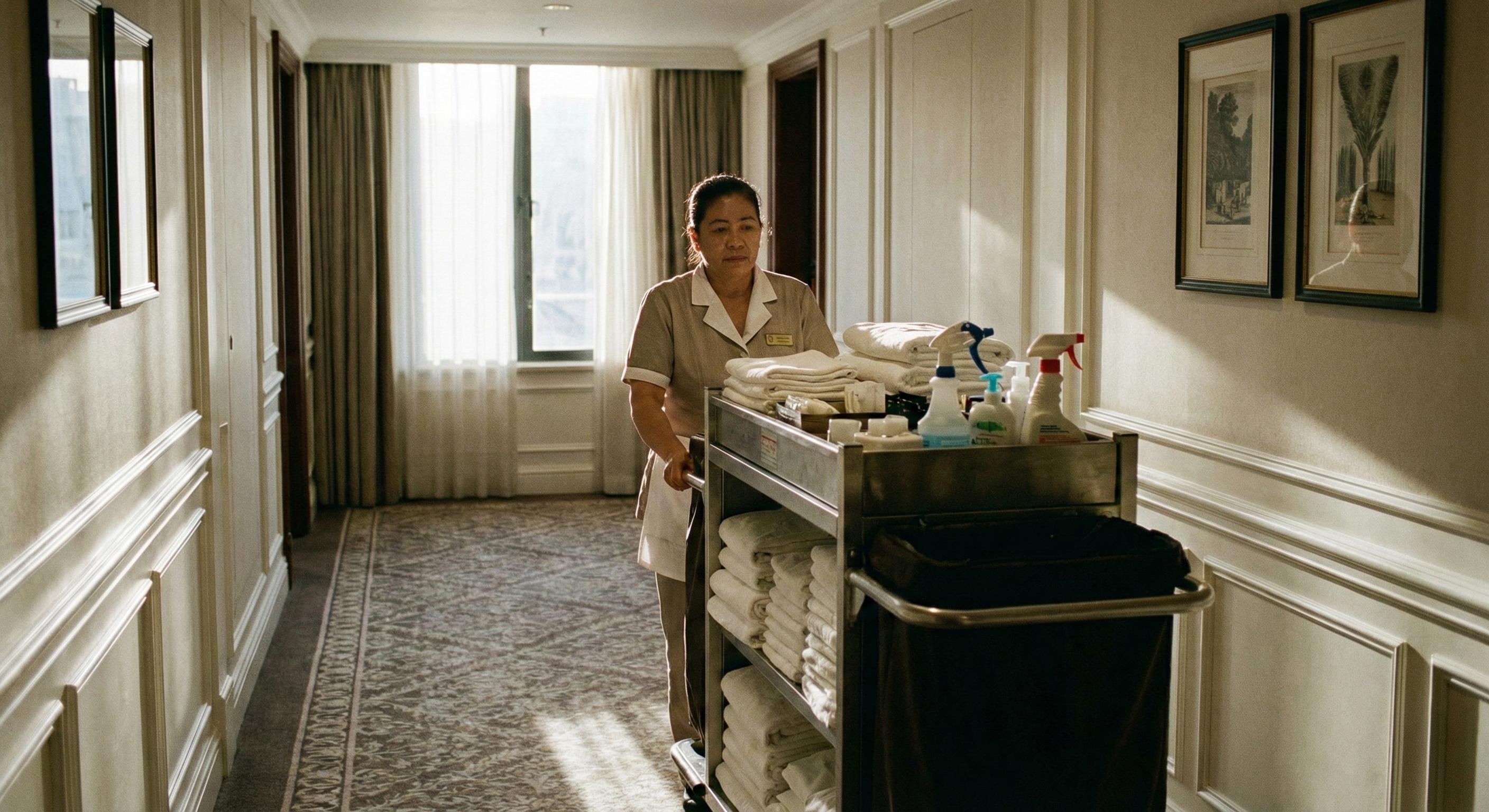
Red-Eye Arrivals, Noon Check-Out: Fixing Dubai Check-In Bottlenecks With Computer-Vision Housekeeping
Dubai hotels sit at the crossroads of red-eye arrivals, near full-year occupancy, and rigid check-in and check-out windows. This piece traces why the city’s check-in bottleneck is so persistent, and how computer-vision housekeeping with Fari Lens can turn early morning arrivals and late departures into a predictable, profitable flow instead of a daily crisis in the lobby.

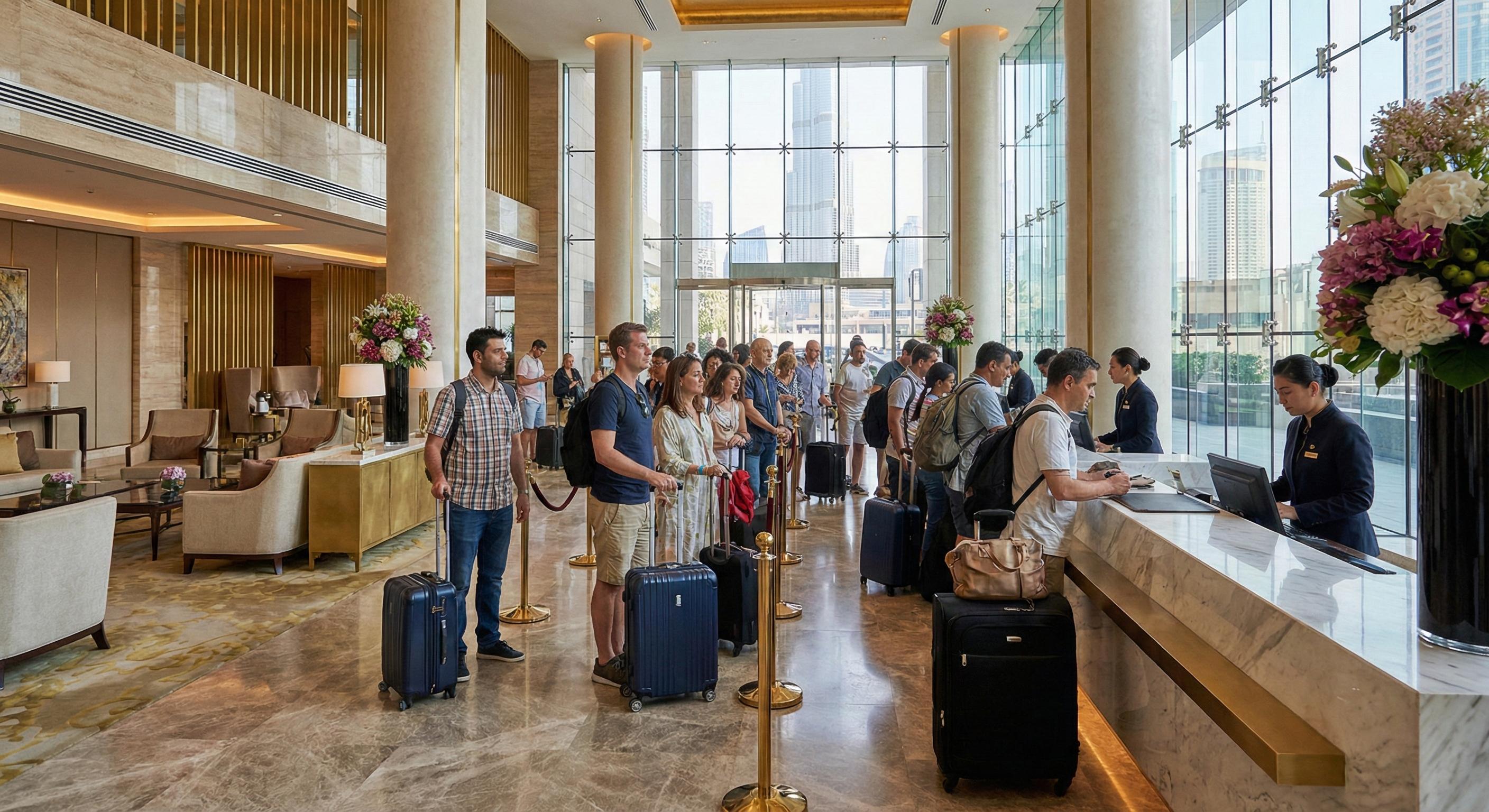
At six in the morning in Dubai, the airport is already in full stride. Wide-body aircraft from Europe and Asia stream in, passengers step into the desert air on little sleep, and a familiar thought crosses many minds on the ride into the city: will a room be ready, or will it be hours in the lobby until the standard check-in time?
In most Dubai properties, the answer still depends less on sophisticated forecasting and real-time visibility and more on whether housekeeping and front office happen to stay perfectly synchronized on that particular day. Check-out policies remain anchored around late morning, and check-in around mid-afternoon, even while the arrival curve has shifted toward early morning and late night. The result is a structural mismatch that plays out in queues, manual juggling of room allocations, and frequent goodwill gestures in the form of free breakfasts and late check-outs.
This article looks at why that mismatch is so pronounced in Dubai, why incremental fixes rarely solve it, and how computer-vision housekeeping powered by tools like Fari Lens, alongside Fari AI and Fari Analytics, can turn check-in and check-out from a daily firefight into a measured, data-driven flow.
1. Dubai’s demand pattern: red-eye city, almost always full
Dubai is no longer a seasonal destination with predictable peaks and quiet troughs. Tourism authorities reported more than seventeen million overnight visitors in 2023, with volumes exceeding pre-pandemic levels and continuing to climb. At the same time, hotels have operated close to full for sustained periods, with citywide occupancy hovering in the high seventies and tens of millions of occupied room nights each year. Revenue per available room ranks among the highest in major global markets, reflecting a mix of strong demand and premium positioning.
Layered on top of that is Dubai International Airport’s role as a global connector. Long-haul flights from Europe, Africa, and Asia are scheduled to land in the early morning window, often between four and seven, so that guests can connect straight onto flights heading east or west or begin their day in the city. For hotels, that means large waves of tired arrivals in the very hours when many rooms are still physically occupied by previous guests.
Most hotels retain conventional policies: check-out around eleven or noon and check-in at two or three in the afternoon. Those windows are not arbitrary. Globally, they evolved to give housekeeping teams a few hours to enter rooms after guests depart, clear rubbish, change linens, reset amenities, and hand over keys to front office in time for the afternoon arrivals. In a city where occupancy sits just below full and inbound flights favor the early hours, that traditional window becomes an increasingly tight bottleneck.
2. The mechanics of the check-in and check-out crunch
To understand why this matters, it helps to walk through a typical day in a high-occupancy Dubai hotel.
By roughly eight in the morning, guests who arrived on earlier flights begin requesting early check-in. Some rooms have turned over organically due to very early departures. Others will only be vacated as the standard check-out hour approaches. Housekeeping, working off a board or a digital list, sequences tasks: out-of-order first, due-out rooms next, stayovers thereafter. Supervisors are pulled in two directions at once, inspecting high-priority rooms for arriving guests and clearing a growing backlog of departures.
From the front-desk perspective, the picture is less clear. The property management system shows rooms as vacant dirty, vacant clean, or occupied, but those statuses often lag reality. A room may be physically ready but not yet flipped in the PMS because a supervisor is still finishing a floor. Another may be marked clean even though an amenity was missed, a maintenance issue is unresolved, or the minibar has not been checked.
Three structural features intensify this choreography:
- Compressed turnover windows. - Asymmetric arrival patterns. - Rising guest expectations.
3. What room ready actually means
From a guest’s perspective, a room is either ready or it is not. Operationally, readiness is layered:
- Core cleanliness.
- Amenity configuration.
- Minibar verification.
- Maintenance checks.
- System status updates.
When these steps are manual and disconnected, check-in promises become fragile.
4. Computer-vision housekeeping as a control layer
Fari Lens introduces structured visual verification. Staff capture guided images of rooms and minibars. Models confirm cleanliness, detect missing items, and convert findings into structured data. Once validated, the system pushes a ready status into the PMS and related systems.
Room readiness becomes a time-stamped, evidence-backed state change rather than a verbal update.
5. Connecting red-eye arrivals to room release
When visual verification connects with forecasting:
- High-pressure arrival days are predicted.
- Cleaning priority is dynamically assigned.
- Rooms required earliest are sequenced first.
- Status flips immediately upon validation.
- Adjustments happen in real time during disruptions.
Instead of uncertainty, front desk sees projected readiness by hour.
6. Minimizing disputes at check-out
Minibar capture at entry and exit reduces billing disputes. Structured image comparison supports accurate charges and fewer post-stay write-offs. Faster verification also accelerates room turnover for incoming arrivals.
7. Deployment blueprint
Step 1: Map bottlenecks. Step 2: Integrate with PMS and task systems. Step 3: Pilot on high-demand floors. Step 4: Connect readiness to commercial levers such as paid early check-in.
8. What success looks like
Success means fewer lobby waits at nine in the morning, predictable early access, reduced internal friction, and higher operational confidence. Check-in and check-out become measurable flows instead of daily gambles.
Computer-vision housekeeping does not change flight schedules or occupancy pressure. It changes visibility, sequencing, and execution discipline, allowing hotels to make promises they can consistently keep.