The State of Hotel Automation in Las Vegas: AI, Kiosks, Robots, and Computer Vision Transforming Casino Resorts
From kiosk check-in and robot concierges on the Strip to computer vision room inspections and back-of-house AI, Las Vegas is turning hotel automation into core infrastructure rather than a side show.

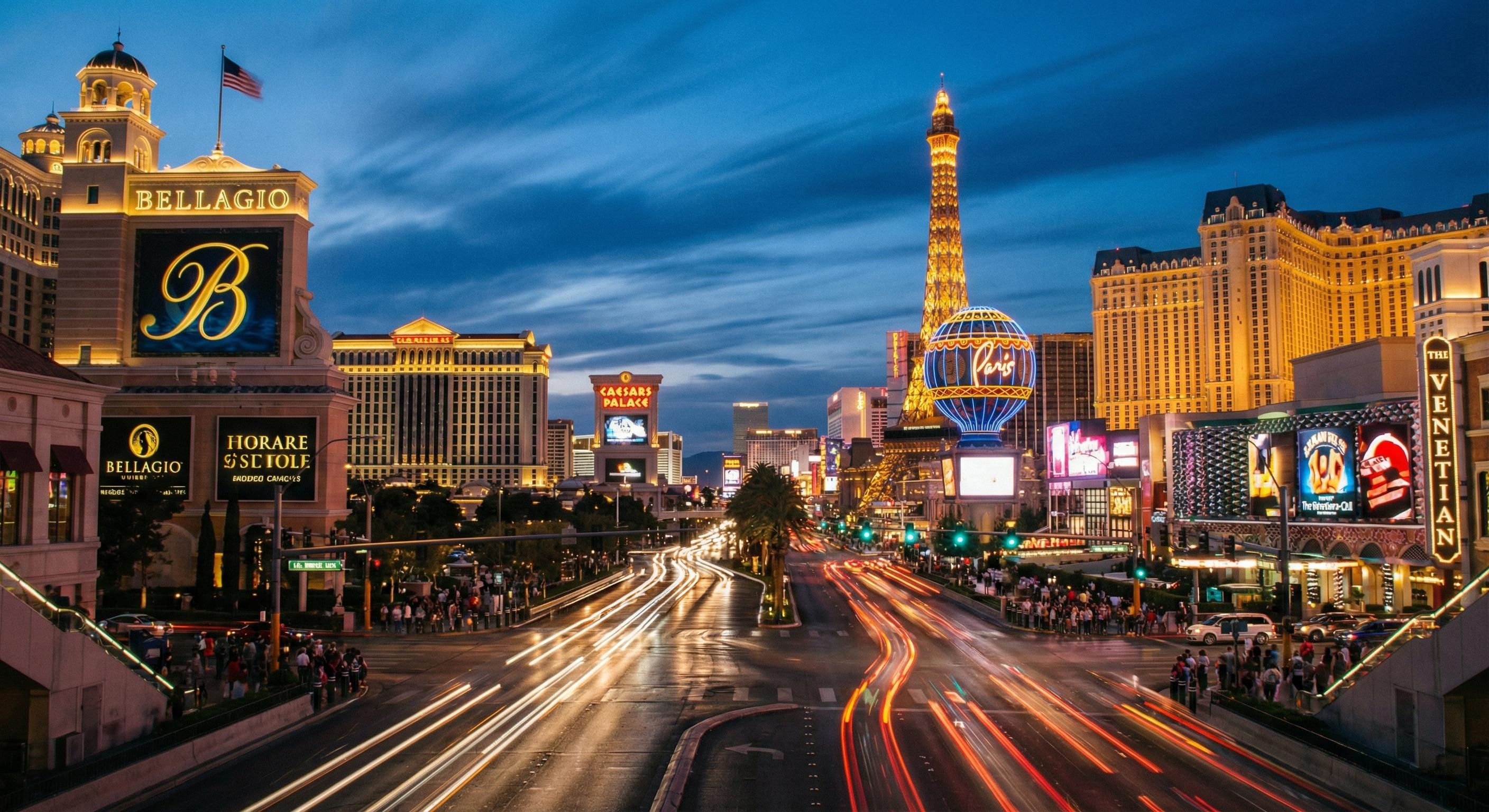
Stand in the arrivals hall of a megaresort on the Strip at 4 p.m. and you can feel the strain on the system. Thousands of guests are trying to check in before a convention welcome party. Housekeeping is racing to turn floors of check-outs. Revenue and casino teams are watching every minute of occupancy and play. A very finite number of employees sit between order and chaos.
Over the past few years, Las Vegas has quietly become one of the most aggressive testbeds for hotel automation in the world. Digital keys, self-service check-in, service robots, AI-assisted housekeeping, and increasingly computer-vision-driven room inspections are shifting how work gets done across the valley’s hotel-casino ecosystem. The shift is not about replacing hospitality’s human core. It is about orchestrating extremely complex operations at a scale few other markets face.
This piece looks at the current state of hotel automation in Las Vegas, with a particular focus on the unglamorous but decisive layer of room inspections and visual quality control, an area where computer vision platforms like Fari Lens are beginning to matter as much as check-in kiosks.
Why Las Vegas became an automation laboratory
Las Vegas hotels are not typical city properties. A single integrated resort can exceed 3,000 keys, combine multiple hotel brands with vast gaming floors, host tens of thousands of convention delegates in a week, and run 24 hours a day without meaningful off-hours. That scale, coupled with tight labor markets and union wages, makes repetitive operational work both expensive and risky to leave to fragile manual processes.
Three structural forces push Las Vegas toward automation:
- Volume and variability. Peaks around major events mean a property may handle several thousand arrivals or departures in a compressed window. Any friction at check-in, housekeeping, or billing multiplies quickly.
- Regulated, multi-line businesses. Many Las Vegas hotels are also casinos, with stringent controls on loyalty programs, comps, surveillance, and financial reporting. That creates an appetite for systems that produce consistent, auditable data.
- Guest expectations. The city competes globally for leisure and business travelers who are used to app-based experiences, digital wallets, and low-touch journeys in airlines and ride-hailing. Automation that removes queueing and paperwork is no longer a novelty. It is a baseline.
The result is a market where experimentation with automation, from mobile keys to humanoid robot concierges, is not only accepted but economically rational.
Guest-facing automation on the Strip: from phones to robots
Mobile keys and the contactless check-in stack
The most visible change for many Las Vegas guests is that the room key increasingly lives on a smartphone. Resorts World Las Vegas and other Strip properties now lean heavily on digital keys and app or web based pre-arrival flows to compress the arrival experience. Registration, ID verification, payment authentication, and key provisioning are increasingly handled before guests ever see the front desk.
These deployments sit on top of a broader self-service stack: pre-arrival registration on the web, identity verification, payment authentication, and automated key provisioning tied into casino-grade property management systems. For a Strip operator, every guest who arrives with a ready-to-use mobile key is one fewer person in a physical queue and one fewer opportunity for a manual error at the desk.
Local coverage has described this shift as part of a broader smartphone first era for Las Vegas trips, where everything from check-in to restaurant reservations routes through personal devices. That orientation also shapes how hotels think about which tasks must be automated and which interactions are worth preserving at the front desk.
Kiosks as pressure valves for the lobby
Alongside mobile keys, self-service kiosks are now common in Strip and off-Strip properties. For many casino resorts, mobile web and kiosk check-in together handle a significant share of arrivals on the busiest days, saving hundreds of guest hours and the equivalent of multiple full-time agents per month.
The arithmetic is compelling at Las Vegas scale. A kiosk or mobile flow that handles identity verification, folio setup, and key issuance for a few hundred guests per day can free agents to focus on complex issues such as group blocks, VIP handling, or guests who genuinely need human help. For the guest, the benefit is measurable: less time in line and more time on the casino floor or at the conference welcome reception.
Digital concierge and conversational interfaces
Automation is not limited to the moment of check-in. Resorts across the valley are investing in digital engagement platforms that provide a sort of always-on concierge, blending messaging, app notifications, and service workflows to handle questions and simple requests without a phone call.
In these setups, AI models help route intent, for example extra towels versus early check-in, propose replies that match brand tone, and trigger the right work orders in housekeeping or engineering. In a city where international guests, trade show exhibitors, and casino regulars all converge, the ability to scale multilingual, low-latency responses has clear upside.
Robots at the front: from novelty to infrastructure
Las Vegas has also become a showcase for physical automation. Hotels have experimented with delivery robots to run items like snacks or amenities to guest rooms, freeing staff from elevator rides that do not require human judgment. Newer concepts, such as fully AI-forward hotels with humanoid robot concierges, push the boundary further, blurring the line between kiosk and host.
For now, robots remain a small fraction of the guest experience. But they signal a trajectory. Routine, repeatable interactions are candidates for automation, while more complex or emotionally charged conversations stay with staff.
Back-of-house: the quiet automation boom
Front-of-house automation may grab headlines, but the deeper transformation in Las Vegas is happening behind the scenes, where AI and workflow tools are reshaping housekeeping, maintenance, and inventory management.
Housekeeping orchestration and AI scheduling
Traditional housekeeping in a convention hotel relies on fixed shift patterns, paper boards, and heavy manual coordination between front desk, supervisors, and room attendants. AI-enabled systems now analyze reservation patterns, group movement, and historical cleaning times to predict when rooms will actually be available and how to assign work most efficiently.
Modern scheduling engines forecast peak cleaning windows, generate task lists, and rebalance workloads based on live occupancy and check-out signals, increasing productivity while reducing overtime. In Las Vegas, where occupancy swings can be extreme, this kind of dynamic orchestration is worth millions of dollars per year in avoided delays and better room readiness.
Vendors like Agilysys and others provide work management platforms that unify housekeeping, maintenance, and guest request tickets into a single system with detailed service assignments and real-time status. For a large casino hotel, that means supervisors can see, in one place, which rooms are dirty, which are inspected, which have outstanding engineering issues, and how that maps to arriving guests.
Kitchens, bars, and inventory
Casino resorts also run enormous food and beverage operations, from quick-service outlets to fine dining and high-volume banquets. Automation here is more subtle, think kitchen monitoring, temperature tracking, and inventory reconciliation, but the impact is significant.
Suppliers to hotels, resorts, and casinos now offer automated solutions that reduce manual prep work, improve consistency, and cut waste by giving chefs and managers real-time visibility into production and stock levels. These capabilities complement front-of-house innovations like mobile ordering and digital menus to create a tighter loop between guest demand, production, and replenishment.
Data, not dashboards, as the bottleneck
Across these back-of-house domains, the binding constraint is no longer the existence of software, but the ability to connect it. When housekeeping, maintenance, POS, and PMS systems operate in silos, automation remains local. The emerging pattern, in Las Vegas and beyond, is to deploy an operating layer that sits between systems and staff, orchestrating actions and consolidating data.
Platforms like Fari take this approach deliberately, integrating with Opera or Opera Cloud PMS, Micros or Infrasys POS, ERP and finance tools, and CMMS systems, then using AI agents to execute cross-system workflows such as prepayment enforcement, night audit preparation, or housekeeping task assignment, all with full audit trails.
In that context, computer vision tools like Fari Lens become another source of structured, actionable data, especially for one of the hardest problems at Las Vegas scale: reliable, fast room inspections.
The room inspection problem at Vegas scale
For all the progress in self-service front desks and automated scheduling, most Las Vegas hotels still rely heavily on manual visual inspection to answer three basic questions:
- Is this room clean to brand standard?
- Is everything in the right place and working?
- Are there any anomalies, such as damage, smoking, or security issues, that must be documented before release?
On a 3,000-key property with high occupancy, supervisors may need to clear hundreds of rooms in a single afternoon. Each inspection involves walking the space, mentally checking against a standard, perhaps ticking boxes on a mobile checklist, and then relaying status to the PMS. There are several structural weaknesses in this workflow:
- Human variability. Two supervisors may interpret dust-free or clutter-free desk differently, leading to inconsistent guest experiences.
- Limited audit trails. When a guest disputes damage or a minibar charge, evidence often depends on memory or incomplete notes.
- Slow feedback loops. Issues discovered during inspection, for example a broken lamp or missing amenity, must be manually re-entered into maintenance or inventory systems, introducing delays and error risk.
In smaller properties, these weaknesses are tolerable. In Las Vegas, where a single wave of arrivals can turn into hundreds of five-minute delays if rooms are not released on time, they accumulate into measurable cost.
This is precisely where computer vision, and specifically tools like Fari Lens, are starting to change the equation.
From clipboards to cameras: how computer vision room inspections work
Computer vision platforms for hospitality, including Fari Lens, are designed to interpret visual scenes the way a trained supervisor might, but with machine-level consistency. Fari Lens already underpins minibar stocktaking, cleanliness checks, and food and beverage inventory for hotels, turning smartphone photos into structured data that feeds billing, purchasing, and analytics systems.
Applied to room inspections in a Las Vegas context, a typical workflow looks like this:
- Capture. A room attendant or supervisor walks the room with a standard smartphone, capturing a small set of guided photos: bathroom, bed, desk, minibar, wardrobe, floor, and key fixtures.
- Analysis. Fari Lens processes the images using models trained on hospitality environments. The system identifies objects such as pillows, amenities, and towels, checks their presence and placement, estimates cleanliness on key surfaces, and detects obvious anomalies such as trash left behind or visible damage.
- Output. The platform converts findings into structured events such as “Room 2814 inspection pass,” “Minibar variance two items missing,” or “Engineering issue visible crack in sink.” These events post automatically into the PMS, maintenance system, or task management tools via Fari’s automation layer.
- Evidence. Each inspection is stored with timestamped images and the model’s assessment, creating an audit trail that can be referenced during guest disputes or internal quality reviews.
For Las Vegas operators, the practical benefits fall into three buckets:
- Speed. Supervisors can review model-flagged exceptions rather than walking every room in detail. On a large tower, this can save hours on peak days.
- Consistency. The same standards are applied across shifts and teams, aligning more tightly with brand or owner expectations.
- Defensibility. When there is a dispute over cleanliness, damage, or minibar consumption, the hotel can rely on visual records rather than recollection.
Existing deployments of Fari Lens in minibar and beverage inventory contexts show how powerful this approach can be. Hotels using the platform typically see significant reductions in inventory shrinkage and dramatic cuts in audit time, savings that scale directly to Las Vegas style towers when inspection data feeds both billing and purchasing decisions.
Weaving inspections into the rest of the Vegas automation stack
Computer vision inspections are most valuable when they are not a standalone tool, but part of the same automation fabric that already powers check-in, housekeeping scheduling, and back-office workflows.
In a Las Vegas resort running an AI-enabled operating layer like Fari, a near-future afternoon might look like this:
- Late morning forecasting. Fari AI analyzes arrivals, departures, and group patterns, then auto-generates housekeeping boards that prioritize early check-ins for loyalty members and high-value casino guests.
- Turnover and cleaning. As rooms go dirty, attendants clean and then capture a short set of images on a Lens-enabled app. The AI checks for standard compliance, minibar variances, and obvious maintenance issues.
- Automated status updates. When Fari Lens sees that a room meets standards, the PMS status flips to inspected without a phone call or manual system update. If the model flags an issue such as a missing amenity, suspected smoking, or visible damage, Fari AI raises a maintenance or housekeeping exception task with all relevant context.
- Analytics and control. Because the same platform also aggregates financial and operational data, leadership teams can see correlations between automation use, labor hours, complaint rates, and revenue outcomes across Las Vegas and non-Vegas properties.
Crucially, this does not remove human judgment. In sensitive situations such as suspected security issues or ambiguous damage, supervisors remain in the loop to override AI decisions. But for the large majority of routine inspections, the combination of image capture, computer vision, and cross-system automation reduces friction and error.
Robots, room inspections, and the wider Vegas ecosystem
Las Vegas does not operate in isolation. The same Strip guests who tap mobile keys and chat with robot concierges increasingly arrive via autonomous shuttles and robotaxis that connect hotels, attractions, and entertainment districts. As urban mobility, payments, and entertainment become more automated, expectations for hotel operations continue to shift.
In that context, computer vision room inspections look less like a speculative experiment and more like the next logical layer of infrastructure. They sit alongside delivery robots that automate routine runs to guest rooms, AI-driven scheduling that optimizes cleaning flows, and digital concierge systems that handle a growing share of guest questions.
What differentiates leaders is not any single gadget, but how coherently they stitch these capabilities together, and how thoughtfully they preserve the human parts of hospitality that cannot be automated.
Practical steps for Las Vegas operators
For executives and owners in Las Vegas considering the next wave of automation, particularly around room inspections, several pragmatic steps help separate signal from noise:
- Map the real bottlenecks. Is the property constrained by front desk queues, housekeeping inspection capacity, engineering turnaround, or inventory shrinkage? The answer should drive which automation projects to prioritize.
- Start where data already exists. If mobile keys and kiosks are in place, the next logical step may be housekeeping orchestration and inspection automation, not yet another guest-facing app.
- Treat computer vision as a data source, not a bolt-on. Tools like Fari Lens are most powerful when their outputs feed directly into PMS, POS, CMMS, and analytics platforms rather than living in a separate dashboard.
- Keep humans in the loop where it matters. Set clear policies for when staff must review AI decisions, for example smoking fees, high-value damage, or security-sensitive anomalies.
- Measure outcomes, not deployments. Track tangible metrics such as time to room ready, inspection failures caught before check-in, minibar dispute rates, and labor hours per occupied room. Platforms that cannot demonstrate improvement on these axes should be reconsidered.
Where Las Vegas goes next
Looking ahead, the most interesting shift in Las Vegas hotel automation is not the next device, but the emergence of coherent operating systems that coordinate many small automations into reliable, repeatable plays. Agent-based orchestration, where software agents handle sequences like detect late arrival risk, reshuffle housekeeping, and adjust upsell timing, is already visible in global hotel groups and is beginning to influence independent and casino-centric properties.
In that world, computer vision room inspections and tools like Fari Lens become foundational infrastructure. They feed trustworthy, granular data about the physical state of rooms and inventory into an automation fabric that spans payments, reservations, staffing, and revenue management.
Las Vegas will likely remain the world’s most theatrical testbed for these ideas. But the lessons are transferable. When automation is designed as an invisible backbone, not as a gimmick, it can make hotels both more efficient and more human. Guests spend less time in lines and on hold. Staff spend more time solving real problems and delivering memorable service. Owners get cleaner data and more resilient margins.
For a city built on orchestrating complex experiences at scale, that is less a technological revolution than an overdue upgrade to the operating system underneath the lights.