The Benefits of Fari Lens for Dubai Hotels
In Dubai’s high-occupancy, high-expectation hotel market, Fari Lens helps properties reduce labor drag, catch minibar leakage, verify room quality, and create better operational evidence.

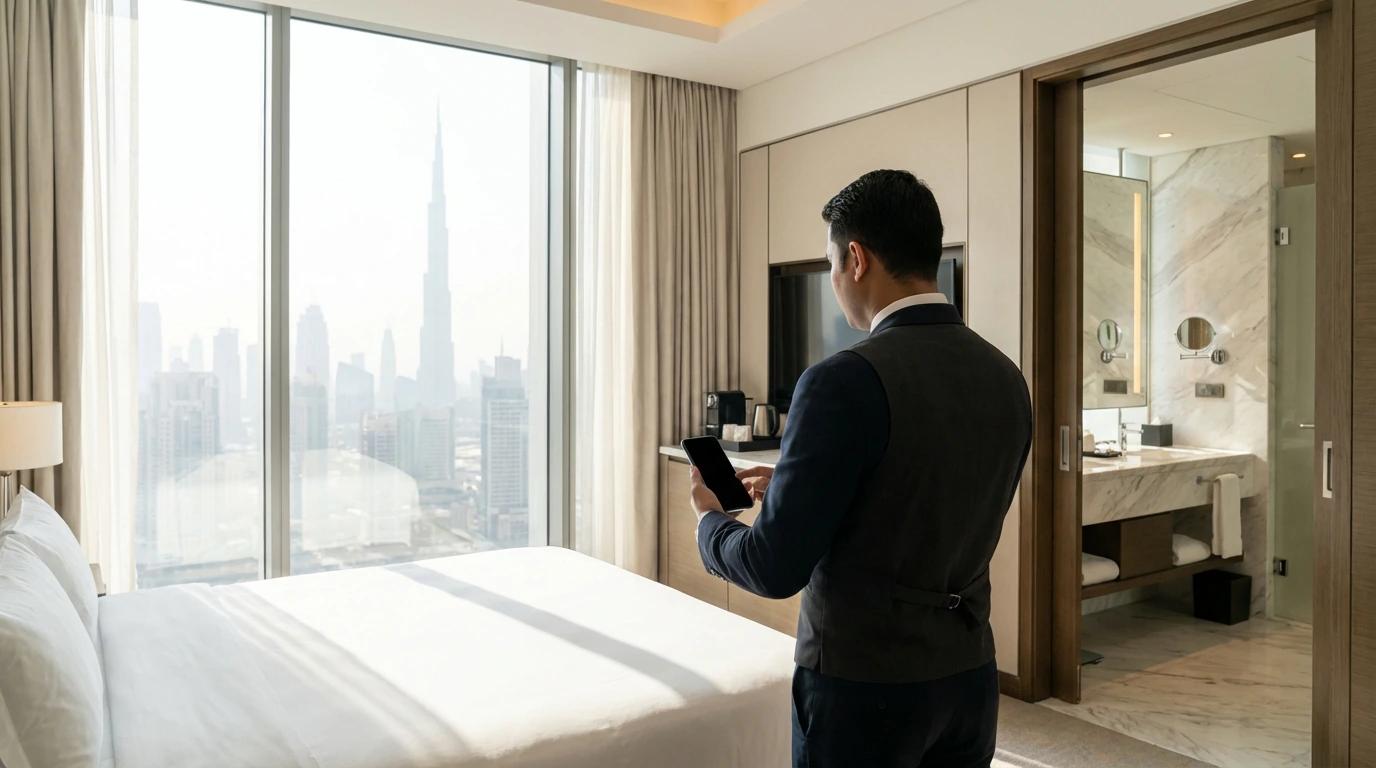
Dubai is one of the few hotel markets where volume, complexity, and expectation all rise at once. Demand is strong, supply keeps expanding, and the city’s premium positioning means operational inconsistency is not a small inconvenience; it is a commercial problem. When occupancy is high and room rates remain elevated, every missed minibar charge, every room released with a flaw, and every delayed inspection carries a larger cost than it would in a softer market.
That is why the case for computer vision in Dubai hotels is unusually practical. Fari Lens is not valuable because it sounds futuristic. It is valuable because it turns visual tasks that are normally slow, inconsistent, and weakly documented into structured operational workflows. In a city where hotels compete on speed, polish, and reliability, that shift matters.
Why Dubai is a particularly strong fit for Fari Lens
The backdrop matters. Dubai welcomed 19.59 million international visitors in 2025. Hotel occupancy averaged 80.7 percent for the year, while ADR rose to AED 579 and RevPAR to AED 467. By year-end, the city had 154,264 rooms across 827 properties, and new supply continues to come in, especially at the higher end of the market. In other words, hotels are being asked to run fuller properties, preserve rate, and defend brand standards while competing in an environment where luxury and upper-upscale supply keeps deepening.
That combination creates a familiar pressure inside operations teams. Supervisors need rooms verified faster. Housekeeping leaders need more consistency across shifts and languages. F&B teams need tighter control over minibar and in-room inventory. General managers need audit trails they can trust when a guest disputes a charge or a department claims a task was completed. Many of these problems are visual in nature, yet they are still handled through manual checks, memory, paper notes, and fragmented apps.
Fari Lens is built for exactly that gap. It uses mobile phone cameras and hotel-specific computer vision models to automate visual operational checks without requiring full integration into the existing stack on day one. That matters in Dubai, where many properties operate with a mix of legacy systems, brand standards, outsourced labor, and tightly managed service expectations.
What Fari Lens actually does inside a hotel
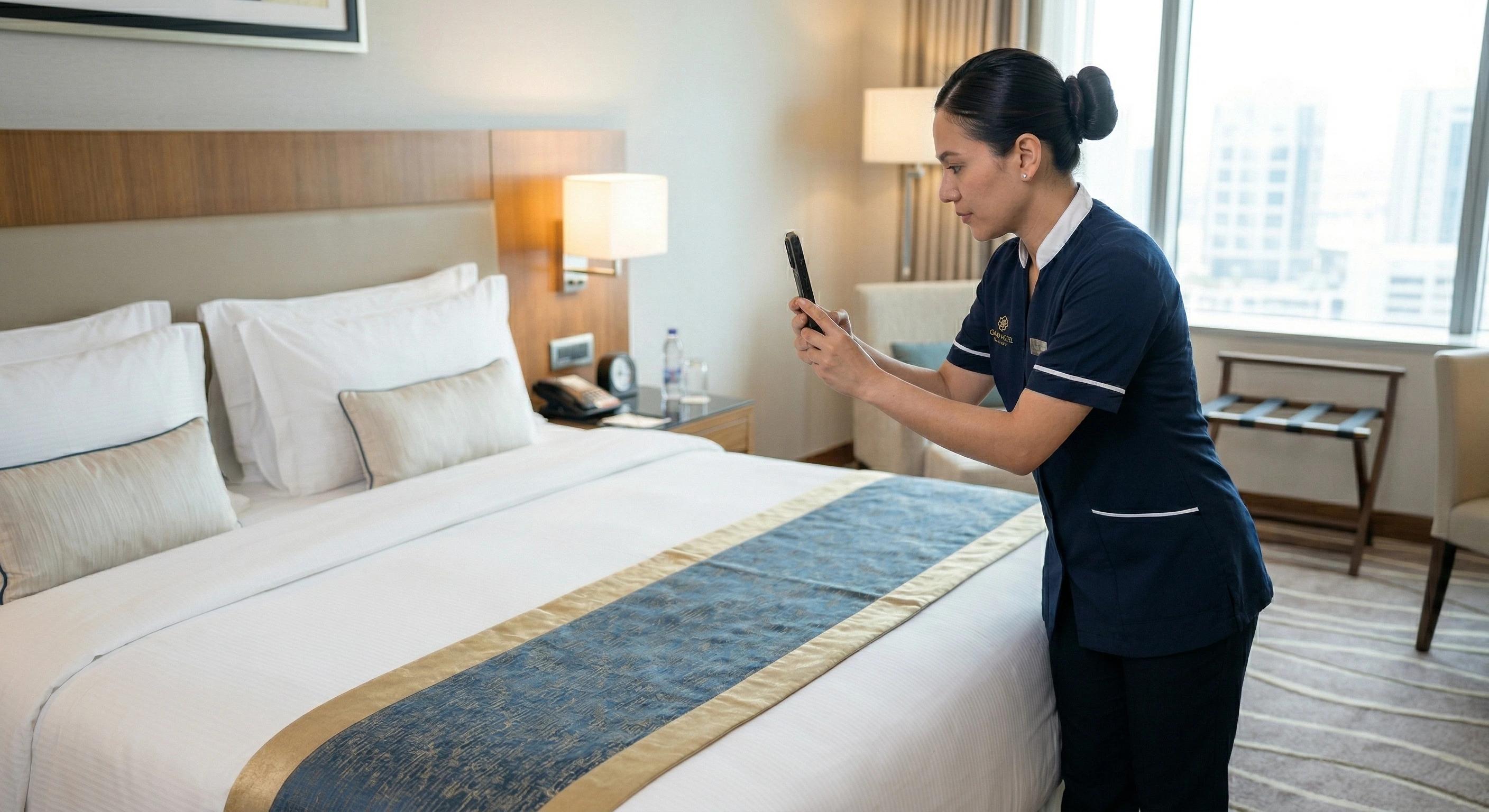
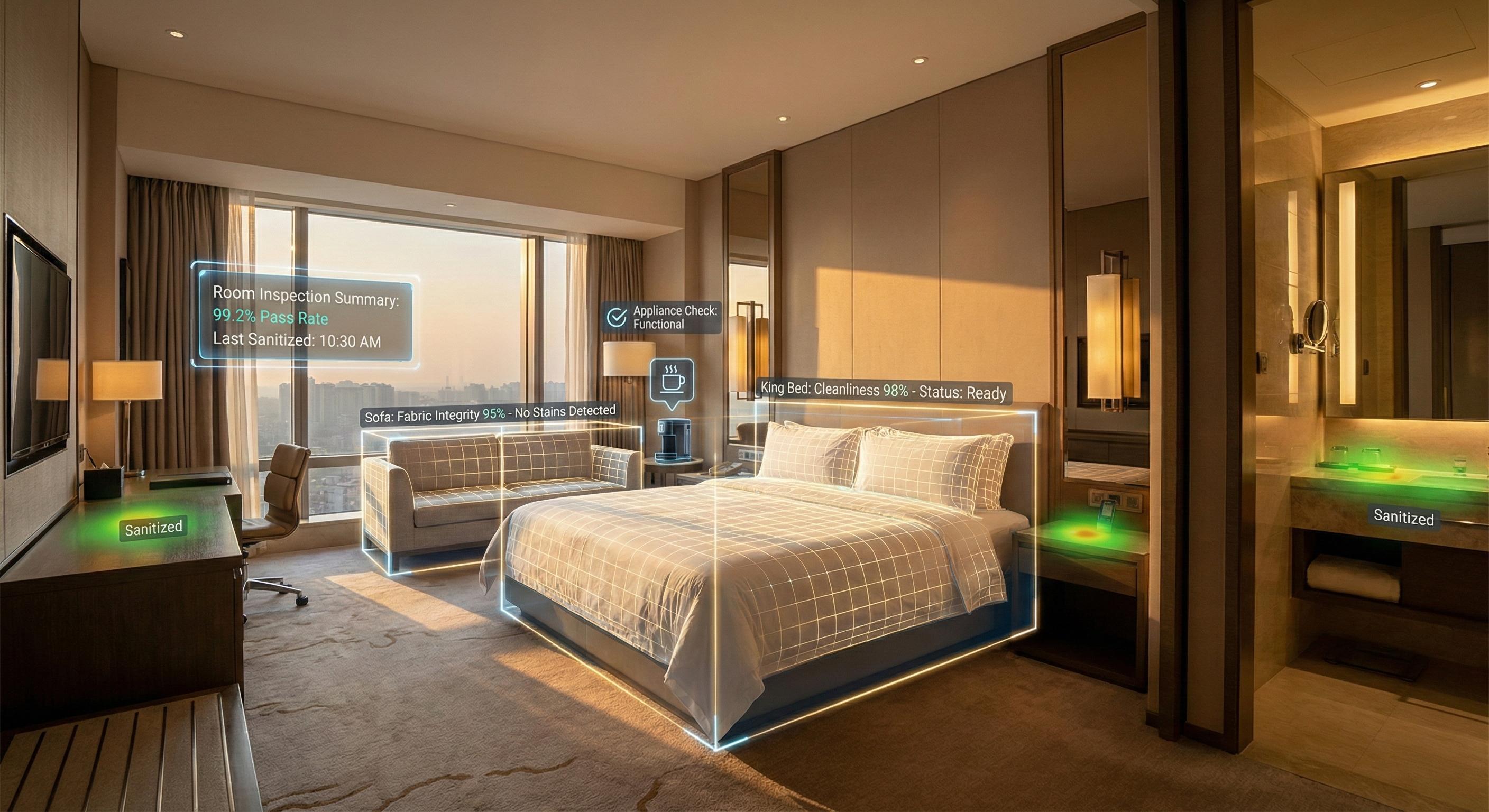
At its core, Fari Lens turns photographs into operational evidence. Staff use the mobile app to capture images of a minibar, guest room, or other inspected area. The system then analyzes what is visible and translates that image into a usable result: what is missing, what appears out of place, what may need maintenance attention, what should be restocked, and what record should be logged for accountability.
Its primary hotel use cases are straightforward but high impact: room cleanliness and maintenance verification, and automated minibar inventory management. Both are tasks with a high cost of inconsistency and a low strategic return on human time. They are necessary, repetitive, and visually dependent. Those are exactly the kinds of processes computer vision tends to improve first.
Benefit 1: Faster room readiness without weakening quality control
One of the hardest operating balances in Dubai hotels is speed versus standard. Properties want rooms released quickly, especially during high-turnover periods, but they cannot afford visible lapses in cleanliness, setup, or maintenance. Traditional inspection models usually force a tradeoff: either managers spend more time checking rooms manually, or they move faster and accept more inconsistency.
Fari Lens changes that tradeoff by making verification quicker and more systematic. Housekeeping staff can photograph the room in-app, and the system checks for conditions such as general cleanliness, missing amenities, stains, damage, maintenance issues, and compliance with standard operating procedures like towel placement or amenity setup. Instead of relying solely on whether an individual supervisor happened to notice a problem, the property gets a timestamped visual record tied to the task itself.
For Dubai hotels, this is especially useful in properties with large room counts, multilingual teams, and strict brand presentation rules. A digitized visual standard reduces the operational variability that often appears across shifts, floors, and outsourced staffing structures. It can also shorten the feedback loop. A room that fails inspection can be corrected immediately, before check-in, instead of generating a complaint later when the recovery is more expensive and more visible.
Benefit 2: Better minibar revenue capture in a market where leakage adds up fast
Minibar management remains one of those hotel processes that looks small until a finance team studies it closely. In-room consumption is dispersed, repetitive, and easy to miss. Manual checks take time, and the more time they take, the more tempting it becomes to rush them. In premium markets like Dubai, where product mix is often wider and room rates are higher, that leakage can become meaningful.
Fari Lens lets staff photograph the minibar and instantly identify items that are missing or moved. The system generates the restock list automatically, recognizes products and quantities without manual counting, and logs results with timestamps and photo evidence. According to Fari’s platform overview, hotels typically see a 70 percent reduction in time spent on minibar checks and a 15 to 30 percent increase in captured minibar revenue by catching consumption that would otherwise be missed.
The significance for Dubai hotels is not only financial. It is also operational. In a busy property, the value of a minibar workflow is not merely that it posts charges accurately. It is that the workflow becomes dependable enough to run daily without becoming a drain on housekeeping or F&B labor. That frees staff to spend less time counting and recounting, and more time on the work guests actually perceive.
Benefit 3: Fewer disputes, better evidence, calmer recovery conversations
Guest disputes over minibar charges or room condition are rarely just accounting questions. They are trust questions. Once a guest believes a charge is inaccurate or a room was released below standard, the issue shifts from simple correction to credibility. Hotels then spend management time reconstructing what happened, often from incomplete notes and inconsistent recollection.
Fari Lens improves this by creating photo-verified records tied to timestamps and itemized findings. In practice, that gives the property something much stronger than a verbal assurance from a staff member who checked the room hours earlier. It creates documentation that can support a billing explanation, a service recovery decision, or a training review.
For Dubai hotels serving international travelers with high service expectations, that kind of operational evidence is not trivial. It can reduce friction at the front desk, shorten internal escalation, and help properties resolve disagreements while preserving confidence in the brand. The point is not to win arguments with guests. The point is to make preventable arguments less common in the first place.
Benefit 4: More consistent execution across multilingual, high-churn operations
Dubai hotels often run with highly international workforces. That diversity is a strength, but it can make operational consistency harder when standards are communicated through long checklists, supervisor discretion, and uneven training. Fari Lens addresses part of that problem by simplifying tasks into a capture-and-confirm workflow and supporting role-based task management with staff-facing workflows in the user’s preferred language.
That matters because many inspection processes fail not from lack of effort, but from ambiguity. Staff are told to inspect thoroughly, but the standard lives partly in memory and partly in informal coaching. A computer-vision workflow makes the expectation more legible. The hotel is no longer asking every staff member to interpret a standard from scratch. It is building the standard into the task path.
Over time, that can make onboarding faster, reduce rework, and support more disciplined scaling across towers, room types, or sister properties. In a market where service consistency is central to reputation, this operational clarity is one of the less obvious but more durable benefits of Fari Lens.
Benefit 5: Earlier maintenance detection and better cross-department follow-through
A room inspection is rarely just a cleanliness exercise. It is also one of the moments when maintenance issues become visible: stains, damage, missing items, setup drift, or signs that an in-room element needs attention before it fails more conspicuously. In many hotels, those observations are still captured inconsistently and routed slowly.
Because Fari Lens can flag maintenance needs as part of the visual verification flow, properties can move issue detection closer to the moment of service delivery. That is a meaningful operational gain. A small defect identified before check-in is a routine fix. The same defect discovered by the guest becomes a complaint, a possible room move, a compensation decision, and a blemish on the stay.
The platform can also connect via API to PMS and operations software, allowing downstream automation such as routing maintenance issues to work order systems or prioritizing housekeeping tasks based on inventory needs. For a Dubai hotel trying to reduce the gap between finding a problem and acting on it, this is where Fari Lens starts to function less like a narrow inspection tool and more like part of an operating layer.
Benefit 6: Real-time visibility for managers instead of delayed, manual reporting
One of the hidden weaknesses in manual hotel operations is not only that tasks take longer. It is that managers often do not see the state of execution until after the fact. If minibar checks are incomplete, if a cluster of rooms needs restocking, or if inspection quality is drifting, that picture may emerge late, after handwritten notes are consolidated or a supervisor reports upward.
Fari Lens improves management visibility by centralizing results in dashboards with task status, timestamps, and operational metrics. That helps department heads understand throughput, exceptions, and unresolved work as it develops. In a city where many hotels operate at high occupancy and with minimal room for service failure, faster visibility is not just convenient. It is managerial leverage.
Benefit 7: A lower-friction path to adoption than many hotel technology projects
A common reason good hotel technology ideas stall is that they require too much from the property before value appears. Full systems integration, process redesign, extended training, and a long implementation timeline can make operators cautious, especially when teams are already busy. Fari Lens is notable because it can deliver core functionality without requiring integration from the start.
That standalone design matters in Dubai, where ownership structures, brand requirements, and system environments vary widely. Hotels can begin with bounded use cases, such as minibar checks or room-quality verification, prove the workflow, and then decide whether to extend the system into broader automation. According to Fari’s deployment materials, implementation typically runs six to twelve weeks depending on scope, and staff training sessions are intentionally compact, often fifteen to thirty minutes.
This staged approach fits the way many successful hotel technology programs actually spread: not through one sweeping transformation, but through a sequence of credible wins. For a Dubai operator, that reduces risk. You do not need to redesign the entire hotel to begin extracting value from visual automation.
Why the benefits compound in luxury and upper-upscale properties
Dubai’s pipeline remains weighted toward the higher end of the market, and that is important because the economics of inconsistency get sharper as positioning rises. A missing minibar charge is more consequential when the room category, amenity mix, and guest expectations are all premium. A room readiness failure is more visible when the product promises precision. Manual inspection systems that were merely inefficient in a midscale environment can become genuinely costly in luxury operations.
Fari Lens is well suited to this context because it is not trying to replace hospitality with automation. It is trying to preserve hospitality by making backend execution more exact. The best luxury hotels still win through human judgment, memory, anticipation, and tone. But those strengths are diluted when teams spend too much time on rote counting, redundant checking, and reconstructing avoidable disputes. Visual automation protects the human side of service by taking friction out of the invisible side.
What a sensible rollout could look like in Dubai
For most Dubai hotels, the right way to think about Fari Lens is not as an all-at-once deployment, but as a disciplined operational pilot. Start with one or two workflows where the visual task is repetitive, measurable, and currently painful. Minibar checks are an obvious candidate. Room cleanliness and setup verification is another. Establish the baseline first: time per check, error rates, dispute frequency, revenue leakage, rework volume, and supervisory hours.
Then train the model against the property’s actual layouts, inventory, and standards. Fari’s process is explicitly hotel-specific, using on-site discovery and image capture to fine-tune the system to a property’s own room types, minibar configurations, and SOPs. That customization is important. Generic visual models often fail in operations because hotels are not generic. The room layouts, product mix, lighting conditions, and service standards differ by property.
After pilot validation, the hotel can decide where to expand: more room categories, more towers, more F&B inventory points, or optional integration into PMS and operations systems. This is also the moment when Fari AI and Fari Analytics can start to matter in a wider sense. Lens creates the visual data and verified events; AI and analytics can help route actions, monitor performance, and connect those events to operating decisions across the property.
The deeper strategic value
The deepest benefit of Fari Lens for Dubai hotels is not simply that it saves time, captures more minibar revenue, or produces cleaner records, though it does all three. It is that it helps hotels move from subjective operations to evidenced operations. That is a larger shift. Once visual checks become structured data, a hotel can manage them with more discipline, compare performance across teams, and see where service promises break down before the guest feels the failure.
In a market like Dubai, that matters because success is not defined only by demand. Demand is already there. The harder question is which hotels can translate that demand into consistent execution, defended rate, calmer teams, and fewer preventable losses. Fari Lens addresses that question at the level where many hotel margins are quietly won or lost: the everyday visual tasks that keep a property credible.
Conclusion
Dubai hotels do not need more technology for its own sake. They need tools that fit the reality of a fast, international, premium, operationally demanding market. Fari Lens fits because it goes after concrete hotel problems: slow inspections, inconsistent room checks, minibar leakage, weak documentation, delayed maintenance capture, and limited real-time visibility.
Its benefits are therefore best understood in operational terms. It helps hotels verify rooms faster, standardize quality control, capture revenue that manual processes miss, reduce guest disputes with photographic evidence, support multilingual teams with simpler workflows, and build a stronger base for broader automation. In a city where occupancy is high, guest expectations are unforgiving, and competition keeps intensifying, those are not marginal improvements. They are the kinds of improvements that protect both profit and reputation.