Why Fari Lens Matters for Hotel Facilities Management Teams
Fari Lens helps hotel teams and housekeeping partners turn room checks into auditable, scalable operations

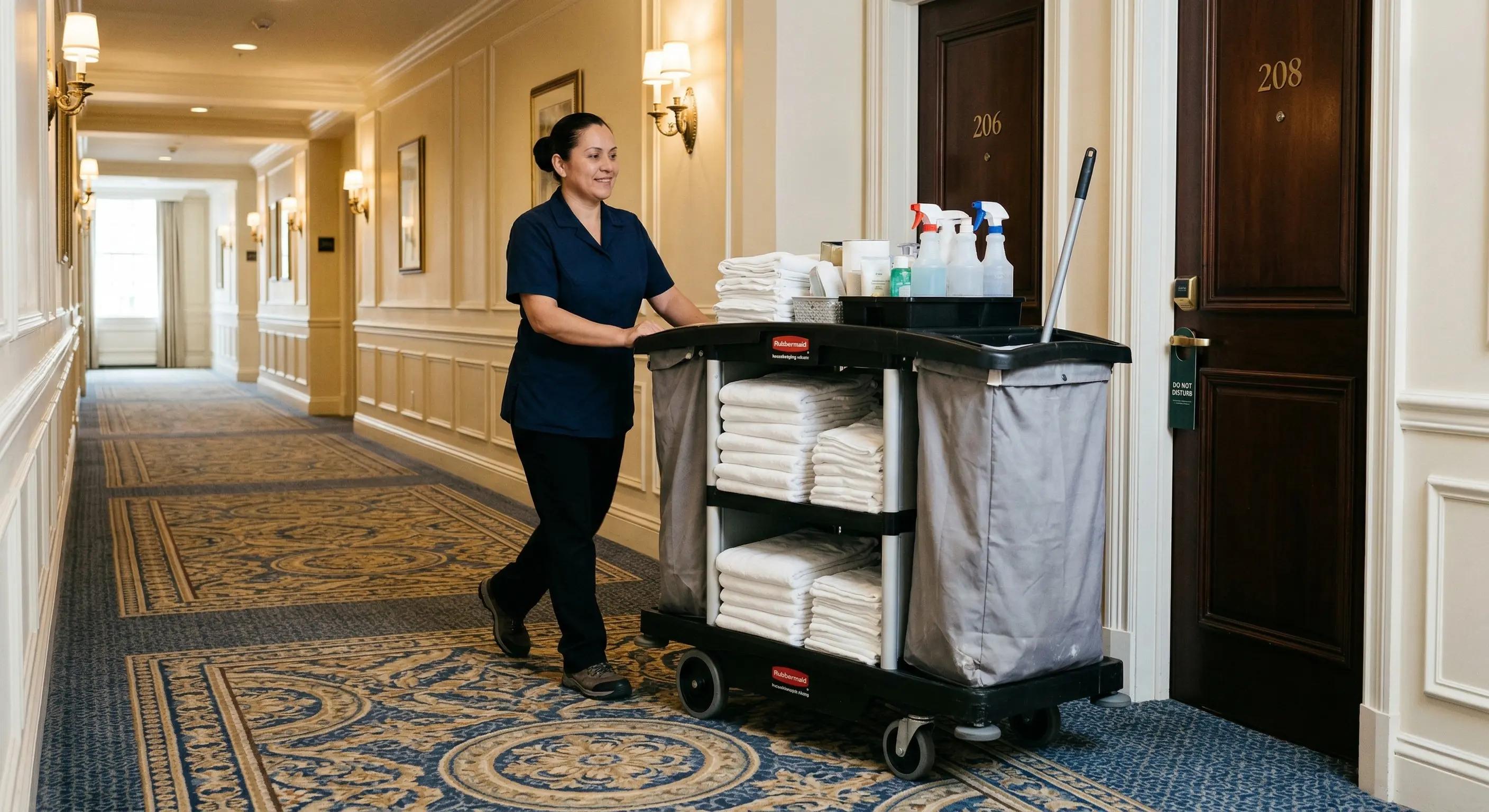
There is a large but often underexamined layer of the hotel business that lives between ownership and guest experience: the companies and teams responsible for keeping rooms ready, standards consistent, assets protected, and labor deployed at the right place and time. Sometimes that layer sits inside the hotel as facilities management or housekeeping leadership. Sometimes it is handled by third-party operators, labor management firms, staffing partners, or outsourced housekeeping specialists contracted to deliver room attendants, supervisors, inspections, and service-level performance. Whatever label the market uses, the commercial reality is the same. These operators are judged on speed, quality, documentation, and trust.
That combination is precisely where visual operations become difficult. A room may be marked clean but still have a missed stain, a missing amenity, a poorly placed towel set, or a maintenance issue that only becomes visible after check-in. A supervisor may complete inspections faithfully, yet inconsistently from floor to floor or property to property. A service provider may believe it is meeting brand standards, while the hotel believes standards are drifting. In labor-intensive environments, the gap is rarely effort. It is verification.
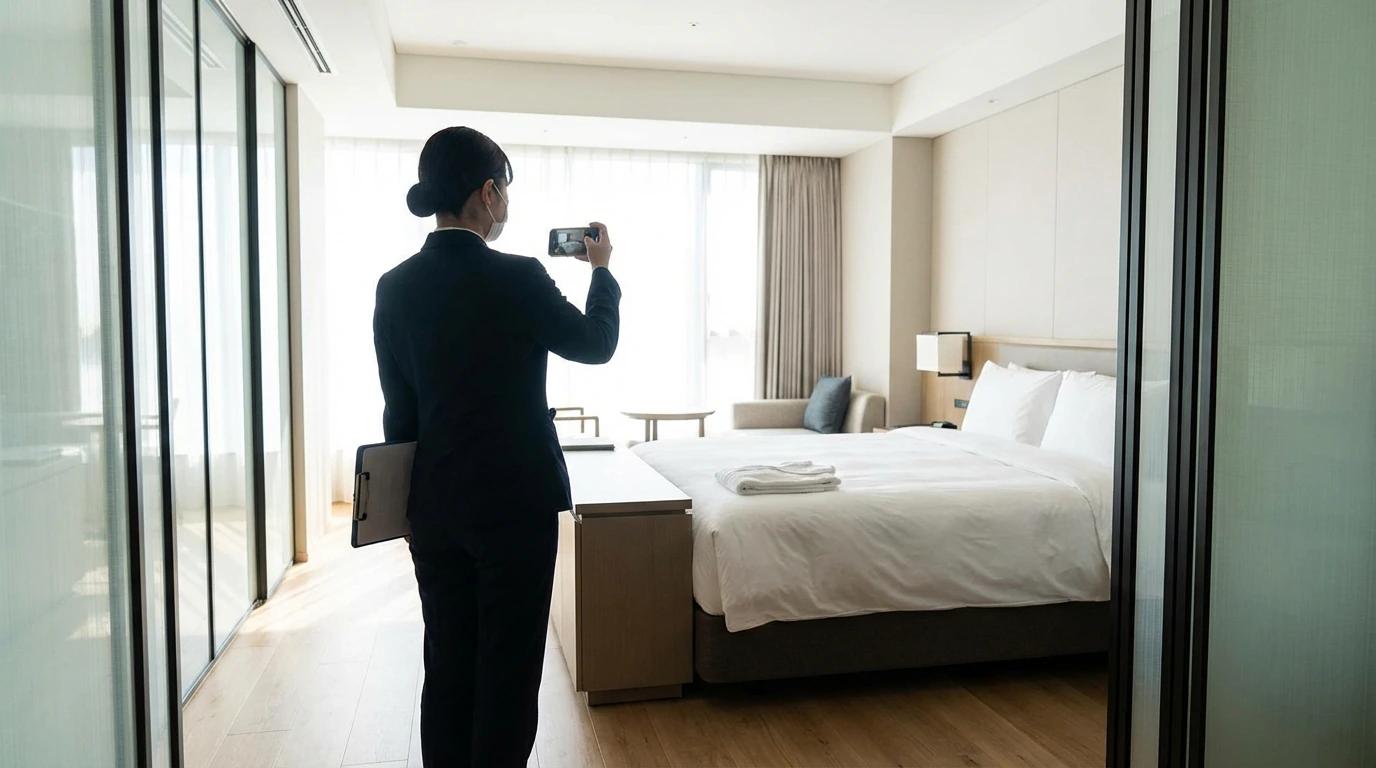
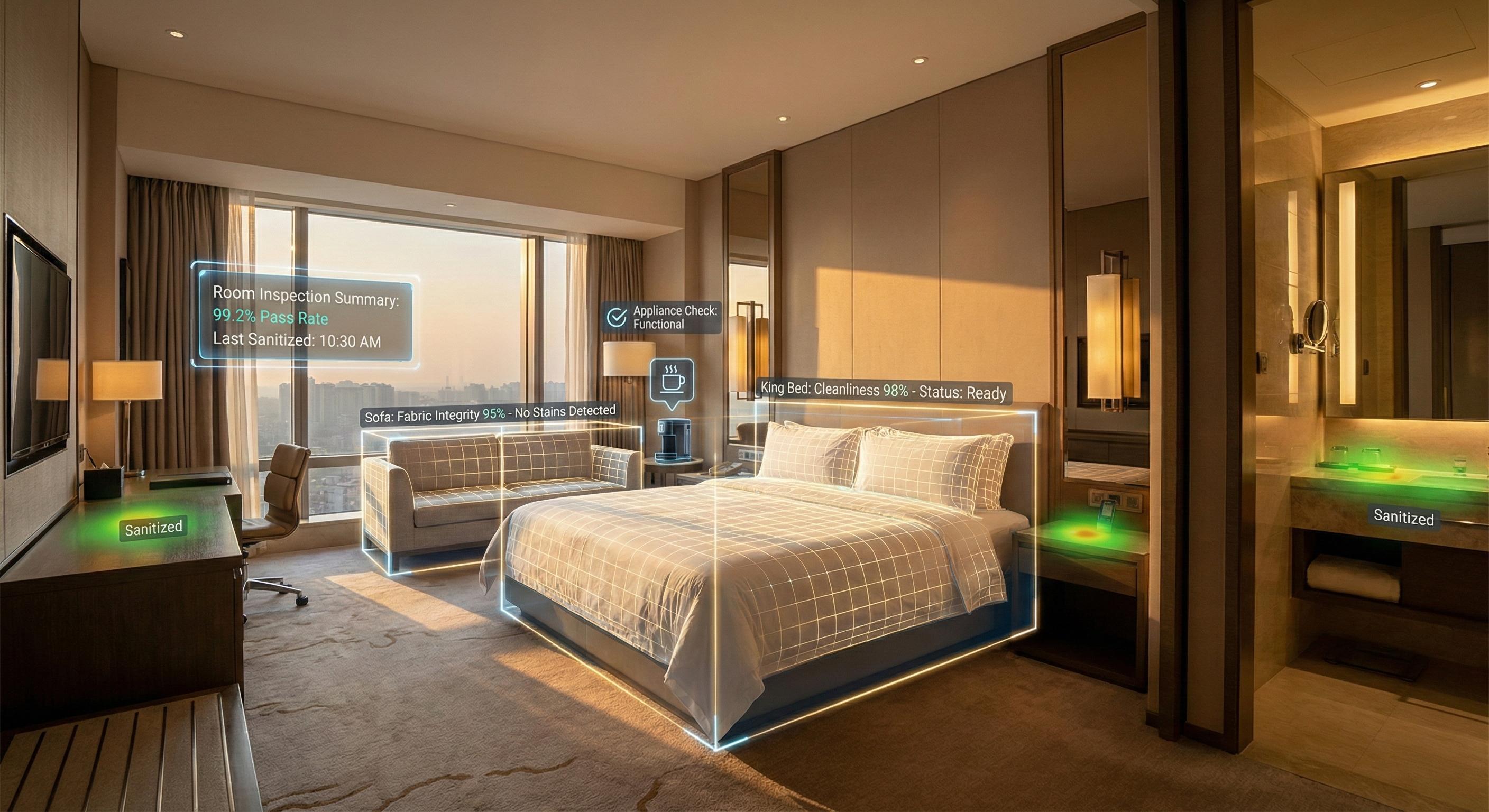
Fari Lens is useful because it attacks that problem at its source. It is a standalone computer vision application built to automate hotel visual operational checks using mobile phone cameras and property-specific models. In practice, that means staff can photograph a room or minibar in the app and receive immediate analysis, timestamped records, and a clearer operational trail without having to wait for a manager’s memory, a paper checklist, or a disputed verbal handoff. For hotel facilities teams and outsourced service partners alike, that changes the economics of quality control.
The industry problem behind the product
The user’s description points to a real category even if the terminology varies: outsourced housekeeping providers, facilities management firms, labor supply partners, and hotel operations contractors. These organizations do not merely provide labor. They provide managed outcomes. The hotel expects rooms to be guest-ready on time, to brand standard, with low complaint rates, proper documentation, and minimal friction between housekeeping, maintenance, and front office. The contractor, meanwhile, must protect margins in a business where labor is expensive, turnover is high, supervision is thin, and disputes over quality can quickly become commercial disputes.
That is why visual verification matters so much. When the work itself is physical and distributed across hundreds of rooms, the management problem is not just assigning people. It is proving what was done, spotting what was missed, and creating a repeatable operating language across different shifts, different supervisors, and different hotels. Traditional inspection models struggle here because they depend heavily on manual spot checks. Spot checks are slow, inconsistent, and expensive. They also tend to surface problems late, after the room has already moved downstream into saleable inventory or, worse, into a guest stay.
Fari Lens sits neatly in that gap. Its cleanliness and maintenance verification workflow is designed around the reality that a phone camera is already available, that staff can be trained quickly, and that hotels need immediate evidence rather than another reporting layer that only becomes useful after the fact. For outsourced operators, this matters because it turns quality assurance from a managerial overhead function into an operational process embedded in daily work.
Why this matters specifically for outsourced housekeeping and facilities partners
A hotel may tolerate some ambiguity within its own internal teams because everyone ultimately reports into the same operating structure. Third-party service relationships are different. They are governed by contracts, service-level expectations, renewal decisions, and brand risk. The burden of proof is higher. If an outsourced housekeeping provider says a floor was cleaned to standard, it helps enormously to have timestamped visual records rather than an argument between a supervisor, an executive housekeeper, and a front office manager reacting to guest complaints the next day.
For that reason, the benefit of Fari Lens is not just automation in the abstract. It is operational credibility. A service partner that can show what was checked, when it was checked, what the system flagged, what was corrected, and how the room was released creates a different relationship with the hotel. It becomes easier to manage performance objectively. It becomes easier to coach teams. It becomes easier to distinguish isolated misses from structural staffing or process problems. And it becomes easier for the service provider to defend its own work when blame is assigned too casually.
1. It makes quality measurable instead of anecdotal
Many facilities and housekeeping partners live in a world of anecdotes: “the rooms on level seven were not inspection-ready,” “amenity placement has been inconsistent,” “we keep finding missed maintenance issues,” “morning shift is stronger than evening shift.” These statements may be true, but they are hard to manage because they are imprecise. Fari Lens converts them into something closer to operational evidence. The app can analyze general cleanliness, missing amenities, stains or damage, maintenance needs, and whether standard operating procedures such as towel placement or amenity setup were followed.
That matters in two directions. Hotels gain greater confidence that standards are being checked consistently. Service providers gain a fairer basis for discussing performance with both clients and staff. Instead of generic criticism, teams can work from actual room-level patterns. Is one room type producing more misses than another? Are certain attendants struggling with setup consistency? Are issues linked to training, staffing ratios, or rushed turnovers during peak arrivals? Once the visual record exists, management can stop guessing so much.
2. It reduces the supervisory tax on the operation
Outsourced housekeeping businesses often win or lose on supervision economics. To maintain trust, they need enough floor leaders and inspectors to assure quality. But every additional supervisor adds cost, and too much supervisory layering can erase already thin margins. The old answer was to choose between tighter control and acceptable profitability. Fari Lens changes that equation by allowing staff to capture rooms directly in the workflow and by generating instant verification records.
This does not eliminate supervisors. It makes them more selective and more useful. Instead of spending disproportionate time walking rooms just to confirm obvious basics, supervisors can focus on exceptions, coaching, recurring misses, and coordination with engineering or front office. In other words, they move up the value chain. For facilities operators managing multiple properties, this is a major advantage because good supervisors are hard to hire and even harder to scale.
3. It supports faster room turnover without relying on blind trust
Room turnover is one of the most sensitive pressure points in hotel operations. Delays ripple outward into front desk queues, early-arrival disappointment, housekeeping overtime, and tension between the hotel and the service provider. Yet speed without verification is dangerous. Rushing a room into available inventory can create complaints that cost far more than the minutes saved.
Fari Lens is valuable here because it offers instant quality verification at the point of work. A team can move more quickly while still creating proof that a room was assessed. For outsourced operators, that is especially important during compressed turnover windows, large group departures, or labor shortages. The technology helps answer a question every hotel asks under pressure: is this room truly ready, or are we simply hoping it is?
4. It improves accountability without turning the operation punitive
Accountability in housekeeping often becomes adversarial because evidence is weak. If a room fails, the natural response is to ask who cleaned it, who inspected it, and who released it. But without structured proof, the discussion quickly turns into memory, hierarchy, and blame. Timestamped photo records change the tone. They create a cleaner chain of responsibility, which is important not only for hotels but also for labor management firms trying to lead fairly across large teams.
The subtle advantage is cultural. When staff know the system is documenting work consistently, feedback becomes easier to standardize. Training becomes more concrete. Managers can compare examples of acceptable and unacceptable room states. Service providers can protect high-performing staff from vague criticism while also identifying repeated failures that genuinely need intervention. In a labor category often plagued by turnover and inconsistent coaching, that is no small thing.
5. It catches maintenance issues before they become guest-facing failures
The border between housekeeping and maintenance is porous. A room attendant may be the first person to notice damage, missing fixtures, visible wear, or a setup issue that technically belongs to engineering. In many hotels, those issues are noticed but not documented well, or documented but not routed quickly enough. The cost is familiar: a room goes back into inventory with a hidden problem, a guest discovers it, and the hotel pays for the miss in compensation, service recovery, or brand damage.
Because Fari Lens can identify maintenance needs during room verification, it gives facilities teams and outsourced operators a better early-warning layer. This is where the product becomes more than a cleanliness tool. It starts functioning as a visual checkpoint inside the wider operating system of the hotel. When paired with operations software or work order systems, those findings can be routed into downstream workflows. But even without integration, the simple act of creating reliable visual evidence earlier in the cycle improves operational response.
The commercial benefits for service providers, not just hotels
A common mistake in hospitality technology writing is to frame every product only from the hotel’s perspective. But outsourced service companies have their own economics, and those economics determine adoption. For them, Fari Lens can strengthen four commercial levers at once: margin protection, client retention, scalability, and differentiation.
Margin protection
When inspections are manual, labor management firms absorb large amounts of non-billable or weakly billable supervisory time. Rework is expensive. Guest complaint resolution is expensive. Contract disputes are expensive. Fari Lens helps reduce those hidden costs by making routine checks faster and by reducing the number of issues discovered late. In minibar workflows, Fari reports a 70% reduction in time spent on checks and a 15 to 30% increase in captured revenue through better detection of consumption. Even though housekeeping verification is a different use case, the underlying lesson is the same: visual checks become more efficient and leakage becomes easier to prevent when evidence is captured directly through computer vision rather than manually reconstructed later.
Client retention
Third-party providers do not merely need to do the work. They need to show the client why they deserve renewal. A provider that can walk into a quarterly business review with room-readiness trends, documented exceptions, examples of corrective action, and timestamped proof of compliance has a stronger story than one relying on broad assurances. The hotel’s confidence increases when the provider can demonstrate not just staffing capacity but operating control.
Scalability across properties
Many service firms grow by adding more hotel contracts, but scale is often fragile because each new property introduces new room types, new brand standards, new supervisors, and new client expectations. Fari Lens is built with property-specific customization in mind. Its models are tuned to a hotel’s layouts, inventory, room configurations, and operational standards rather than forcing generic recognition onto a highly variable environment. That makes it more realistic for multi-property service partners who need consistency without pretending every hotel operates the same way.
Differentiation in a crowded service market
Outsourced housekeeping is often procured as if it were a commodity, especially when buyers focus too narrowly on labor rates. Technology can shift that conversation. A provider using Fari Lens is no longer selling only labor hours. It is selling a more controlled operating model: digital verification, cleaner audit trails, faster issue detection, multilingual task workflows, and better visibility into execution. That is a more defensible value proposition, especially for branded hotels or high-service properties where inconsistency is costly.
Why the standalone architecture matters
One of the more practical strengths of Fari Lens is that it can deliver full functionality without requiring integration into existing hotel systems. This matters enormously in the outsourcing context. Third-party operators do not always control the hotel’s PMS, operations platform, or IT roadmap. They may work across properties with different stacks, different security postures, and different appetites for integration. A solution that depends on a long systems project before it becomes useful often dies before the pilot starts.
Because Fari Lens can operate as a standalone application, facilities teams and service partners can begin with the visual workflow itself. That lowers adoption friction. It also lowers political friction, which is just as important. A hotel can trial the process without re-architecting its stack. A service provider can prove value before asking for deeper integration. Later, if the operational case is strong enough, the system can connect via API to PMS platforms and operations software so that findings can trigger downstream actions such as posting minibar charges, dynamically prioritizing housekeeping tasks, routing maintenance issues into work order systems, or connecting stock visibility to restocking flows.
This progression is important because it mirrors how hotels actually adopt operational technology: not in one giant leap, but in stages. First prove that the workflow works. Then wire it into the broader operating environment. Fari Lens appears built for that kind of practical sequencing.
Training, adoption, and the reality of frontline operations
A product can be conceptually elegant and still fail on the floor. Housekeeping and facilities operations are unforgiving in that way. The technology has to work for people who are moving quickly, often across language differences, under staffing pressure, and with little patience for software that complicates the job. The operational promise of Fari Lens is helped by the fact that the workflow begins with a familiar tool, the mobile phone camera, and that staff training is designed to be compact, practical, and tied to real hotel environments.
The platform overview describes 15 to 30 minute training sessions, hands-on practice with sample captures, and role-based workflows in the mobile app. That sounds mundane, but it is exactly the kind of adoption design that matters in outsourced operations. Service providers cannot afford a system that requires weeks of classroom retraining or technical specialists shadowing every shift. The best operational technology respects the cadence of the floor. It fits into SOPs rather than demanding that the whole SOP universe revolve around it.
There is also a deeper managerial benefit. When the workflow is simple enough for frontline teams to use consistently, the data becomes more believable. Poorly adopted systems create false precision: dashboards built on incomplete behavior. But when staff can actually capture rooms and supervisors can review results in real time, the technology becomes part of the operating routine rather than a reporting fiction layered on top of it.
What Fari Lens changes in the hotel-service provider relationship
The most interesting strategic effect of Fari Lens may be relational rather than technical. Hotels and outsourced service partners often struggle because both sides are trying to manage quality through lagging indicators. Guest complaints, late room releases, supervisor escalations, and contract tensions all arrive after the work has already happened. By then, the conversation is reactive. Fari Lens pulls some of that conversation forward. It inserts an evidentiary layer closer to the moment of execution.
That has several consequences. It can make SLAs more specific. It can make audits less theatrical and more operational. It can help owners and operators distinguish whether a problem is truly labor quality, insufficient staffing, unrealistic turnaround targets, training gaps, or weak cross-department escalation. In effect, the technology helps all parties argue less vaguely. This is one reason tools like Fari Lens are often most valuable not in perfect operations, but in contested ones, where ambiguity is expensive.
The hidden value of visual operations technology is not only that it sees more. It is that it gives hotels and service partners a shared record of what actually happened.
Natural adjacencies with Fari AI and broader operational automation
Although the strongest immediate case here is Fari Lens itself, the broader operational opportunity becomes clearer when visual verification is connected to workflow automation. A room image is not just an image. It is a trigger. Once cleanliness issues, missing amenities, or maintenance needs are identified, those findings can be routed, prioritized, and tracked across teams. That is where Fari AI enters naturally: not as a separate marketing add-on, but as a logical extension of the evidence generated by Lens.
For example, a facilities or service partner could use Fari Lens to verify room state and surface exceptions, while Fari AI handles follow-on actions such as task creation, escalation logic, or routing into other systems. In a mature operating model, the picture is only the beginning. The real value comes from shrinking the distance between seeing a problem and getting it resolved. For companies managing hotel labor at scale, that compression of response time is often where service quality and margin finally align.
Implementation considerations for facilities and outsourced operators
The companies most likely to benefit are not necessarily the ones chasing novelty. They are the ones with repeatable visual processes, measurable service obligations, and enough operating complexity that missed issues become expensive. In practice, that often includes:
- housekeeping contractors serving full-service or luxury hotels,
- facilities management firms overseeing room quality, maintenance coordination, or asset condition,
- multi-property operators that need more consistent inspection standards,
- hotel groups with chronic friction between housekeeping, engineering, and front office,
- service partners that need stronger proof for client reviews, renewals, and dispute resolution.
A sensible rollout would usually begin with one or two tightly defined workflows: room cleanliness verification, amenity compliance, or maintenance issue capture. From there, the operator can establish baseline accuracy, train frontline teams, refine edge cases, and decide where integrations are worth adding. Fari’s development approach, including discovery, property-specific model tuning, system configuration, staff training, and phased rollout, is well suited to that pattern. It accepts a truth many vendors ignore: hotel operations are highly specific, and the model has to learn the property rather than pretend the property should adapt to the model.
The deeper strategic case
The deeper case for Fari Lens is not that it replaces the judgment of experienced housekeeping or facilities leaders. It is that it gives that judgment a more stable operational substrate. Hotels will always need people who understand standards, timing, staffing realities, and guest expectations. Outsourced service partners will always need managers who can coach, intervene, and own outcomes. But those people are more effective when they are not spending so much time reconstructing what happened after the fact.
In that sense, Fari Lens belongs to a category of hospitality technology that matters precisely because it is unglamorous. It does not exist mainly to impress guests directly. It exists to protect the operational conditions that make great service possible: rooms that are actually ready, standards that are actually followed, issues that are actually documented, and partnerships that are actually manageable. For facilities management companies and outsourced housekeeping operators, that is not a minor improvement. It is a stronger operating foundation.
Conclusion
For the segment you are describing, whether it is called facilities outsourcing, housekeeping services, labor management, or hotel operations contracting, the central challenge is the same: delivering repeatable quality in a labor-heavy environment where proof matters almost as much as performance. Fari Lens is compelling because it turns visual checks into structured operational data without requiring a heavy systems project to get started. It helps providers supervise more intelligently, document more credibly, train more concretely, and surface maintenance or cleanliness issues earlier. It helps hotels trust what they are buying. And it helps service partners move from selling manpower to selling control.
In hospitality, the work that matters most is often the work the guest never notices. A clean room, a correctly staged amenity set, a damage issue caught before arrival, a faster turnover without a hidden miss: these are quiet victories. Fari Lens gives hotel facilities teams and outsourced housekeeping partners a better way to produce those victories at scale.